
Alerts
-
7 minutes, 10 seconds
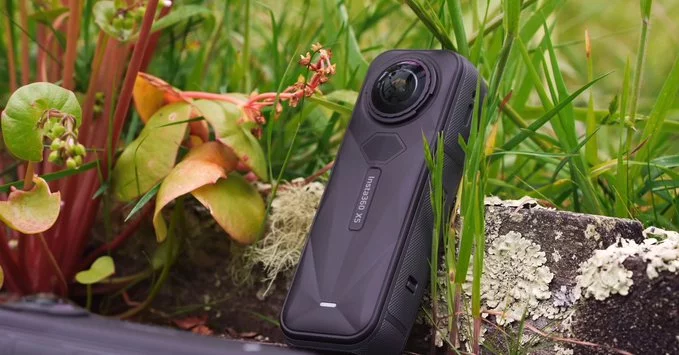
360-degree cameras are rapidly evolving beyond immersive video tools into systems capable of reconstructing real-world environments using Gaussian splats. If you’re searching how this works, what it means for Insta360 devices, or why drones are part of the shift, the answer lies in spatial computing innovation. This breakthrough allows users to digitize small chunks of the world with surprising accuracy. It is reshaping how creators, developers, and everyday users capture reality. The result is a new category of visual technology that blends photography, 3D modeling, and AI-driven reconstruction.
Gaussian splats are a method of representing 3D environments using tiny, overlapping data points that create highly realistic digital scenes. Instead of traditional 3D modeling, this approach allows faster rendering and more flexible reconstruction from captured imagery. 360-degree cameras benefit from this because they capture full spherical views that can be turned into spatial models.
By combining multiple perspectives into one unified representation, Gaussian splats preserve fine visual details while remaining efficient. This makes them especially useful for environments that need realistic depth and texture. The process turns ordinary camera footage into something closer to a living digital replica.
Insta360 cameras are already known for immersive capture, but Gaussian splats take their output far beyond standard video. Antigravity drones complement this by collecting aerial perspectives that feed directly into spatial reconstruction systems. Together, they create a pipeline that transforms real-world environments into editable digital spaces.
This combination allows both ground-level and aerial data to merge seamlessly. It enables creators to scan locations from multiple angles without complex setups. The result is faster, richer 3D scene generation that feels increasingly automated.
The most exciting shift is the ability to digitize small chunks of the world in seconds rather than hours or days. This makes spatial capture more accessible for creators, researchers, and even everyday users experimenting with 360-degree cameras. Gaussian splats reduce the computational load while preserving fine details that matter in immersive experiences.
As a result, users can quickly turn real environments into usable digital assets. This speed changes how fast ideas move from capture to creation. It also lowers the barrier to entry for advanced 3D content production.
This technology is reshaping how creators build virtual environments for storytelling, gaming, and design. It also has strong implications for mapping, allowing more accurate digital twins of real-world locations. As 360-degree cameras become more powerful, the gap between physical and digital spaces continues to shrink.
Creators can now design experiences that mirror reality with greater precision. Meanwhile, mapping systems gain richer environmental data for simulations. This convergence is pushing visual content into a more interactive future.
The future points toward fully interactive digital worlds generated directly from real-world scans. With ongoing improvements in Gaussian splats and camera hardware, these systems will become more mainstream. For users, this means more immersive experiences and simpler ways to capture reality in digital form. 360-degree cameras are no longer just recording tools but gateways into spatial computing.
As hardware improves, capture quality will increase while processing becomes faster. This will allow even more seamless blending of real and virtual environments. The foundation for next-generation media is already forming.
Real-world applications of Gaussian splats are expanding quickly across media production and virtual reality workflows. Filmmakers are using 360-degree cameras to capture environments that can later be reconstructed for post-production edits. This reduces the need for costly set design while increasing creative flexibility. Game developers are also experimenting with these techniques to build more realistic worlds.
These applications highlight how flexible the technology has become. Entire scenes can be rebuilt digitally from real footage. This is changing how industries approach visual storytelling and simulation.
Despite its promise, Gaussian splat technology still faces challenges in processing power and storage demands. High-quality reconstructions require significant computational resources, especially when working with large 360-degree datasets. However, improvements in hardware and AI optimization are steadily reducing these barriers.
Efficiency remains a key focus for developers working in this space. As systems improve, adoption is expected to grow more rapidly. The technology is powerful, but still evolving.
For everyday users, the biggest change is accessibility to advanced 3D capture tools that once required expensive equipment and technical expertise. Now, with modern 360-degree cameras and AI-driven reconstruction, even casual creators can experiment with spatial content creation. This shift is expected to influence social media, education, and virtual collaboration tools in the coming years. It represents a step toward a more immersive and visually connected digital ecosystem.
Spatial capture powered by Gaussian splats is redefining how 360-degree cameras are used across industries. It blends real-world imaging with advanced computation to create more dynamic digital experiences. As adoption grows, this technology is set to become a foundation for next-generation visual computing. Ultimately, it reshapes how we experience reality itself.









Comment