
Alerts
-
3 minutes, 33 seconds
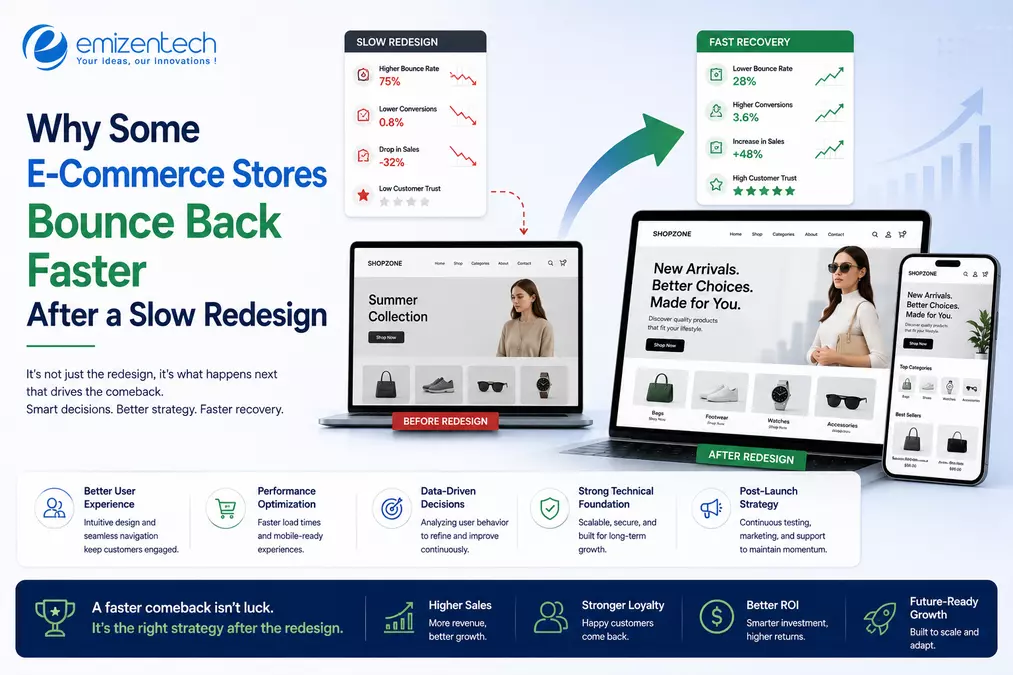
Every redesign has a rough patch right after launch, that's normal. What separates the stores that recover in days from the ones still limping along a month later isn't luck, it's how fast they actually respond to the problems the redesign created instead of hoping things settle on their own.
The stores that bounce back quickly treat the days right after launch as a diagnostic window, not a victory lap.
Rather than waiting to see if complaints roll in, fast-recovering stores run a performance test the same day the new site goes live, catching heavy images or slow-loading scripts before they've had time to hurt rankings or frustrate shoppers. Stores that hire ecommerce developers to run this audit right after launch, instead of weeks later once traffic has already dropped, tend to catch the expensive problems while they're still cheap to fix.
The fix usually isn't a second redesign, it's a targeted cleanup. Developers strip out plugins nobody's using anymore, patch broken links, and quietly correct the small things that slipped through during launch, all without touching the actual layout customers already got used to.
Once the obvious issues are found, the recovery speed comes down to a few specific fixes rather than a long list of changes.
Turning on proper server-side caching means a returning shopper gets a page served near-instantly instead of the site rebuilding it from scratch every single visit. It's a small setting with an outsized effect on how fast the store feels.
Moving big images and media to a content delivery network means shoppers pull that data from a server physically closer to them, rather than waiting on a single origin server no matter where they're browsing from. Stores that skip this step often stay slow globally even after every other fix is in place.
Speed isn't the only thing at risk during a rocky redesign, search visibility and the paths shoppers actually use to buy things need attention too.
Old URLs that quietly break during a migration need proper redirects set up immediately, not eventually. Left alone, broken links start costing you the search rankings that took months to build, and by the time it shows up in traffic numbers, the damage is already done.
Through all the technical cleanup, the pages that actually drive revenue, product pages, category pages, checkout, need to stay fast and easy to use throughout. Fast-recovering stores watch how real shoppers move through the site in the days after launch and fix friction points immediately rather than waiting for a monthly report to flag them.
The gap between stores that recover fast and ones that don't usually comes down to speed of response, not the size of the problem. Catching issues in the first few days, fixing what's broken quietly in the background, and keeping the core buying path smooth throughout tends to matter more than getting everything perfect on launch day itself.
Within days, not weeks. The stores that recover fastest treat launch week as active monitoring time, not a period to relax after a big project.
Broken links and slow-loading images tend to top the list, since both are common casualties of a migration and both have an outsized effect on speed and search visibility.
Not if it's addressed quickly. Search engines generally recover rankings once the underlying issues, broken redirects especially, get fixed promptly rather than left for months.
Watch page speed scores and cart abandonment on the pages that matter most. Improvement there usually shows up before the overall traffic numbers catch up.



Comment