
Alerts
-
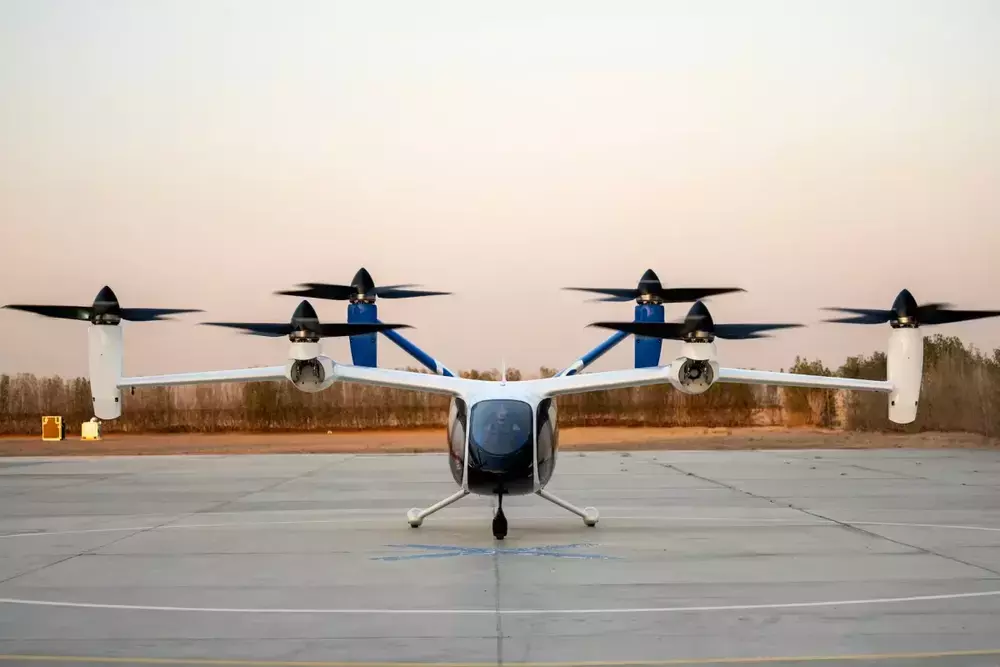
Electric aviation remains a costly bet. For years, Joby Aviation has poured resources into developing its S4 eVTOL aircraft, working through the complex FAA certification process and laying the groundwork for urban air mobility. The company has raised billions in capital, went public through a SPAC merger, and continues to confront the same fundamental issue facing every advanced air mobility startup: expenses arrive every month, but meaningful revenue is still years down the line.
Joby’s response to this challenge has become increasingly clear. Rather than waiting for the air taxi market to mature, the company is building a profitable side business to fund its primary mission. The $500 million acquisition of Resonant Sciences marks the most significant move in that direction to date.
Resonant Sciences, an Ohio-based defense contractor specializing in radio frequency and sensor systems, brings far more to Joby than just technology. The acquisition delivers $100 million in trailing twelve-month revenue, a proven business model, and importantly, access to classified U.S. government programs. For a company spending heavily to certify an entirely new category of aircraft, these assets are invaluable—they buy the time and financial runway needed to see the core mission through.
Resonant Sciences is not a headline-grabbing consumer brand or a flashy software platform. Instead, it operates in the specialized world of defense electronics—a sector that rarely makes news but consistently generates government contracts. The company’s radio frequency and sensor systems serve as foundational components for sophisticated military applications, including autonomous systems technology that aligns with Joby’s long-term development goals.
Under the terms of the deal, Resonant Sciences will become Joby’s dedicated defense division. J. Micah North, the company’s co-founder and CEO, will lead the new unit, which will also absorb Joby’s existing defense projects. These include turbine-electric and hydrogen-electric aircraft development, as well as autonomy technology that could eventually enable uncrewed operations.
The structure of the deal reveals a deliberate strategy. Joby is not merely acquiring a collection of patents or prototypes—it is purchasing an operating business with established revenue streams, long-standing government relationships, and leadership that deeply understands the defense procurement process. Resonant’s access to classified programs is particularly valuable, opening doors that typically take years for new entrants to unlock.
This acquisition also serves an important internal purpose for Joby Aviation: clearing the deck. By consolidating all defense operations into a separate division, the core aviation team can concentrate entirely on certifying, manufacturing, and launching the S4 electric air taxi. The arrangement eliminates competing priorities and potential distractions, allowing the company to focus on its singular objective of bringing the aircraft to market.
For Joby, the deal represents a pragmatic acknowledgment of the financial realities facing the eVTOL industry. The company is betting that a profitable defense subsidiary can provide the financial stability needed to weather the long certification process and ultimately deliver on the promise of urban air mobility.
Joby’s move to acquire Resonant Sciences is not a departure from its established strategy; rather, it represents a significant escalation of a proven playbook. The company has demonstrated a clear pattern of using acquisitions to bridge the gap between its long-term eVTOL ambitions and the need for immediate, tangible revenue streams.
The most prominent example of this strategy came last year with the purchase of Blade Air Mobility’s helicopter rideshare business. That transaction, valued at approximately $125 million, was a direct entry point into the existing vertical-flight market. Through the deal, Joby gained immediate control of 12 strategically located terminals in high-traffic corridors, including New York City, JFK Airport, Newark Liberty Airport, and multiple Manhattan locations on the East Side, West Side, and Wall Street.
This acquisition yielded immediate financial results. In the second quarter, Joby reported $38.6 million in revenue, with the vast majority—$36.2 million—generated directly by the newly acquired Blade operations. This influx of capital is crucial, providing the company with real cash flow while its core eVTOL aircraft development remains in the pre-revenue phase.
The Resonant Sciences acquisition follows the same fundamental logic but operates on a larger scale and targets a different sector. Instead of purchasing rideshare infrastructure, Joby is acquiring defense-related revenue and specialized capabilities. While the $500 million price tag is substantial, the structure of the deal—a combination of cash and stock—suggests a deliberate effort to preserve liquidity while securing an asset that could be pivotal for future growth.
Joby’s foray into the defense sector is not a recent pivot but the culmination of two years of deepening ties with military and aerospace partners. A key milestone was the agreement signed last year with L3Harris Technologies. This partnership was established to explore the development of a new class of aircraft: a gas-turbine hybrid VTOL capable of autonomous flight. While this aircraft would utilize Joby’s S4 platform as its base, it would feature a significantly different powertrain designed for endurance and range rather than pure electric efficiency.
These hybrid capabilities are far more than theoretical concepts. In 2024, Joby demonstrated a hydrogen-electric hybrid version of its aircraft that successfully flew 521 miles. This distance is more than double the range of its battery-electric prototype, showcasing the performance potential of hybrid systems. Such capabilities have obvious and significant military applications, where mission requirements often prioritize range, payload capacity, and operational flexibility over emissions reduction.
With this context, the Resonant acquisition appears to be a calculated move to accelerate Joby’s defense work. By keeping these operations separate from the commercial air taxi business, Joby can maintain focus and agility in both domains. The radio frequency and sensing technologies that Resonant brings to the table are highly complementary to Joby’s ongoing work in autonomous systems and hybrid propulsion, potentially unlocking new capabilities for both defense and commercial platforms.
The prevailing narrative surrounding eVTOL developers has long centered on a tension between transformative potential and substantial financial exposure. These ventures are inherently capital-intensive, operating with extended development horizons and navigating complex, evolving regulatory landscapes. Consequently, a significant portion of the investment community has grown increasingly wary, moving past the initial excitement to a more demanding phase focused on tangible revenue generation and demonstrable commercial progress.
Joby’s strategic pivot—first with the acquisition of Blade and now with Resonant Sciences—is a direct response to this investor sentiment. These transactions are not merely about future capabilities; they are structured to bring immediate, real-world revenue onto the books. This approach offers several distinct advantages:
The strategic logic extends beyond immediate financial relief. The defense sector offers a level of revenue predictability that is rarely found in consumer aviation markets. While securing government contracts is a complex and competitive process, the payoff is substantial: multi-year agreements, dependable payment schedules, and a scale of operations that can effectively underwrite the development of advanced manufacturing capabilities. If Joby successfully cultivates a significant defense business, it effectively creates a guaranteed customer for its production capacity. This reduces the economic peril of building factories and supply chains that might otherwise face periods of underutilization while waiting for the commercial air taxi market to mature.
Joby’s corporate trajectory signals a fundamental evolution in how advanced air mobility companies are approaching their business models. The initial industry blueprint was straightforward: develop and certify an electric aircraft, then launch and operate urban air taxi networks. While this long-term vision remains intact, the route to financial sustainability is becoming more pragmatic and multi-faceted.
This dual-track strategy bears a striking resemblance to the early development of the commercial space industry. Pioneering companies such as SpaceX and Blue Origin strategically leveraged government contracts to fund their ambitious research and development efforts while they continued to pursue their broader commercial objectives. The revenue and capabilities derived from NASA and defense partnerships provided the essential foundation that made their more speculative commercial ventures possible.
Joby is effectively executing a similar playbook, adapted for the skies. The defense division serves multiple strategic purposes:
The commercial air taxi operation remains the aspirational end goal, but it is no longer the sole source of the company’s financial lifeblood in the interim. This pragmatic approach has significant implications for the broader eVTOL industry. It suggests that startups unable to secure near-term revenue—whether through defense work, logistics partnerships, or other verticals—will face immense difficulty maintaining investor confidence throughout the prolonged and expensive certification process. The combination of technical hurdles, regulatory scrutiny, and intense capital demands creates an existential risk for those who remain purely focused on the eventual launch of air taxi services without a more immediate financial strategy.
The Resonant Sciences acquisition is likely the largest defense-focused deal Joby will make, but it probably won’t be the last strategic acquisition. The company has repeatedly shown a willingness to use its stock as currency for assets that deliver immediate value. That approach makes sense given its public market valuation and the premium placed on speed in this industry.
For Resonant Sciences, the deal opens access to Joby’s resources, technology, and public market platform. For North and his team, it provides a route to scale their defense business alongside a partner that shares their focus on advanced vertical lift technology.
For the broader industry, Joby’s strategy offers a template: advanced air mobility companies don’t have to be purely commercial from day one. The defense market presents a viable path to revenue, capability development, and manufacturing scale that can ultimately support commercial operations.
Joby Aviation’s acquisition of Resonant Sciences is a bet that defense revenue can fund commercial aviation’s future. It’s a pragmatic strategy from a company that understands the financial realities of its industry. While the core eVTOL program remains the ultimate goal, building a profitable defense business in parallel provides the cash flow, capabilities, and runway needed to get there.
The question now is execution. Integrating Resonant Sciences into Joby’s operations, maintaining its government relationships, and leveraging its capabilities for Joby’s defense projects will require careful management. If successful, Joby will emerge as a dual-use company with a profitable defense business funding a transformative commercial aviation program. That’s a very different company than the one that went public in 2021, and potentially a more resilient one.










Comment