Alerts

-
8 minutes, 15 seconds
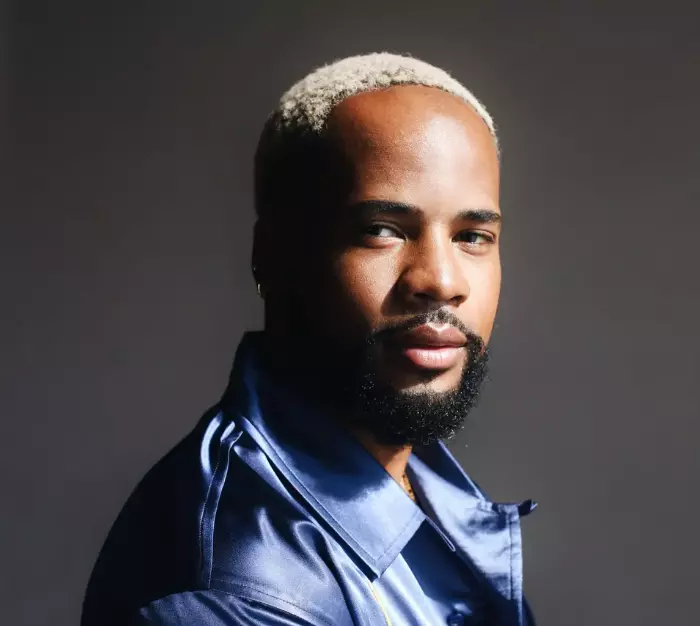
Long before 1921, the Greenwood District in Tulsa, Oklahoma, was one of the most economically dense Black communities in American history. No federal grants. No venture capital. No corporate diversity commitments. Thirty-five square blocks of hotels, law offices, theaters, and beauty parlors built entirely through referrals, introductions, and relationships passed between people who trusted each other.
A century later, the tech industry gave that system a name: the network effect. The idea that a product or service becomes more valuable as more people use it, and that value compounds through connection. Silicon Valley built trillion-dollar companies on that thesis. What it didn't acknowledge is that Black entrepreneurs have been running it for a very long time.
Dujon Smith thinks about Greenwood. "I love going to Tulsa," he told me. "People don't invest in businesses. They invest in people before they invest in the business, and most opportunities don't come from cold outreach." He has built his suncare brand My Block Skin the way the Greenwood founders built their block: not through institutions, but through the chain of trust that runs between people who see each other.
He calls the mechanism "passing around the offering plate," a frame from the Black Pentecostal church he grew up in. You give because the community gave to you. The expectation, unspoken and absolute, is that it comes back around. Not charity, but infrastructure.
That is the original network effect. And right now, it may be the most durable infrastructure Black millennial founders have.
Smith is a corporate venture capitalist at Accenture and the founder of My Block Skin. In his thirties, he has already placed the brand in 405 Boots locations across the UK and Ireland, making My Block Skin the first Black-owned brand in the retailer's 175-year history. He holds a patent-pending formula for a mineral zinc oxide sunscreen that appears clear on dark skin tones, a problem the industry had not solved. L'Oréal awarded him its 2026 Inclusive Beauty Grant. He is raising a seed round.
And in 2025, with all of that on his resume, Black founders like him raised a collective $942 million in venture capital, just 0.32% of all U.S. VC deployed that year. Even at the record-breaking 2021 peak, Black founders captured just 1.5% of the total. The institutional pipeline was never designed to carry them. The Original Network Effect is what they built instead.
Smith grew up in Evanston, Illinois. Single mother, CNA who sold Avon on the side. His dad wasn't in the picture. There were periods, three of them, when his mother's mental health meant he couldn't see or hear from her. A Caucasian family he describes as his "bonus family" helped get him out to Pepperdine. The community at his Black Pentecostal church, the after-school programs at Family Focus, the adults who placed him in Northwestern tennis camps and a music scholarship that eventually took him to Italy, none of that was institutional. After speaking with him, I realized it was all relational.
"There were people who always saw something in me," he said. "Who placed me in environments because they knew I could go far."
He ran toward every "yes" after that: Deloitte in London, a startup in Shanghai, a hedge fund in LA, and a casting agency behind The Bachelor and The Amazing Race. By the time he landed at Accenture and started thinking about building something of his own, the habit was settled. Call the person who knows the person.
He cold-called Jamilla Brown, then head of Soho House Foundations, because she was in the community and he already had a relationship. Two conversations later, the $50,000 sampling fee was waived. One of his business partners scraped together $5,000 to fund the first product batch. The offering bucket, moving hand to hand: you take care of the people around you, and they take care of the work.
"It was a grassroots effort of us just canvassing, picking up the phone, saying who knows who," he said. "We were pulling resources and making things happen."
He cold-DM'd a Boots buyer. Found the name on a Tuesday. Flew to London on Thursday. Met with him that night. The partnership is now in 405 stores.
The product itself makes the exact same case. Mineral zinc oxide—the active ingredient most dermatologists recommend—leaves a visible white cast on deep skin tones, and that has historically driven Black consumers away from sunscreen altogether. Black men face a five-year melanoma survival rate of just 51.7%, compared with 75.1% for white men. Their risk of dying from melanoma is 26% higher than white patients, in part because the products meant to prevent the disease were never designed for them.
Smith found the scientist who changed that formula at the Black Women and Venture Capital Summit in Martha’s Vineyard. She was a Black PhD candidate at UCLA. A chance introduction at an event built specifically to put Black people in the same room. The scientist had figured out how to make 20% mineral zinc oxide appear clear on deep skin tones—something the sunscreen industry had failed to crack for decades. Smith flew to Los Angeles to see the demo, filed a provisional patent for $3,000, and brought on Jerry Porter, former Chief Innovation Officer at Procter & Gamble, to guide commercialization.
That Martha’s Vineyard meeting was not luck at all, he said emphatically. The network he had built was simply delivering.
Black consumers represent 11.1% of total beauty spending, with annual beauty expenditures projected at $120 billion. Black-owned brands capture just 2.5% of beauty industry revenue. More than 80% of Black-founded brand revenue flows to companies that are not owned by Black people. The gap between what Black consumers spend and what Black founders earn from that spending equals $2.6 billion in unaddressed market opportunity.
This kind of original network effect is not just a survival strategy. What it actually is, he argues, is a capital strategy. It is how founders keep moving inside a market that has structurally excluded them from formal pathways.
The Trump administration’s dismantling of the Minority Business Development Agency in 2025 made this trend more visible, but it did not create it. Under the Biden administration, the MBDA dispersed $3.2 billion in contracts to minority enterprises and supported 23,000 jobs through 38 business centers. By April 2025, those grants had been terminated. A staff of 100 was reduced to effectively one remaining person in the DC headquarters. Corporate DEI commitments have retreated. Supplier diversity programs are narrowing. The entry points that many founders spent years building toward are closing.
Smith was direct about it in our conversation.
“The entry points are being closed off,” he said. “But you know what hasn’t changed? You and I, we still have to buy these products. Retailers are still looking for innovation. Investors are still looking for outsized returns. Our strategy doesn’t necessarily change. We just have to be even better.”
He invokes Alex Banayan’s book The Third Door when describing what comes next. The front door said no. The side door let some of them in as performers, as exceptions. The third door is where Black and Brown entrepreneurs have always had to operate.
“Think about it like a 2026 underground railroad,” he said. “Creating pathways for us to still make it when the traditional entry points have been closed.”
I believe the Greenwood founders would have recognized that logic immediately.
The ownership question is where Smith’s argument sharpens. He is not building MyBlockSkin to exit. He is building it to hold.
“There’s a new renaissance of Black founders realizing we should retain more ownership,” he said. He brought up Henrietta Lacks and how her cells generated decades of pharmaceutical profit while her family received nothing. He mentioned Beyoncé taking full ownership of her whiskey brand Sir Davis. He referenced Honey Pot founder Bea Dixon, who still owns a majority stake in her company after attracting major investment opportunity.
“We build things, sell them, they get extracted and compounded and flipped, and a whole community of people doesn’t benefit because we didn’t retain the equity.”
Smith explained that his patent is the mechanism. A defensible intellectual property claim creates licensing revenue, strengthens the brand’s enterprise value for any strategic acquirer, and keeps the upside inside the network that built it. His chief science officer runs a nonprofit called Elements of Equity, which focuses on getting more Black and Brown students into STEM so they can develop consumer products and hold patents of their own.
This relational networking he seems to have mastered, in his vision, will eventually become generational. Not just who opens the door, but who owns the building.
At the end of our conversation, Dujon added one more thing, unprompted, the way people do when something has been sitting with them.
“I want people to really think about this,” he said. “Community isn’t just cultural. When you truly look at it, it’s an economic advantage.”
He sold cookie dough in high school to fund his first trip to Italy. He built a brand in a community-owned apartment over tequila. He called the person he trusted, and she called the next person, and thirty months later he was in 405 stores.
The Greenwood founders ran the same play on a different block, in a different century, without the DM button.
This network effect he speaks of is not a Silicon Valley invention, but an old strategy, built by people who had no other choice, that has outlasted every institution designed to replace it. When those institutions close again, Black founders know exactly what to go back to.
They never really left.










Comment