Alerts

-
4 minutes, 45 seconds
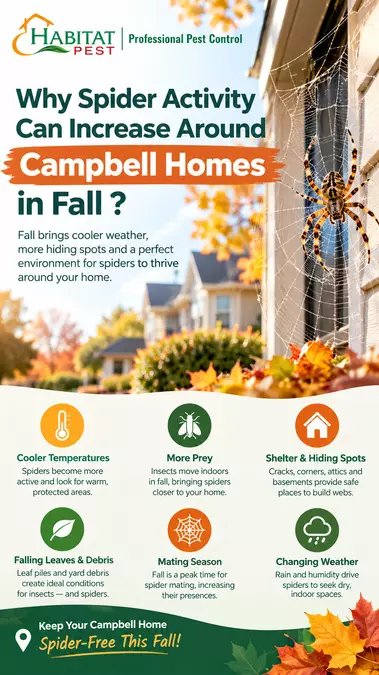
A web across a garage door can appear almost overnight. Another may show up beneath an eave, beside a window, or around an exterior light. More spiders do not always mean they have invaded the house. Often, changing conditions around the property simply make certain areas more useful to them.
As temperatures shift through fall, sheltered corners, outdoor lighting, and nearby insects can increase spider activity around homes in Campbell. Areas that stayed quiet through summer may suddenly show fresh webs, particularly around garages, eaves, landscaping, and exterior fixtures.
Where the webs show up says a lot about why they keep returning. Paying attention to those spots also makes spider pest control more focused if the activity doesn't settle down.
Start With the Location of the Web
A spider web can tell you more about the surrounding conditions than the spider itself.
Webs tucked into eaves, fence corners, landscaping, or exterior fixtures usually point to outdoor activity. A tangled web hidden behind stored items in a garage means something else. Repeated webs around one doorway can also suggest a steady supply of insects nearby.
Removing the web gets rid of the visible evidence, but the location can remain attractive. If shelter and prey are still available, another spider may use the same area.
Insects Can Keep the Area Attractive
Spiders need food, and much of their activity revolves around finding it.
Outdoor lights can attract flying insects toward a home. Those insects create feeding opportunities for spiders nearby. Vegetation and sheltered outdoor areas can contribute to the same pattern.
A porch with several insects gathering at night may support more spider activity than a darker part of the property. The spider is not necessarily attracted to the house itself. It may simply be taking advantage of a reliable food source.
One small change some homeowners try is swapping a bright white porch bulb for a yellow one, since many night-flying insects are less drawn to it. Fewer insects at the door means less reason for a spider to set up there.
The Garage Can Hide More Than You Notice
A garage can provide dark corners, sheltered gaps, and areas that rarely get disturbed. Stored materials and quiet spaces can create suitable hiding spots, including places where black widows may be found.
Pay closer attention to:
• Boxes and stored items left untouched for long periods
• Firewood or gardening equipment kept close to walls
• Corners behind shelves or large items
• Gaps around garage doors and other openings
• Old webs or tangled webbing in low, sheltered areas
• Dark spaces near the floor that receive little activity
Moving items so the area is easier to inspect can expose hidden webs and make it easier to identify where spiders are active. Take care when reaching into dark corners or moving stored materials, particularly if you suspect black widow activity.
Repeated Indoor Sightings Can Point to Entry Areas
A spider found indoors may have entered through a small opening rather than using the living space as its main habitat. Repeated sightings near the same part of the house make the surrounding entry areas worth checking.
Look for:
• Loose or damaged window screens
• Gaps beneath exterior or garage doors
• Cracks around window and door frames
• Openings around pipes, cables, or other utility points
• Small gaps along exterior walls or the foundation
Three spiders near the same window in one week point somewhere. Three spiders in three different rooms usually don't.
Check the outside of the same area as well. Nearby webs, insects, vegetation, or sheltered spaces may help explain why spiders are repeatedly appearing indoors.
Reduce Shelter Around the House
Spiders do not need a messy yard to find suitable shelter. Eaves, dense vegetation, stored materials, woodpiles, and quiet corners can all provide protection close to the structure.
A few practical steps can make these areas easier to manage:
• Remove old webs from eaves, walls, and exterior fixtures.
• Keep unnecessary boxes and stored items out of quiet corners.
• Move firewood and other stored materials farther from the structure where practical.
• Trim vegetation touching or heavily covering exterior walls.
• Clear excess debris around the foundation.
You won't get rid of every spider outdoors, and you don't need to. Fewer hiding spots near doors, windows, and the garage is what cuts down on the ones that end up inside.
Not Every Fall Spider Means the Same Thing
A large outdoor web does not automatically signal a problem inside the house.
California has a wide range of spider species with different habits and preferred habitats. Garden spiders, cellar spiders, cobweb spiders, wolf spiders, and widow spiders do not all behave in the same way.
Black widows deserve greater caution because their bites can cause significant symptoms. They are commonly associated with sheltered, dry, undisturbed locations, such as garages, woodpiles, storage areas, and other quiet spaces.
So a web low in the garage, near the woodpile, or behind stored boxes calls for more care than a spider spinning in the garden.
When Cleanup Isn't Enough
If fresh webs still show up in the same garage corner or around the same light after you've cleared things out, something there is still drawing spiders in. Repeated sightings indoors near one window or door point the same way.
At that point, spider extermination is worth considering. Habitat Pest Control works with homes in and around Campbell and can look at those specific spots before deciding how to treat them.


8.5K articles

2.8K articles

1.6K articles

34 articles









Comment