Alerts

-
7 minutes, 15 seconds
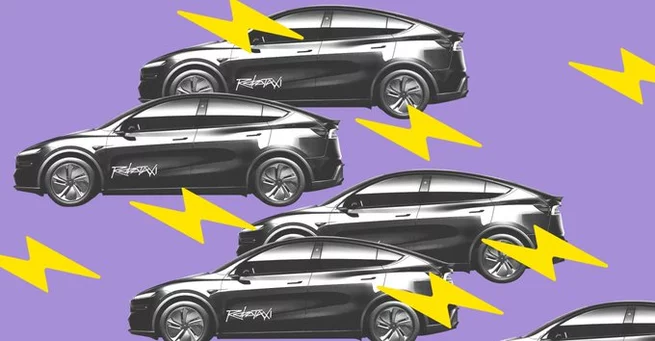
Tesla unsupervised robotaxi rides are no longer just a future promise. The company has quietly begun operating a small number of driverless robotaxi trips in Austin, signaling a major milestone in its long-running push toward full autonomy. Many people are asking the same questions right now: Are these rides truly driverless, who can access them, and what does this mean for everyday transportation? The short answer is progress, but with important limitations. While the move shows technical confidence, public access remains restricted, and broader deployment is still some distance away.
This development places Tesla at a critical crossroads, where innovation meets public scrutiny. Supporters see it as proof that autonomous driving is finally maturing. Critics argue the rollout is premature, pointing to unresolved safety concerns and limited transparency.
Until recently, Tesla’s robotaxi trials relied on human safety monitors seated inside the vehicle. These monitors could intervene or shut down the system if something went wrong. The new unsupervised robotaxi rides remove that human backup entirely, allowing the vehicle’s software to handle driving decisions on its own.
According to Tesla executives, this shift is intentional and gradual. Only a small portion of the fleet is operating without onboard supervision, mixed alongside vehicles that still include safety monitors. The company says this phased approach helps validate real-world performance while minimizing risk. Over time, the ratio of unsupervised vehicles is expected to increase.
This distinction matters because it represents Tesla’s strongest public statement yet that its autonomous system can function independently, at least in controlled conditions.
Austin has become a central hub for Tesla’s autonomy experiments, and for good reason. The city offers relatively favorable regulations, predictable road layouts, and a growing technology-friendly environment. These factors make it easier to monitor performance and collect valuable driving data.
However, Tesla’s robotaxi service in Austin is not open to everyone. Participation is still limited to a waitlist, and the total number of vehicles on the road appears to be small. That means most residents are unlikely to encounter an unsupervised robotaxi anytime soon.
The controlled nature of this rollout suggests Tesla is prioritizing learning and refinement over rapid expansion, even as public expectations continue to rise.
For years, Elon Musk has predicted that fully autonomous vehicles were just around the corner. Many of those timelines came and went, fueling skepticism across the industry. The launch of unsupervised robotaxi rides, even on a limited scale, marks one of the rare moments where Tesla’s actions align closely with earlier promises.
Tesla leadership has framed previous safety monitors as an extra layer of caution rather than a technical necessity. The recent removal of those monitors supports that claim, at least in part. Still, being a few weeks late compared to bold forecasts underscores the complexity of delivering true autonomy.
This moment feels less like a finish line and more like a checkpoint in a long, uncertain journey.
Despite the excitement, safety remains the most controversial aspect of Tesla’s robotaxi ambitions. Reports of crashes during earlier monitored trials have fueled debate about whether the technology is ready for full independence. Even a small number of incidents can shape public perception, especially when human drivers are removed from the equation.
Tesla argues that every mile driven improves the system through real-world data and continuous updates. Critics counter that public roads are not the place for unresolved experimentation. Without widespread transparency on incident rates and system limitations, trust will remain fragile.
The success of unsupervised robotaxi rides will depend not just on performance, but on how openly Tesla addresses these concerns.
Tesla’s gradual approach mirrors a broader pattern seen across the autonomous vehicle space. Many companies begin with limited fleets, restricted access, and safety fallbacks before expanding to wider audiences. Starting small allows teams to identify edge cases, refine software, and respond to unexpected behavior.
Where Tesla differs is in its reliance on camera-based systems and its emphasis on rapid iteration through software updates. This strategy has loyal supporters who believe it will scale faster. It also has vocal critics who question whether it offers enough redundancy for complex driving environments.
The unsupervised robotaxi rollout puts that philosophy to its toughest test yet.
Tesla unsupervised robotaxi rides represent meaningful progress, but not a finished product. Public access is limited, the fleet is small, and long-term reliability remains under close watch. For now, this is a signal of intent rather than a transportation revolution.
If Tesla can expand safely, reduce incidents, and earn regulatory confidence, robotaxis could eventually become a mainstream option. If not, this moment may be remembered as an ambitious step taken too soon.
Either way, Tesla has moved the conversation forward. The era of supervised testing is starting to give way to real-world autonomy, and the next phase will determine whether trust can keep up with technology.








Comment