Alerts

-
4 minutes, 23 seconds
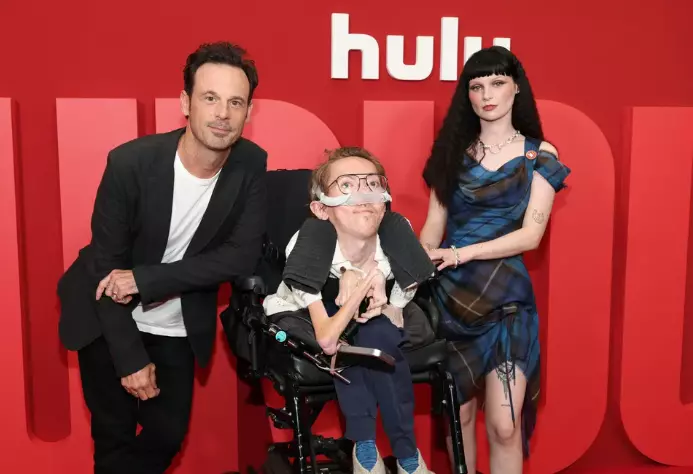
Steve Way has spent the summer on the number one show on Hulu. In Furious, created by Liz Meriwether, he plays Alden, a Disabled man who falls into an affectionate and unsettling romance with Catherine, the young woman at the center of the thriller, played by Lola Petticrew. It is a role that asks for stillness, menace, longing and comedy, often inside the same scene, and Way holds all of it. Variety called his work in the series impeccable. Entertainment coverage through the season has described him as the show’s secret weapon.
It is also, by any reasonable measure, a landmark. Disabled actors are rarely written romance, almost never written desire, and essentially never written as the emotional center of a thriller. Way plays all three without a trace of the sentimentality the industry usually insists on. The part was written for him, which is itself rare enough to be news.
What makes it more remarkable is that he did it without an agent or a manager, and that he is currently planning for federal healthcare changes that could reshape his access to the care that makes the work possible at all. “I lived a dual life,” he told me. “I’m in the spotlight, recognized everywhere,” and “yet I’m planning for imminent healthcare cuts.” That gap between visible success and structural precarity is the story of disability employment in the United States, and it does not stop at the edges of the entertainment industry.
Way argues that the problem starts with the job posting itself. "It has to start with the very ableist, discriminatory job requirements," he said, pointing to a common absurdity: "You're working a desk job and you have to lift more than 40 pounds." These physical demands, along with unnecessary driving-license requirements and vague calls for "flexibility," are often copied from outdated templates. They screen out qualified disabled candidates before a human reads a single résumé.
This boilerplate is usually not a legal requirement at all. Under the Americans with Disabilities Act, employers may only hold candidates to the essential functions of a role—the things it exists to do. Yet these unexamined lines are rarely tested against that standard, and disabled applicants self-select out, unable to know if the demand is real.
The fix is remarkably cheap. Auditing job descriptions against actual duties is "a morning of work for a hiring team," and the most cost-effective lever an employer has. As Way notes, the burden of proof currently falls on the candidate, not the employer who wrote the posting.
There is real and well-founded fear about AI among disabled workers, who have watched automated hiring tools screen them out and algorithmic benefits systems deny their claims. Way has landed somewhere more useful than either the panic or the hype, and he arrived there the way he arrives at most things, by paying close attention to his own working life.
“I use AI to schedule things. It keeps my calendar. I wake up every morning and it tells me about my day,” he said. “It helps me to be more efficient. It helps me to be on task. And I feel like I now have more time to work on the things I want to do outside of my job.” It also, he said, helps him prepare for meetings and calls.
He draws a hard line around the craft itself. “I will never use AI to write a script to help me shoot a movie or TV show,” he said. “But I will use it to help me automate my day-to-day life… and that will make me more efficient in writing and shooting and editing.”
For employers, the relevant point is what this does to the accommodations conversation. Scheduling support, transcription, meeting prep and note-taking are now standard-issue features in tools most companies already pay for. The question of who counts as needing an accommodation, and who is simply using the software on their laptop, is dissolving.
Under H.R. 1, signed into law in July 2025, states must implement Medicaid community engagement requirements by 1 January 2027, obliging non-exempt adults to document 80 hours of monthly work or earn at least $580, with redeterminations moving to twice yearly. The interim final rule from CMS, issued 1 June 2026, narrowed protections for disabled enrollees by requiring states to prove not only that a person is disabled or medically frail, but also that the condition significantly impairs their ability to meet the work requirement—barring exemptions by diagnosis alone.
Way’s experience underscores the threat. He told me, “I’m in the spotlight, recognized everywhere,” yet he is “planning for imminent healthcare cuts.” Success doesn’t exempt him from systemic barriers. “I’m no better than anyone else,” he said. “I just have the platform to talk about it.” Arkansas’s 2018 experiment, where 18,000 adults lost coverage largely through reporting failures, shows the stakes. As Way put it, “America is the best for upward mobility. Not for us.”










Comment