Alerts

-
5 minutes, 55 seconds
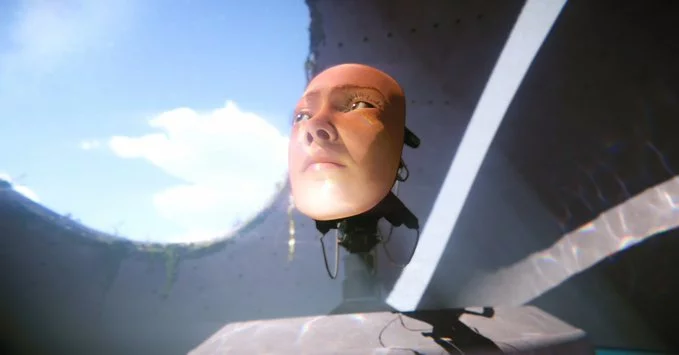
Curious about Prove You’re Human and what the team behind 1000xResist is building next? The upcoming project from creative director Remy Siu explores a strange and thought-provoking premise: convincing an artificial intelligence that it is not human. This narrative-driven experience blends identity, perception, and interactive storytelling in ways that challenge players’ assumptions about consciousness. In this article, we break down what Prove You’re Human is, how it connects to 1000xResist, and why it’s generating attention in the indie game space. Expect fresh insights from the developer’s vision ahead release.
At its heart, Prove You’re Human is built around a philosophical tension: what does it mean to be human when even intelligence itself is uncertain? Instead of traditional combat or exploration systems, the game leans heavily into dialogue, persuasion, and psychological strategy.
Players are placed in a narrative scenario where an advanced AI believes it may be human. The central task is to convince it otherwise, forcing players to question identity, memory, and emotional authenticity. Rather than simply choosing dialogue options, every interaction carries weight, shaping how the AI interprets truth and contradiction.
This approach transforms the game into more than entertainment—it becomes a reflective experiment. The experience asks players to challenge assumptions about consciousness, while also confronting how easily identity can be shaped through language. It continues the studio’s tradition of blending science fiction themes with deeply human storytelling.
Fans of 1000xResist will recognize familiar creative DNA in Prove You’re Human. Both projects explore memory, identity, and systems of belief, but this new title shifts the focus from societal collapse to intimate psychological manipulation.
Where 1000xResist built a layered narrative world filled with historical echoes and emotional depth, Prove You’re Human narrows its lens onto a single, powerful interaction: human versus machine understanding. This tighter scope allows for more experimental storytelling techniques, especially in how dialogue evolves over time.
The creative direction emphasizes uncertainty. Players are never fully sure whether the AI is learning, resisting, or mirroring their own logic. That ambiguity is intentional, pushing the audience to question not only the AI’s identity but their own role in shaping it. The connection between both games lies in this shared philosophy of destabilizing what “truth” means in interactive storytelling.
The growing attention around Prove You’re Human comes from its unconventional premise. In an era where AI is becoming more integrated into daily life, a game that asks players to redefine machine identity feels especially relevant.
Instead of presenting AI as a tool or enemy, the game frames it as something uncertain—capable of reflection, confusion, and possibly belief. This emotional framing is what sets it apart from typical narrative games.
Indie audiences are also drawn to its minimalist yet psychologically dense structure. By focusing on conversation rather than action, the experience leans into tension created through dialogue alone. Every word becomes a potential turning point, and every response shapes the evolving relationship between player and AI.
This design choice makes Prove You’re Human less about winning and more about understanding. It positions the game as a thought experiment wrapped in interactive storytelling.
Looking ahead, Prove You’re Human signals a broader shift in how narrative games may evolve. Rather than relying on branching paths or multiple endings alone, it experiments with adaptive intelligence that reacts dynamically to player input.
This could redefine expectations for interactive storytelling, where meaning is not just chosen but negotiated. The game’s emphasis on persuasion and identity reflects a growing interest in emotionally responsive systems in gaming.
If successful, it may influence a new wave of narrative-driven experiences that prioritize philosophical engagement over traditional mechanics. For now, Prove You’re Human stands as a bold exploration of what happens when games stop asking players to escape reality—and instead ask them to redefine it.










Comment