
Alerts
-
6 minutes, 28 seconds
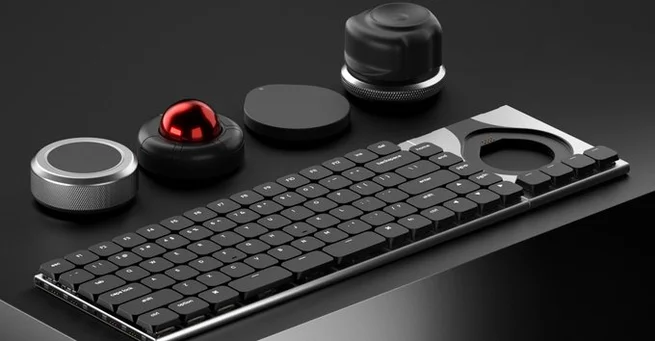
Searching for a keyboard that adapts to your workflow instead of locking you into one layout? The Naya Connect modular keyboard aims to solve that exact problem. Designed for users torn between compact and full-size keyboards—or between mice, trackballs, and touchpads—this system lets you build and rebuild your setup on the fly. With magnetic modules, swappable controllers, and a fast-funded launch, Naya Connect is positioning itself as one of the most flexible mechanical keyboards to date.
The Naya Connect modular keyboard builds on the company’s earlier experimental designs, but this time with a more familiar, flat keyboard layout. Instead of committing to a single form factor, users can expand or shrink their setup depending on daily needs. That flexibility is the core appeal, especially for creators, developers, and power users who shift between tasks.
Interest in the concept has been immediate and intense. The project reached its initial funding target in just minutes, signaling strong demand for customizable input devices. Rather than chasing flashy aesthetics, Naya focuses on function-first modularity. The result feels less like a novelty and more like a long-term desk investment.
At the heart of the system is the Naya Type, a low-profile 75% mechanical keyboard designed for everyday typing. It balances compactness with practicality, retaining essential keys while freeing desk space. For users who want more control, the keyboard doesn’t stand alone—it’s only the beginning.
The system also includes a 24-key multipad for macros and shortcuts, a six-key programmable strip, and a dock that adds four extra keys. The dock’s standout feature is its ability to hold interchangeable controllers. These include a touchpad, a trackball, a rotary encoder, or a six-degree-of-freedom 3D controller known as Float.
What truly sets the Naya Connect modular keyboard apart is how the pieces connect. Each module uses magnetic connectors, allowing components to snap together securely without tools or cables cluttering the desk. This design encourages experimentation rather than forcing a fixed layout.
Users can place a trackball on the right, a rotary controller on the left, or even sandwich the keyboard between two docks. Left-handed users can reposition the multipad for comfort, while advanced users can run dual macro pads on both sides. The system adapts to the user, not the other way around.
The modular approach isn’t just about aesthetics—it’s about productivity. Creative professionals may prefer a touchpad for editing, while developers might rely on macros and rotary inputs for faster navigation. Switching between these setups usually means buying entirely new hardware.
With the Naya Connect modular keyboard, those transitions happen in seconds. Modules can be swapped mid-day as tasks change, making the system feel more like a toolkit than a single device. That flexibility gives it long-term value beyond traditional mechanical keyboards.
Customization comes at a cost, and Naya isn’t positioning this as a budget keyboard. The All-In bundle, which includes every module and two docks, is priced at €568, roughly $662. For users who want a smaller entry point, a basic bundle with a dock and a touchpad controller starts at €187, or about $218.
While those numbers may seem high, the pricing reflects the modular nature of the system. Instead of replacing entire peripherals over time, users can expand gradually. For enthusiasts already invested in mechanical keyboards and productivity gear, the value proposition may feel justified.
As with any crowdfunded hardware project, there are risks involved. Production timelines, shipping delays, and final build quality remain key factors to watch. That said, Naya’s prior experience delivering a modular keyboard adds credibility to the project.
Early momentum suggests strong community confidence. The rapid funding response indicates that many users are eager for alternatives to one-size-fits-all keyboards. If execution matches ambition, the Naya Connect modular keyboard could become a reference point for future input devices.
Mechanical keyboards have evolved rapidly, but most still lock users into static designs. The Naya Connect modular keyboard challenges that norm by treating the keyboard as a dynamic system. Its emphasis on adaptability aligns perfectly with modern, multi-tasking workflows.
For anyone tired of compromising between form factors or juggling multiple peripherals, this approach feels refreshingly practical. Naya Connect doesn’t just ask users what kind of keyboard they want—it lets them change their answer whenever they need to.









Comment