
-
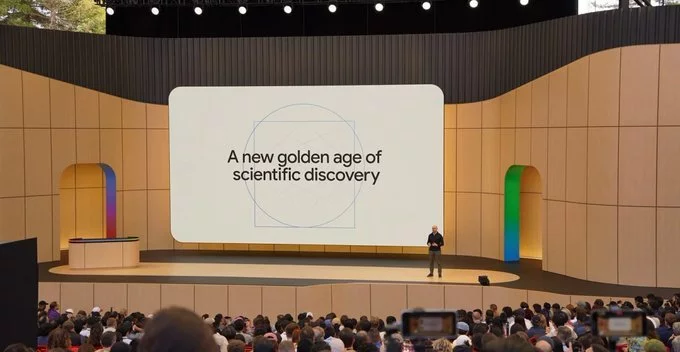
At Google I/O 2026, DeepMind CEO Demis Hassabis made a statement that quickly went viral: the company hopes to 'reimagine the drug discovery process with the goal of one day solving all disease.' While this sounds like science fiction, Hassabis was actually introducing Gemini for Science, a suite of experimental AI tools designed to accelerate research. But for the average person, the phrase 'solve all disease' can be dangerously misleading. Let's break down what this really means for the future of medicine.
Gemini for Science is not a single cure-all. Instead, it is a collection of AI models aimed at helping researchers make new discoveries faster. The tools build on Google's existing work with AlphaFold and AlphaGenome. These models help scientists understand protein structures and predict genetic mutations—two areas critical to understanding diseases like cancer, Parkinson's, and malaria.
AI has been a part of medical research for decades. Wearables use AI algorithms, and machine learning has driven non-invasive diagnostic tools. However, generative AI is a newer player. While promising, it comes with significant challenges. A meta-review on AI and COVID-19 vaccines found that AI reduced development timelines but also raised concerns about algorithmic bias, data privacy, and equitable global access.
AlphaFold has already proven its value. Researchers have used it to:
These are real breakthroughs, but they are steps in a long journey—not instant cures.
AlphaGenome, for example, has not been validated for personal genome prediction. It struggles with cell- and tissue-specific patterns. These nuances are critical for researchers but easily lost in public soundbites.
The problem with Hassabis's statement is not the science—it's the communication gap. In a keynote filled with dozens of AI announcements, there is no time to explain that 'solving all disease' is a multi-decade goal. Most people hear 'AI will cure everything' and draw incorrect conclusions.
Health Secretary RFK Jr. recently claimed AI could make the FDA 'irrelevant' by speeding up drug approvals. While AI can accelerate research, it does not eliminate the need for clinical trials, animal testing, or regulatory oversight. The layperson might mistakenly link Hassabis's comment to Kennedy's, creating a false narrative that Google supports deregulation.
Experts estimate that meaningful AI-driven medical breakthroughs are 20+ years away. This is an ambitious timeline by scientific standards. For context, the COVID-19 vaccine—developed in record time—still took nearly a year and relied on decades of prior research.
For most people, AI health has been a mixed experience: fitness trackers, symptom checkers, and AI-generated summaries that often hallucinate. It's important not to conflate consumer AI health features with research-grade AI tools. However, it's human nature to do so.
When you hear a bold claim like 'solve all disease,' ask yourself:
Good science communication is harder than ever. But understanding the difference between a headline and a hypothesis is crucial for making informed decisions about your health.

2.5K articles

1.4K articles

34 articles

28 articles













Comment