
Alerts
-
8 minutes, 11 seconds
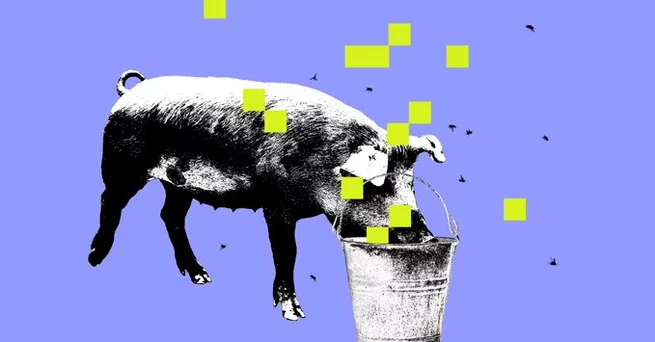
Does Big Tech actually care about stopping AI-generated spam and deepfakes? That question is gaining traction as platforms roll out labeling tools while simultaneously pushing more generative AI features. Users want authenticity, creators want protection, and regulators want accountability — yet progress feels slow. The tension lies in a simple contradiction: the same companies promising solutions are still actively building the tools driving the chaos.
This growing disconnect has sparked a wider conversation about whether Big Tech is genuinely trying to solve the AI slop crisis or merely managing optics while expanding their AI ecosystems.
AI slop refers to low-quality, mass-produced synthetic content flooding social feeds. Think fake influencers, AI-generated photoshoots, recycled trends, and synthetic news clips that blur the line between reality and fiction. The rise of accessible generative tools has made creating convincing fake content easier than ever.
Platforms like Instagram and TikTok have seen an explosion of hyper-polished yet artificial posts. These posts often mimic real creators so closely that casual users struggle to tell the difference. What once required advanced editing skills can now be done in seconds using AI.
The result is a flood of content that feels familiar but increasingly hollow — and that’s reshaping how audiences engage with social media.
Executives themselves are sounding the alarm. Adam Mosseri has publicly warned that authenticity is becoming infinitely reproducible. When everything can be cloned, the value of originality collapses.
His proposed solution? A future where real media can be verified through cryptographic signatures at the point of capture. The idea is to create a traceable chain proving whether an image or video is authentic.
While the concept sounds promising, critics argue that vision alone isn’t enough — especially when implementation remains patchy and inconsistent across platforms.
The technology often cited as the answer is C2PA (Coalition for Content Provenance and Authenticity). It allows media to carry embedded metadata showing its origin and editing history. Major tech firms have already started integrating the standard.
On paper, this should make identifying AI-generated content easier. In practice, its impact has been limited. Many users never see authenticity labels, and AI-generated content without metadata still spreads freely.
Critics argue that labeling alone doesn’t address the scale of the problem. If the majority of viral content lacks provenance data, then verification tools risk becoming symbolic rather than transformative.
One of the biggest criticisms facing companies like Meta is the perceived contradiction in strategy. On one hand, they’re investing heavily in authenticity initiatives. On the other, they’re aggressively rolling out generative AI features that make synthetic content easier to create.
From AI image generators to auto-edited reels, platforms are incentivized to boost engagement — and AI content performs well. That creates a structural conflict: authenticity measures often lag behind growth-focused innovation.
This dual strategy makes it harder for users to trust whether companies are solving the problem or simply managing its narrative.
Content creators are already adapting to the shift. Many are leaning into raw, imperfect aesthetics to differentiate themselves from AI content. Unfiltered videos, behind-the-scenes moments, and lo-fi storytelling are becoming markers of “realness.”
But even that strategy has limits. AI models are rapidly learning to mimic imperfections, from shaky camera work to spontaneous dialogue. What once signaled authenticity can now be simulated.
For creators whose livelihoods depend on originality, the line between human and machine creativity is becoming dangerously thin.
Beyond aesthetics, the stakes grow higher when synthetic content intersects with real-world events. AI-generated visuals can distort public understanding during protests, elections, or crises. Even well-intentioned users can unknowingly share manipulated media.
Once misinformation spreads, corrections rarely travel as far. This asymmetry makes AI slop more than a content quality issue — it becomes a societal one.
The concern isn’t just fake influencers or spam posts. It’s the erosion of shared reality in an era where visual evidence can no longer be trusted at face value.
Despite massive resources, meaningful progress remains incremental. Part of the challenge is technical: detecting AI content reliably is difficult when models evolve rapidly. Another barrier is adoption — authenticity standards only work if widely implemented.
There’s also a business dimension. Platforms rely on user engagement, and AI-generated content often boosts time-on-platform metrics. That creates friction between ethical responsibility and growth incentives.
Until those incentives align, solutions may continue to feel half-finished.
At its core, the AI slop debate isn’t just about technology — it’s about trust. Users are becoming more skeptical of what they see online. Creators are questioning how to prove their originality. Regulators are exploring new rules around transparency.
If platforms fail to restore confidence, the long-term impact could reshape the internet itself. A digital ecosystem where nothing feels real risks driving audiences toward smaller, closed communities or verified networks.
That would fundamentally change how social media works today.
Big Tech companies are undeniably investing in solutions like provenance tracking and AI labeling. But their simultaneous push into generative AI raises a valid question: can they truly solve a problem they’re still accelerating?
The AI slop debate will likely intensify as synthetic media becomes more sophisticated. For now, users are left navigating a messy middle ground — one where authenticity tools exist, but certainty remains elusive.
Whether platforms choose stronger enforcement, better transparency, or slower AI rollouts may ultimately determine how trustworthy the internet feels in the years ahead.










Comment