NYC CORE's Reparations Gathering Was NYC's Largest. What's Next?
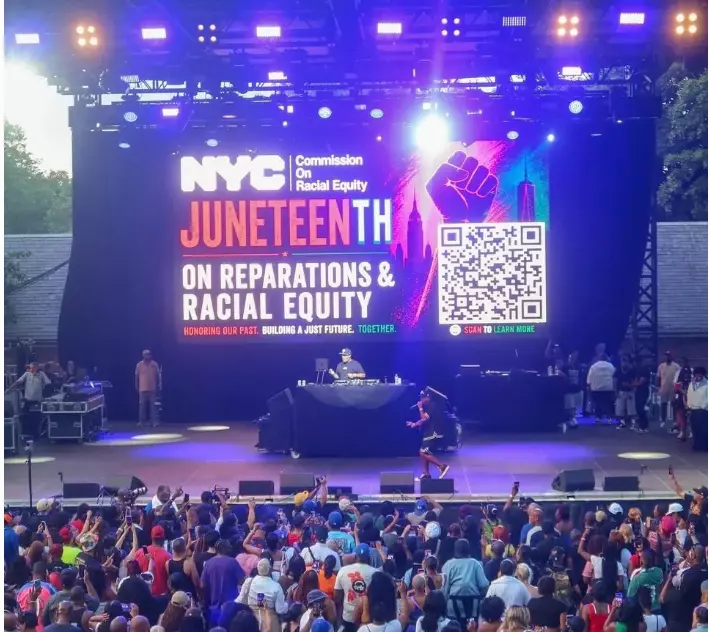
New York City’s Commission on Racial Equity (CORE) hosted the largest reparations gathering in NYC history during a 2026 Juneteenth event. This historic gathering brought together thousands to discuss reparations for the Black community, addressing the lasting harms of chattel slavery. While reparations remain a debated topic nationwide, more cities and states are forming study groups to develop actionable plans. So, what's next for NYC? Community-led conversations, policy proposals, and economic investments are on the horizon.
Why This Event Mattered
Tyrik Washington, a political strategist working with CORE, explained the goal: “We wanted to create a space where joy, community, and civic engagement were central to commemorating Juneteenth and advancing reparations.” The event featured performances by Ja Rule, LeToya Luckett, and DJ Kid Capri, drawing massive crowds. Washington noted, “Juneteenth is often reduced to symbolic celebrations. Our objective was to connect its legacy to repairing the harms of slavery.”
Community Participation Drives the Process
“Community participation is at the heart of this work,” Washington said. “The community is leading what reparations will look like in NYC.” CORE used the event to educate New Yorkers about racial equity goals. By partnering with megastars like Ja Rule, they boosted awareness. “It created a free, joyful space where people could learn and become civically connected,” he added.
How Reparations Could Change Black New Yorkers' Lives
Washington shared a clear vision: within 5 to 10 years, reparations could reduce occupational segregation and improve pay equity. According to the National Employment Law Project, Black and Latinx workers are overrepresented in dangerous jobs with fewer benefits. NYC Comptroller data shows that only 25% of Black workers hold quality jobs, compared to 50% of White workers.
Cash Payments and Wealth Building
Nikole Hannah-Jones, creator of the 1619 Project, stated, “The center of any reparations program has to be cash payments. The only thing that closes a wealth gap is money.” Closing this gap improves quality of life and boosts entrepreneurship. McKinsey research shows it also strengthens the overall economy.
Entrepreneurship and Local Economies
Washington explained, “Reparations could expand pathways to entrepreneurship and business ownership. Removing barriers to capital would allow Black-owned businesses to start and grow. These businesses often hire within their communities, creating jobs and economic mobility.”
What Success Looks Like
“Success would mean higher incomes, greater workforce representation, increased business ownership, and intergenerational wealth,” Washington said. For Black professionals, reparations could unlock opportunities historically denied. A future with equity requires accountability for past harms and meaningful redress.
Key Takeaways
- NYC CORE’s Juneteenth event was the largest reparations gathering in NYC history.
- Community input is central to shaping reparations policies.
- Cash payments are a critical component for closing the wealth gap.
- Reparations could boost Black entrepreneurship and local economies within 5–10 years.
- Occupational segregation and pay equity are key areas for improvement.
As NYC moves forward, the focus remains on turning conversation into action. Stay informed and engaged as these efforts develop.














Comment