
-
9 minutes, 28 seconds
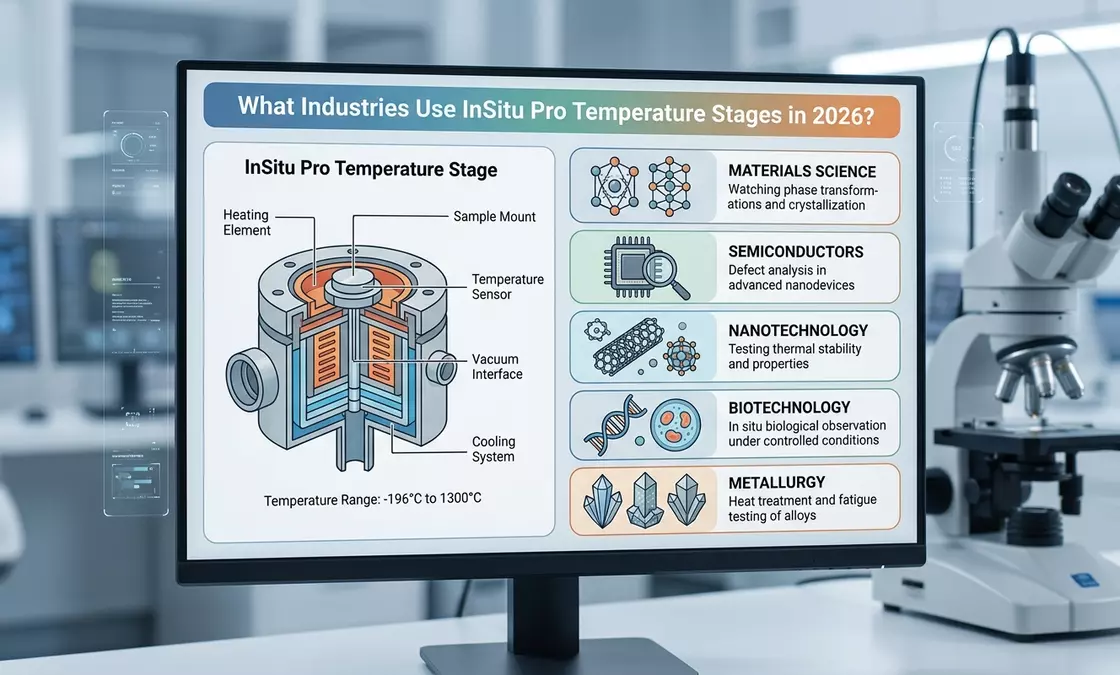
Laboratories continue to change how they study materials. In the past, researchers heated samples and checked the results later. Today, scientists want to observe changes while they happen. Because of this shift, temperature-stage systems have become more important across many industries.
One of the leading solutions is InSitu ProTM from ACS Material. This advanced platform allows researchers to heat samples inside analytical instruments while watching structural changes in real time.
In 2026, many industries will depend on this technology. Companies need better ways to test how materials behave under heat. They also want to understand how temperature affects strength, stability, and performance.
This blog explains which industries use InSitu ProTM temperature stages and why this technology continues to grow in importance.
InSitu ProTM is a temperature-stage system used in laboratory research. Scientists place a sample onto a heating platform inside an instrument such as an electron microscope.
The system slowly increases temperature while maintaining stable imaging conditions.
Because of this setup, researchers can observe several important changes. In addition, they can compare how materials react under different temperature levels. Researchers can observe:
Structural changes
Surface movement
Phase transitions
Defect formation
Material degradation
Unlike traditional heating methods, this platform allows scientists to monitor changes during testing. As a result, they gain a clearer understanding of how materials behave under heat.
Many products work in hot environments. Heat affects materials in different ways. Some materials expand, while others crack or lose stability.
Without temperature-stage testing, researchers may only see the final result after heating.
However, this approach leaves out important details. Therefore, industries look for systems that reveal the full transformation process. Industries use InSitu ProTM because it helps them understand:
When a material begins to change
How heat affects structure
Where weak points develop
Which temperature limits matter
Because of this information, companies can improve products before manufacturing begins.
The electronics industry depends heavily on temperature analysis.
Electronic devices generate heat during operation. Therefore, engineers must understand how materials react under repeated heating.
InSitu ProTM helps researchers study:
Thin film performance
Conductive layer stability
Surface degradation
Heat-driven diffusion
For example, semiconductor layers can shift when exposed to heat. Researchers observe these changes to identify weak points before production. This testing improves the reliability of:
Processors
Sensors
Flexible electronics
Microchips
As electronic devices become smaller, thermal testing becomes more important.
Battery technology continues to grow in 2026. Electric vehicles, renewable energy systems, and portable devices all depend on stable batteries.
However, batteries generate heat during charging and discharge cycles. Because of this, researchers use temperature-stage systems to study:
Electrode stability
Thermal expansion
Structural breakdown
Internal material stress
Scientists can heat battery materials while observing changes directly. This helps identify when damage begins.
As a result, engineers improve battery lifespan, performance, and safety. Furthermore, they can compare how different battery materials respond under similar heating conditions.
Nanotechnology remains one of the largest users of InSitu ProTM. Additionally, nanomaterials react quickly to heat because of their small structure. Even minor temperature changes can alter their behavior. Researchers use temperature stages to observe:
Particle movement
Surface diffusion
Layer rearrangement
Structural evolution
For example, graphene oxide may lose oxygen-containing groups during heating. This process changes conductivity and chemical behavior. Likewise, graphene naoplates may show improved ordering or structural shifting under controlled heat.
Because nanoscale materials change rapidly, real-time observation becomes essential. In addition, researchers can better understand how small structural shifts influence long-term performance.
Aerospace materials operate in extreme environments. Besides, aircraft engines, heat shields, and structural components all face high temperatures. Researchers use InSitu ProTM to test:
Thermal barrier coatings
High-temperature alloys
Lightweight composites
Heat-resistant materials
This testing helps engineers understand how materials respond to thermal stress. For example, researchers can simulate heat conditions similar to flight environments.
As a result, aerospace companies improve safety and long-term performance. At the same time, they gain a clearer view of how materials behave under repeated heating cycles.
Many chemical reactions occur under heat. Catalysts must remain stable while supporting reactions. Researchers use temperature-stage systems to monitor:
Surface restructuring
Catalyst activation
Thermal degradation
Reaction-related changes
Scientists often test catalysts during controlled heating. This allows them to observe how structures evolve over time. Industries use these insights to improve:
Fuel processing
Hydrogen production
Environmental chemistry
Industrial manufacturing
Because reactions happen dynamically, real-time observation becomes valuable.
The biomedical industry also uses temperature-stage testing. Many medical materials experience heat during manufacturing or sterilization. Here are some uses for research studies.
Drug-delivery materials
Bio-compatible coatings
Implant surfaces
Medical nanomaterials
Thermal testing helps scientists understand how materials respond under controlled conditions. Because medical applications require precision, researchers need reliable data. This testing improves performance and long-term stability.
Manufacturing industries continue to adopt advanced materials. Heat treatment remains an important step in production. Researchers use temperature stages to study:
Grain growth
Surface bonding
Material stress
Thermal expansion
This process helps manufacturers improve consistency. For example, metals may behave differently at different heating levels. By observing changes directly, engineers refine production methods.
Environmental research often depends on heat-resistant materials. Scientists test materials used in:
Renewable energy systems
Filtration technologies
Thermal membranes
Carbon-based environmental materials
Heating stages help researchers understand how these materials perform under changing temperatures. As a result, they can improve efficiency and durability. This work supports cleaner technology and sustainable development.
Industries continue demanding stronger and more reliable materials. Traditional heating methods only show the final result after testing. However, temperature-stage systems reveal the full transformation process.
Researchers can identify:
When structural changes begin
How heat affects performance
Where instability develops
How surfaces react over time
Because of these advantages, more industries continue adopting InSitu ProTM. Additionally, companies value the ability to test materials before large-scale production begins. As products become more advanced, a detailed thermal analysis becomes essential.
Imagine a company developing a protective coating for high-temperature equipment. Researchers place the coating onto a temperature stage. As heating begins:
Surface texture changes
Small defects appear
Layers expand
Material stress develops
The researcher records each change during heating. This process creates a detailed thermal profile. Without temperature-stage analysis, engineers would only see the final condition. However, with real-time observation, they understand the full transformation pathway.
InSitu ProTM temperature stages support many industries in 2026. From electronics and batteries to aerospace and nanotechnology, these systems help researchers understand how materials react under heat. They reveal structural changes, improve testing accuracy, and support better material development.
Most importantly, they connect laboratory research with real operating conditions. As industries continue developing advanced materials, temperature-stage technology will remain a key part of scientific testing and industrial innovation.


7.8K articles

2.5K articles

1.4K articles

34 articles









Comment