
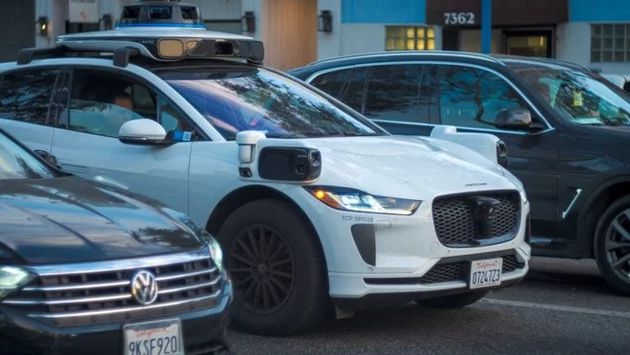
When a massive power outage hit San Francisco on Saturday, December 20, 2025, it didn’t just plunge neighborhoods into darkness—it brought Waymo’s robotaxi fleet to a sudden, chaotic standstill. In a rare public postmortem released Tuesday, the Alphabet-owned autonomous vehicle company detailed how its self-driving cars struggled with dark traffic signals and uncertain road conditions, ultimately forcing a full fleet recall. Users searching “Why did Waymo stop during SF blackout?” now have answers: the vehicles’ safety protocols couldn’t interpret unlit intersections, triggering a citywide retreat that left many stranded mid-ride.
According to Waymo’s report, the core issue wasn’t a software bug or hardware failure—it was a deliberate safety response. When traffic lights went dark across the city, Waymo’s AVs correctly identified the signals as non-operational but couldn’t determine right-of-way with high enough confidence to proceed. Rather than risk unsafe maneuvers, the system initiated “remote assist” requests. However, with human operators unable to override decisions in real time (more on that below), the fallback was to pull over safely or return to base. In dense urban corridors like the Mission or SoMa, that meant dozens of robotaxis idling mid-block or double-parked, sparking viral social media clips that exaggerated the scale of the “meltdown.”
One of the most revealing takeaways from Waymo’s statement is its firm stance on remote human intervention. Despite years of speculation—and competitor Cruise’s past experiments with “teleoperations”—Waymo confirmed it has no plans to deploy human remote drivers to override vehicle decisions during edge cases like blackouts. The company insists its autonomy stack must handle all scenarios without real-time human input, citing reliability and scalability concerns. While this approach upholds its long-term vision, Saturday’s event exposed how brittle that philosophy can be during citywide infrastructure failures.
Riders’ reactions were mixed. Some praised Waymo for prioritizing safety over convenience, while others vented about being dropped off blocks from their destinations in the rain. “I get that it’s a blackout, but my car just… gave up,” tweeted one user. Still, transportation analysts note that no human-driven rideshare service was immune to chaos—Uber and Lyft also saw massive surge pricing and cancellations. What set Waymo apart was the visible uniformity of its response: every vehicle behaving identically, like a synchronized safety dance gone awry.
Waymo subtly shifted some blame to the city itself, pointing out that modern traffic infrastructure lacks standardized protocols for autonomous vehicles during power failures. Unlike human drivers, who can negotiate unlit intersections with eye contact or hand signals, AVs rely on clear, rule-based inputs. The company called for smarter traffic signals with backup power and V2I (vehicle-to-infrastructure) communication—a plea that’s gaining traction among urban planners. The blackout, in other words, wasn’t just a Waymo failure; it was a stress test for an entire city unprepared for an autonomous future.
Despite the hiccup, Waymo says it’s committed to expanding its San Francisco service. The company is already testing new software that better handles “degraded infrastructure” scenarios, including using lidar and mapping data to infer intersection rules even without functioning lights. Regulatory filings suggest a revised rollout plan by early 2026. Importantly, Waymo emphasized that no collisions or injuries occurred during the event—a point it hopes will reassure both regulators and wary residents.
The San Francisco blackout is a textbook example of why autonomous driving remains so hard: real cities are messy, unpredictable, and often operate on creaky infrastructure. Waymo’s cautious retreat may seem underwhelming, but it underscores a critical truth—the safest self-driving car is the one that knows when not to drive. As more cities court AV deployments, this incident serves as a wake-up call: autonomy isn’t just about vehicles. It’s about building resilient ecosystems where technology and infrastructure evolve together. Until then, even the smartest robotaxi might freeze when the lights go out.
Waymo San Francisco Blackout: What Really Hap... 0 0 0 2 2
2 photos

𝗦𝗲𝗺𝗮𝘀𝗼𝗰𝗶𝗮𝗹 𝗶𝘀 𝘄𝗵𝗲𝗿𝗲 𝗽𝗲𝗼𝗽𝗹𝗲 𝗰𝗼𝗻𝗻𝗲𝗰𝘁, 𝗴𝗿𝗼𝘄, 𝗮𝗻𝗱 𝗳𝗶𝗻𝗱 𝗼𝗽𝗽𝗼𝗿𝘁𝘂𝗻𝗶𝘁𝗶𝗲𝘀.
From jobs and gigs to communities, events, and real conversations — we bring people and ideas together in one simple, meaningful space.




Comments