Alerts

-
5 minutes, 15 seconds
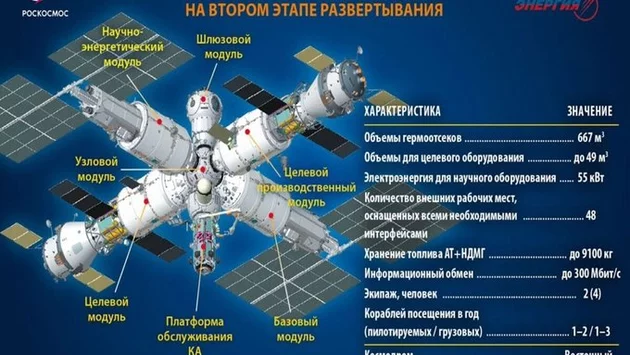
As the International Space Station (ISS) nears its planned retirement in 2030, many wonder what happens to its aging hardware. Russia now has an answer: reuse it. According to recent reports, the country’s upcoming Russian Orbital Space Station (ROSS) may incorporate existing Russian-built ISS modules—even those known for persistent air leaks. This unexpected pivot shifts the narrative from scrapping to recycling, but it also raises new questions about safety, feasibility, and Russia’s long-term space ambitions.
Originally, Roscosmos intended to launch all-new modules for ROSS starting in 2027, aiming for a fully independent orbital outpost by the early 2030s. However, financial constraints and technical delays have prompted a strategic rethink. A senior Roscosmos official recently confirmed that the agency is evaluating whether to detach and repurpose parts of its current ISS segment—including the Zvezda service module and the newer Nauka lab—instead of building everything from scratch. If approved, this would mark one of the most ambitious in-orbit recycling efforts in space history.
Not all ISS modules are created equal. Russia’s segment has faced repeated issues, most notably small but persistent air leaks in Zvezda and Nauka. Engineers have patched them repeatedly, but the structural integrity of these 20- to 25-year-old modules remains a concern. Despite this, Roscosmos appears willing to take the risk—partly out of budget necessity, and partly to accelerate ROSS’s deployment. Reusing these components could shave years off the timeline, offering Russia a faster path to orbital independence amid growing geopolitical tensions.
The move aligns with a broader trend in space exploration: sustainability. With space debris and resource waste becoming critical concerns, reusing hardware isn’t just pragmatic—it’s increasingly responsible. NASA and private companies like SpaceX are also exploring in-space servicing and component reuse. Still, Russia’s approach is uniquely bold, attempting to extend the life of modules never designed for detachment or long-term standalone operation. If successful, ROSS could become a testbed for orbital recycling on an unprecedented scale.
Detaching modules from the ISS won’t be simple. These units were designed to function as part of an integrated station, relying on shared power, data, and life-support systems. Separating them would require new propulsion, navigation, and independent life-support retrofits—costly upgrades that might offset savings from reuse. Moreover, launching replacement parts to support old hardware could introduce new failure points. Experts warn that what looks like a cost-cutting measure on paper may prove more complex in practice.
Russia’s renewed emphasis on ROSS also reflects its desire to assert autonomy in space. Since the invasion of Ukraine in 2022, collaboration with Western space agencies has frayed, accelerating Moscow’s push for self-reliance. Repurposing its ISS segment isn’t just about saving rubles—it’s a symbolic step toward a post-ISS future where Russia operates its own sovereign platform, free from international oversight or partnership dependencies.
If Russia succeeds, ROSS could pioneer a new model for national space stations—leaner, faster to deploy, and built on legacy infrastructure. Yet failure could delay Russia’s orbital ambitions further, forcing reliance on commercial partners or grounding its human spaceflight program. Either way, the world is watching. As the ISS era winds down, the decisions made in Moscow over the next two years will shape not only Russia’s space trajectory but also the blueprint for how nations manage the end of life for massive orbital assets.









Comment