
Alerts
-
3 minutes, 12 seconds
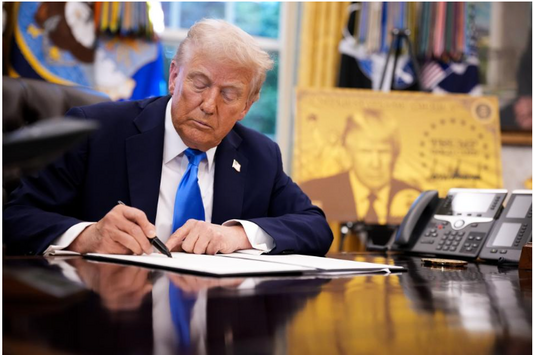
The H-1B visa program was designed to bring highly skilled foreign workers into the United States, particularly in tech and other specialty occupations. But under the Trump administration’s new policy, applicants now face a $100,000 H-1B visa fee, creating significant barriers for workers and employers alike. While tech giants like Google and Microsoft may absorb the cost, smaller businesses and startups risk losing access to top global talent. For the 80% of H-1B holders who are South Asian, this policy not only threatens career opportunities but also amplifies existing vulnerabilities in the workplace.
Experts warn that the fee adds fuel to a growing culture of xenophobia. Manjusha Kulkarni, co-founder of Stop AAPI Hate, explains that anti-immigrant rhetoric has increasingly targeted South Asian workers, often spilling from online spaces into offices and communities. Already, South Asian professionals face heightened risks of workplace discrimination, stereotypes, and harassment. By framing immigrants as a threat to American jobs, the $100,000 H-1B fee reinforces harmful narratives that deepen inequities and hostility toward these communities.
Discrimination against South Asians in the U.S. is not new. Since September 11, 2001, South Asian, Muslim, Sikh, and Middle Eastern communities have endured heightened state surveillance, racist policies, and social hostility. Recent spikes in anti-South Asian hate—linked to public figures like Vivek Ramaswamy, Kamala Harris, and Zohran Mamdani—show how quickly rhetoric turns into real-world harm. India, which accounts for over 70% of H-1B visa beneficiaries, is disproportionately affected by this policy, putting thousands of skilled South Asian workers directly in the crosshairs of political agendas.
The $100K H-1B visa fee is more than a policy—it’s a signal that legitimizes exclusion and discrimination. Organizations must take an active role in protecting employees impacted by such measures. This means denouncing harmful policies, creating inclusive workplaces, and offering resources for affected workers. As Kulkarni emphasizes, these issues do not exist in a vacuum: political actions shape social attitudes, and silence only deepens the damage. By standing against discriminatory measures like the H-1B fee, companies and communities can help reduce harm and foster workplaces where South Asian employees—and all immigrants—can thrive.










Comment