Alerts

-
6 minutes, 11 seconds
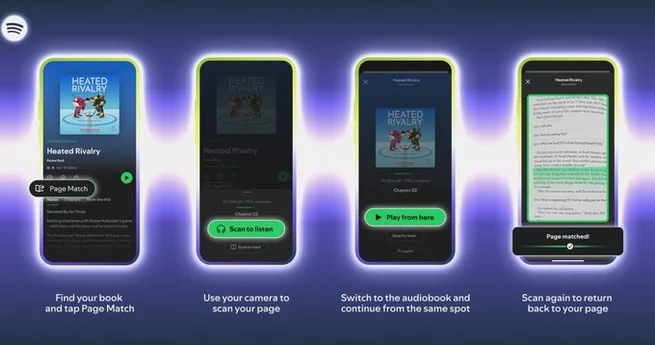
Spotify Page Match is designed for a simple but common question: How do I continue my audiobook exactly where I stopped reading my physical book? The new feature uses a smartphone camera to recognize printed text and instantly jump to the matching spot in the audiobook. Readers no longer need to scroll chapters or guess timestamps. With Page Match, switching between reading and listening becomes nearly effortless, especially for people who mix formats throughout the day.
This launch marks a notable step in how digital platforms are blending physical media with audio experiences, making books more flexible for modern schedules.
Using Page Match is intentionally straightforward. Open the audiobook inside Spotify, tap the Page Match option, and point your phone’s camera at the page you last read. The app scans the visible text and uses computer vision to identify the corresponding passage in the audiobook. Within moments, playback resumes at the right sentence rather than the start of a chapter.
This approach works with physical books and most ebooks viewed on dedicated e-readers. However, ebooks displayed on the same phone won’t scan properly, since the camera cannot read on-screen text. Despite that limitation, the feature covers a wide range of real-world reading habits.
Spotify Page Match works both ways, which is especially useful for listeners who switch back to print. If you have been listening to an audiobook and want to resume reading, the app guides you to the correct location in the physical book. Instead of giving a page number, it prompts you to turn pages forward or backward until the text aligns.
A progress indicator helps narrow things down, and the matching sentence is highlighted on-screen once detected. This avoids confusion caused by different book editions, font sizes, or layouts. It feels more like following directions than performing a manual search.
Early hands-on use shows that Page Match is generally accurate, but speed can vary. In some cases, the app identifies the passage almost instantly. In others, it may take several seconds to process the text and load the correct audiobook segment. Lighting conditions, page clarity, and camera focus all influence performance.
Even with occasional delays, the feature succeeds at its core goal: keeping readers immersed instead of breaking their flow. The slight wait is often shorter than manually scrubbing through audio tracks or flipping pages repeatedly.
At launch, Spotify Page Match supports most English-language audiobooks available on the platform. Spotify has confirmed plans to expand coverage over time, likely including additional languages and a broader catalog. This phased rollout suggests ongoing improvements rather than a one-off experiment.
For readers who consume popular or newly released titles, compatibility is unlikely to be an issue. As the system learns from more scans, accuracy and speed are also expected to improve.
Many people don’t consume books in a single format anymore. A chapter might be read at home, continued through headphones during a commute, and picked up again in print before bed. Page Match recognizes this reality and removes friction from switching formats.
Instead of forcing readers to choose between physical books and audiobooks, Spotify positions them as complementary experiences. This flexibility encourages more consistent reading habits and makes long books easier to finish.
Page Match reflects a broader trend toward context-aware media. Rather than treating audiobooks as isolated files, Spotify integrates them into a reader’s real-world behavior. The camera becomes a bridge between paper and audio, making the transition feel natural rather than technical.
This kind of feature also signals where audiobook platforms are heading. Convenience, continuity, and personalization are becoming just as important as catalog size or pricing.
Spotify has not announced specific timelines for expanded language support or additional refinements. Still, the current version already delivers practical value. As computer vision improves and more data becomes available, Page Match could become faster, smarter, and more widely compatible.
For now, it offers a meaningful upgrade for readers who move between formats. By letting physical pages and audiobooks stay in sync, Spotify Page Match quietly reshapes how stories fit into busy lives.










Comment