
Alerts
-
4 minutes, 28 seconds
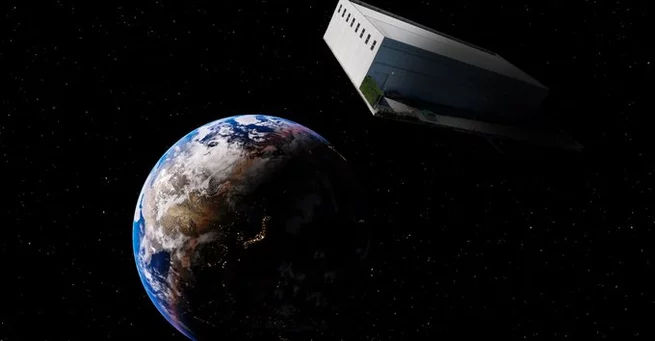
Tech billionaires are taking their love of space beyond exploration, eyeing orbit as the next frontier for AI data centers. In 2025 alone, six massive data center proposals emerged, each requiring gigawatts of energy. On Earth, these centers demand land, water, and electricity, while producing limited jobs and increasing pollution. The idea of placing data centers in orbit, powered by solar energy, promises to solve some of these challenges—but scientists warn it won’t be simple.
Elon Musk, Jeff Bezos, Sundar Pichai, and Eric Schmidt have expanded their space ventures to include orbital AI operations. Startups like Aetherflux are planning satellite-based data centers, while established companies are forming partnerships: Google and Planet, Nvidia and Starcloud. China and Europe are joining the race, launching supercomputer satellites to process data in orbit. Space is no longer just a “cool” project—it’s a commercial playground for AI powerhouses.
The main advantage of orbital data centers lies in solar energy. Satellites in sun-synchronous low Earth orbit can access near-constant sunlight, theoretically powering AI workloads without relying on terrestrial electricity. Google’s Project Suncatcher plans to launch 81 satellites, each equipped with TPU chips, interconnected via lasers instead of wires. This design aims to create a floating, high-performance AI cluster one kilometer square in size.
Scientists remain skeptical about the feasibility of these orbital ambitions. Astronomer Jonathan McDowell warns that launching satellites is expensive, and maintaining clusters in close formation is unprecedented. Each satellite must avoid collisions, using fuel for maneuvering. With millions of pieces of space debris orbiting Earth, even minor malfunctions could create cascading failures.
Space is crowded. Experts note that satellites in popular orbits like sun-synchronous paths face millions of fast-moving debris fragments. Google’s 81-unit fleet would need to move collectively to avoid collisions, a challenge far greater than individual satellite maneuvers. For context, 8,300 Starlink satellites executed over 140,000 avoidance maneuvers in the first half of 2025 alone.
Google plans to test orbital AI with two prototype satellites in 2027. The final constellation size will depend on test results and funding. According to Jessica Bloom, a Google astrophysicist, the current 81-satellite plan is illustrative. Adjustments will follow based on real-world performance, making cautious optimism the guiding principle for these pioneering space data centers.
While orbital data centers promise unlimited energy and potential new computing paradigms, the risks are immense. Close-proximity satellite clusters increase the chance of catastrophic failure, while high costs and space debris add uncertainty. Critics argue that these ventures may be driven more by prestige and hype than necessity, echoing the long-standing tension between innovation and practicality in space exploration.
Despite skepticism, billionaires and AI companies are pushing forward. Orbital data centers could redefine computing, unlocking new possibilities for AI-powered applications while reducing Earth-bound energy consumption. Whether the vision becomes reality or a cautionary tale remains to be seen—but one thing is clear: the race for space-based AI has officially begun.










Comment