Alerts

-
6 minutes, 55 seconds
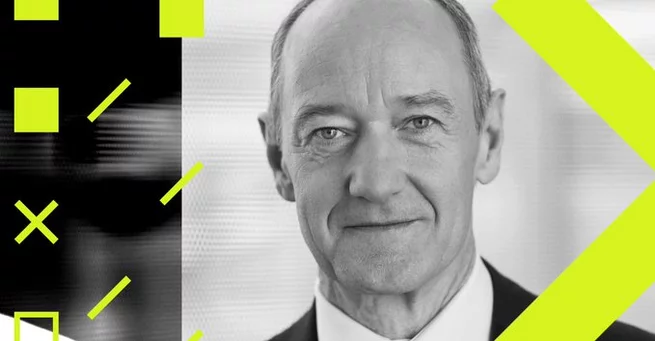
Siemens CEO Roland Busch is on a mission that raises big questions many people are already searching for: What does full automation really mean, how far can AI go inside factories, and what happens to workers along the way? Speaking about the future of industry, Busch outlines a vision where artificial intelligence connects machines, software, and decision-making into one seamless system. The goal is not just faster production, but smarter operations across entire supply chains. As automation expands beyond machines and into digital workflows, Siemens wants to sit at the center of that transformation.
Siemens is one of the world’s most influential industrial companies, even if it rarely grabs public attention. Its technology quietly powers factories, transportation systems, energy grids, and large commercial buildings across the globe. From industrial software to control systems and advanced hardware, Siemens provides the backbone that helps other companies operate efficiently. With hundreds of thousands of employees worldwide, the company touches nearly every sector of modern industry. That scale gives Siemens unusual influence over how automation evolves.
Running a company as vast as Siemens is anything but simple. The organization is divided across industries, regions, and technologies, all of which must coordinate smoothly to deliver results. Busch has emphasized that this complexity is not accidental but necessary for managing global industrial systems. Each division focuses on a specific part of the automation puzzle, from factory floors to digital twins and data analytics. Together, they form an ecosystem designed to scale AI-powered automation worldwide.
Automation at Siemens no longer stops with machines assembling products. Busch describes a future where AI also manages planning, procurement, accounting, and logistics. These systems analyze data upstream and downstream of production to decide what should be built, when it should be built, and how resources should be allocated. By linking physical manufacturing with digital decision-making, Siemens aims to create a fully optimized industrial loop. This approach promises efficiency gains that traditional automation could never reach.
In Busch’s view, AI-powered factories represent a near-ideal state of industrial operations. Machines communicate in real time, supply chains adjust automatically, and production bottlenecks disappear before humans even notice them. The result is smoother output, lower waste, and faster responses to market demand. For manufacturers facing rising costs and global competition, this vision is extremely appealing. Siemens believes its technology can make that future practical, not theoretical.
Despite the efficiency gains, automation at this scale sparks serious concerns. Critics worry that AI-driven factories could eliminate entire categories of jobs, especially roles tied to routine decision-making. Even workers who remain employed may find their autonomy reduced, acting more as operators than decision-makers. Busch acknowledges these fears but argues that automation historically creates new roles even as it removes old ones. The challenge, he says, lies in reskilling workers fast enough to keep pace with technological change.
Automation does not exist in a vacuum, and Busch frequently connects it to global trade and economic policy. Advanced factories can reduce reliance on low-cost labor, reshaping where goods are produced. This shift has implications for tariffs, supply chain resilience, and national industrial strategies. Siemens sees automation as a way for countries to strengthen domestic manufacturing while remaining competitive globally. In an era of economic uncertainty, that argument carries significant weight.
For Siemens, automation is not just a product strategy but a long-term survival plan. Industrial customers are demanding systems that are faster, smarter, and more adaptable than ever before. By investing heavily in AI-driven automation, Siemens aims to lock in its position as a foundational player in global industry. Busch believes that companies unable to automate at scale will struggle to compete in the coming decade. That belief is driving aggressive innovation across the company.
The future outlined by Siemens CEO Roland Busch is both exciting and unsettling. AI-powered automation could unlock unprecedented efficiency and economic growth. At the same time, it forces governments, companies, and workers to rethink education, training, and job design. Whether this future feels utopian or dystopian may depend on how well societies manage the transition. What is clear is that Siemens intends to lead the shift, not follow it.
As AI continues to blur the line between physical and digital work, Siemens’ strategy offers a glimpse into where global industry is headed. Busch’s vision of fully automated systems challenges long-held assumptions about factories, labor, and productivity. The debate around these changes is only beginning, but the technology is moving fast. With Siemens pushing hard on automation, the future of industry may arrive sooner than many expect.










Comment