
Alerts
-
7 minutes, 17 seconds
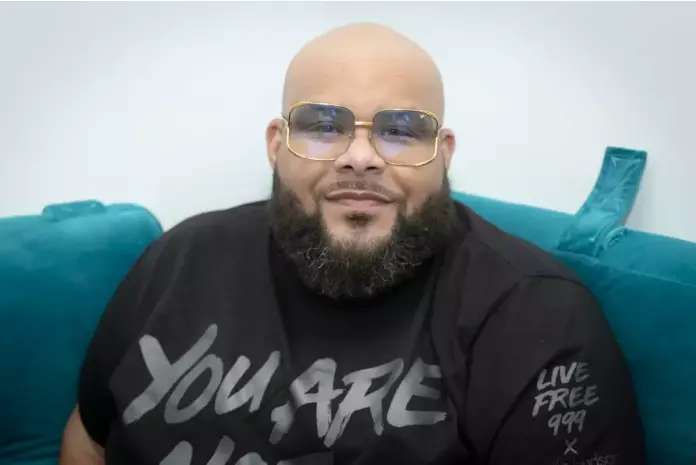
Sergio Hudson, the designer who dressed Michelle Obama and Kamala Harris for the 2021 inauguration, has spent a decade building influence by backing people others overlooked. His front row tells the story: creators who return season after season, posting his ready-to-wear for free, are turning down paid work elsewhere to do it.
“They have bigger brands that’ll pay them a lot of money to do the things that they do for me for free,” Hudson said the morning before his Spring/Summer 2027 show. “Don’t tell nobody that.”
Most managers would call that loyalty and move on. It is something more useful. Hudson did not build his network by reaching up. He built it by being the first person to take seriously the people everyone else was looking past.
Millennials came up on a specific set of instructions: build a personal brand and find a mentor above you. Every coffee was a step toward the next title. That playbook produced professionals who are good at being noticed and surprisingly bad at noticing anyone else.
Now the same generation runs the teams, and the numbers are not flattering. Gallup’s 2026 State of the Global Workplace puts global employee engagement at 20 percent, the lowest reading since 2020, and manager engagement at 22 percent, down from 31 percent in 2022. Disengaged managers do not sponsor anyone. They process people.
The gap lands hardest on employees who already had the least access. Research published in Harvard Business Review found that 20 percent of white employees have a sponsor at work—someone senior who actively advocates for their advancement. Among Black employees, the figure is 5 percent. Talent is not the constraint. Being seen is.
Hudson’s answer to that gap did not require a title or a budget. When asked how creators like Jackie Aina and Jenee Naylor became fixtures at his shows, he did not describe a campaign. “I would say that’s all due to PR and building those relationships,” he said. Over enough seasons, the transaction dissolved. “We built a personal relationship now, so it’s more than just creator to brand.”
Then he said the part most executives would keep off the record. “That’s why we have a lot of creators of color that we work with, because I feel like they get looked over.” He pointed to Aina, one of the most influential beauty creators of the past decade. “If Jackie were a white woman, there would be more explosive energy around her than there is, because what she’s done is really blaze a trail for thousands of creators to come after her. That’s why we show them the love that they deserve, and that’s how we get those relationships.”
His read on the creator economy matches the workplace data almost point for point. A 2021 MSL study of more than 400 U.S. influencers found a 35 percent pay gap between white and Black creators, and nearly half of Black creators said race had contributed to an offer below market value. The concentration has only tightened since. CreatorIQ’s 2025 report found the top 10 percent of creators collected 62 percent of all payments, up from 53 percent two years earlier.
Undervalued talent is everywhere in both economies. Hudson simply chose to be the one who valued it first.
There is a business case underneath the generosity, and he does not pretend otherwise. “When a woman feels seen by a brand, they tend to do more,” Hudson said.
Every manager who has ever wondered why one team runs on discretionary effort while another does the minimum has been circling that sentence. A paycheck buys a deliverable. Sponsorship buys the extra draft, the unprompted fix, the colleague who defends your project in a meeting you were not invited to. Hudson’s creators are not being exploited when they post him for free. They are spending reach that other brands underpay for on the person who paid attention before it was profitable.
The mechanism works the same way inside a company. The analyst nobody staffed, the coordinator whose ideas keep getting attributed to someone louder, the new hire with the wrong pedigree and the right instincts: those are the people whose loyalty is still available, because nobody else has claimed it. Sponsoring them costs a manager some social capital in the short term. It returns the kind of alliance that survives a reorg.
Hudson knows the mechanism from the other side, because he was once the overlooked party. When he left school in 2005 and went straight into starting a label, the only credit he could get was a Capital One card with a $500 limit. “That little $500 card was able to fund the fabric for my first collection out of college,” he told me. He would buy the fabric, “hope and pray that somebody buy a piece to be able to pay the bill,” and repeat.
What kept him loyal was not the limit, but how the relationship behaved when he could not perform.
“As a designer, you go through where you don’t have money, you can’t pay the bill, and they’ve never canceled my card,” he said. He carried balances for six to eight months at a stretch without his limit being cut. When a financial rough patch left him unable to make a car payment during the pandemic, the same bank pushed it to the end of the loan. “That was so helpful to me as a young creative coming up. I’m in a different financial place right now in my life, but I wouldn’t be here if I didn’t have that time.”
Ami Vedak, Managing Vice President of Business Cards and Payments at Capital One, spent about eight years running her family’s small business before she joined the bank, and she describes the underwriting philosophy in terms that sound less like risk management than like patience.
“We understand that some small business owners might have had a hiccup in the past,” she told me the same morning. “Whether it’s a small business owner who has excellent credit or one who’s had a hiccup in the past, our portfolio is designed to help each of those customers grow in the way that makes sense for them.” Twenty-one years after the $500 card, Capital One Business presented Hudson’s New York Fashion Week show. Vedak called it “a great proof point of our support of the creative industry” and said that “partnering with somebody who has this incredible vision, who has brought something amazing to life,” is what the bank means when it talks about walking alongside a business rather than merely financing one.
An executive would say that, and a bank has every commercial reason to sponsor a designer once he is dressing first ladies. The part that matters for this column is the sequence. The relationship extended patience to a 20-something with no track record two decades before the show sponsorship became a marketing story. Institutions and managers alike tend to sponsor people once they are already safe bets. The ones that sponsor earlier are the ones people never leave.
Hudson is an elder millennial who built through the 2008 recession, a pandemic, and the collapse of the fashion calendar, and he has been unusually public about the low years. I asked what that candor got him. “Relatability,” he said. “So many people come to me like, oh wow, I had the same struggle.” The speaking invitations followed. As for the cost, he shrugged. “I haven’t had much drawback from that publicly.”
It is the same instinct running in every direction. Because he showed the struggle, people saw him. Because someone extended him patience before it paid, he stayed. Because he saw people the industry ignored, they show up. He is now executive producing a documentary on Patrick Kelly, the Black designer who conquered Paris in the 1980s and whose legacy the industry nearly let disappear, which is the pattern one more time.
The lesson for anyone managing a team in 2026 is not to be nicer. It is to notice earlier. The people you sponsor before the org has decided they matter are the ones who will do more than the job requires, and they will do it long after the budget that could have bought them is gone.










Comment