Alerts

-
4 minutes, 6 seconds
As voters approach the 2026 midterms, the economy is their top concern, while a strong military also remains a priority. The debate is sharpened by controversy over U.S. engagements in the Middle East, Ukraine, Taiwan and elsewhere, alongside warnings that isolationist sentiment is rising.
Congress has yet to approve the administration’s record $1.5 trillion defense request for fiscal 2027. A continuing resolution passed on September 1 maintains current funding only through December 11, leaving lawmakers a temporary deadline. The proposal would raise service members’ pay and fund munitions, planes, tanks and ships, while expanding multiyear munitions contracts and encouraging long-term supply-chain investment. Some officials and Republicans have questioned the increase; Senator Rand Paul calls it fiscally irresponsible. Defense Secretary Pete Hegseth has also said the military will cut 20% of its generals and admirals.
Overseas commitments are under scrutiny, too. The U.S. withdrew troops from Iraq under a 2024 agreement, and a canceled deployment and withdrawal reduced its presence in Europe. The administration says Europeans should take primary responsibility for Europe’s defense. Supporters of a narrower role cite the need to focus on domestic concerns and limit costly commitments; critics argue that pulling back could weaken U.S. and allied interests. Policy analysts have also urged narrower commitments in Asia and a reduced U.S. presence in the Gulf under certain conditions.
The Department of Defense is one of the nation’s largest employers, with almost 3 million military and civilian employees, including service members and federal employees worldwide. The aerospace and defense industry supports roughly 2.1 million U.S. jobs, nearly half of them in defense. The defense budget helps pay service members and federal employees, as well as employee benefits and health care.
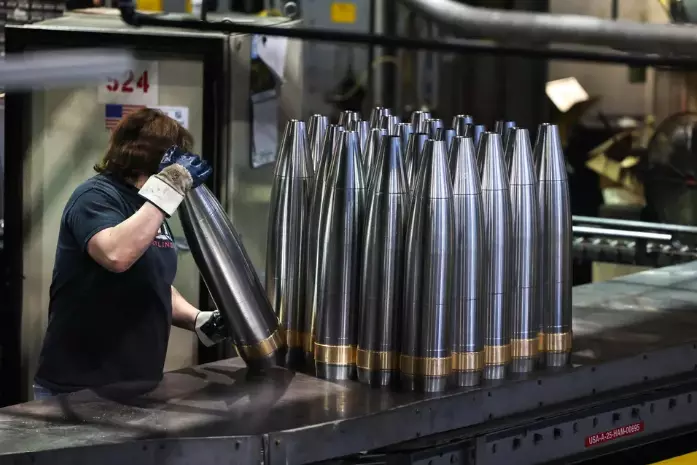
Defense manufacturing also depends on specialized, skilled workers and can provide high-paying jobs. Firms, manufacturing plants, and military bases employ thousands of Americans, while defense activity helps support local economies. New investments can bring additional production and jobs to communities: Avio USA announced plans to invest more than $500 million in a solid-rocket-motor facility in Pittsylvania County, Virginia, with more than 1,000 jobs expected. Lockheed Martin announced an investment of more than $60 million to double the size of its Archbald, Pennsylvania operation and create more than 700 jobs, while expanding munitions and components production in Jessup.
These projects illustrate how defense spending can link national requirements with local employment and industrial capacity. Programs such as the Defense Civilian Training Corps and Reserve Officers’ Training Corps also prepare Americans for careers with DoD and the military.
U.S. arms sales link security partnerships with domestic production. The State Department reports that total U.S. arms sales reached $331.18 billion in fiscal 2025, including government-to-government Foreign Military Sales (FMS) and licensed direct commercial exports. Of the $104.38 billion implemented through FMS, $75.90 billion was funded by partner nations and international organizations. The Army has also announced plans for a marketplace intended to streamline weapons exports to allies and speed up sales.
That connection is also visible in support for Ukraine. Through the Prioritized Ukraine Requirements List, NATO allies and partners purchase U.S.-made weapons for Ukraine; they have contributed or pledged $6.3 billion through the program. A Center for Strategic and International Studies report examined broader Ukraine-related aid appropriated by Congress between February 2022 and April 2024. Of $113 billion in appropriations, CSIS found that as much as $68 billion was destined to be invested in the United States. As equipment was sent to Ukraine, funding also helped U.S. manufacturers and businesses replenish stockpiles, affecting prime vendors and critical suppliers in 37 states. These figures show how allied purchases and aid can support both security objectives and U.S. suppliers.
Supporters of a larger defense budget argue that U.S. engagement abroad and investment at home reinforce one another: defense spending enhances national security, supports weapons production and stockpiles, bolsters the industrial base, and sustains American jobs. They point to Ukraine assistance as an example: funds for U.S. manufacturers have helped replenish stockpiles with modern technology and new weapons, while supporting vendors and suppliers in 37 states.
Scaling back the budget, supporters warn, could mean less spending on U.S. weapons and stockpiles. It could also affect workers and the broader economy, given the defense sector’s role in employing service members, federal employees, and workers at companies and manufacturing plants across the country. Those consequences are part of the debate over whether a smaller defense budget would serve U.S. interests.
Congress has not approved the administration’s proposed $1.5 trillion defense budget for fiscal year 2027. After the midterm elections, the House and Senate are expected to re-evaluate the request. The continuing resolution that maintains current spending levels runs through December 11, making that deadline a key point in the funding debate.










Comment