Alerts

-
3 minutes, 23 seconds
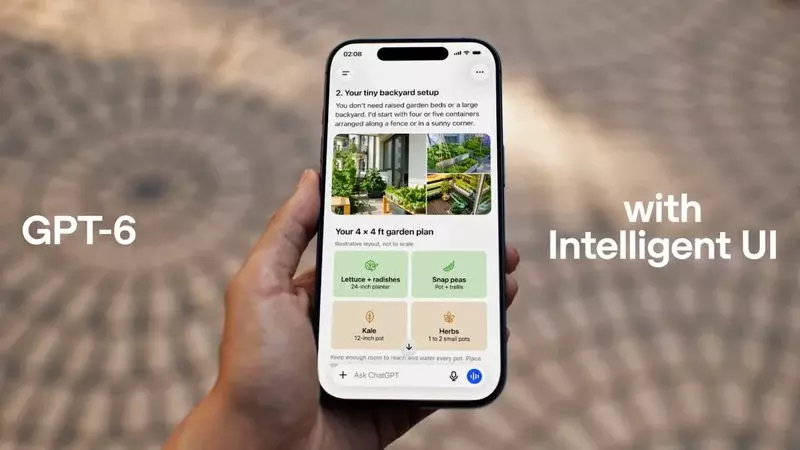
OpenAI has introduced Intelligent UI, a feature that lets ChatGPT respond with fully interactive user interfaces. The company says the change is intended to make everyday answers more visual and help users understand complicated topics.
Rather than relying only on text, responses can include graphics, tappable buttons, forms, charts, diagrams, and other interactive elements. OpenAI’s examples show how the approach can turn an answer into something users can explore or adjust. A recipe widget, for instance, can change ingredient quantities based on the number of guests, while checklists and integrated maps can present information in more practical formats.
Intelligent UI can also provide multiple-choice follow-up questions to help narrow down results. Alongside these interfaces, GPT-6 can quickly create tools for tasks such as splitting a bill, playing small games, or using a calculator. OpenAI says the model can begin answering while it is still thinking, too, allowing responses to start sooner.
Together, these features mark a shift toward answers that combine information with interactive, visual ways to use it. The aim is to make complex subjects easier to follow and give users more direct ways to work with ChatGPT’s responses.
GPT-6 responses can go beyond text, bringing information to life with graphics, tappable buttons, forms, charts, diagrams, and other interactive experiences. These visual elements are intended to make everyday answers more engaging and help users understand complicated topics.
Examples include an interactive recipe widget that adjusts ingredient quantities to match the number of guests, as well as checklists and maps integrated into responses. Multiple-choice follow-up questions can help narrow down results, giving users a way to refine what they are looking for without starting over.
GPT-6 can also create small tools to help complete tasks. These include a bill splitter, a calculator, and small games, turning a request into something users can interact with rather than a static explanation. OpenAI’s examples show how such features can appear directly in the response, alongside the information they support.
Another change is that GPT-6 can begin answering while it is still thinking, which OpenAI says can make responses quicker. Combined with interactive elements, this means an answer may start arriving before the full response is complete, while offering practical ways to explore or use the information.
OpenAI says Intelligent UI is built around a library of native, streamable components and a compiler that processes the interface as the model generates it. Rather than waiting for a complete response before presenting a fixed block of text, ChatGPT can produce interface elements as the answer takes shape.
Those components can turn a response into a visual, interactive experience. Depending on the question, ChatGPT may include graphics, tappable buttons, forms, charts, diagrams, or other interface elements. OpenAI’s examples include a recipe widget that adjusts ingredient quantities based on the number of guests, as well as checklists, integrated maps, and multiple-choice questions that help narrow down results.
The same approach can also create small tools for practical tasks, including a bill splitter, a calculator, or a game. GPT-6 can begin answering while it is still thinking, too, so users may see a response take shape sooner. Together, the streamable components and compiler let the interface develop alongside the model’s answer, making it possible to move beyond static text when a more interactive format is useful.
GPT-6 with Intelligent UI is rolling out first to ChatGPT Plus, Pro, Business, and Enterprise users. Access for Free and Go users is planned for the following day, extending the rollout to those tiers.
The model available depends on the plan: Plus, Pro, Business, and Enterprise users get GPT-6 Sol, while Free and Go users get GPT-6 Luna. The rollout applies to the Chat tab, where users can try GPT-6 with Intelligent UI.
GPT-6 access is limited to that tab. Models for Work and Codex are not changing as part of this rollout, so the update does not extend GPT-6 to those areas.









Comment