Alerts

-
3 minutes, 30 seconds
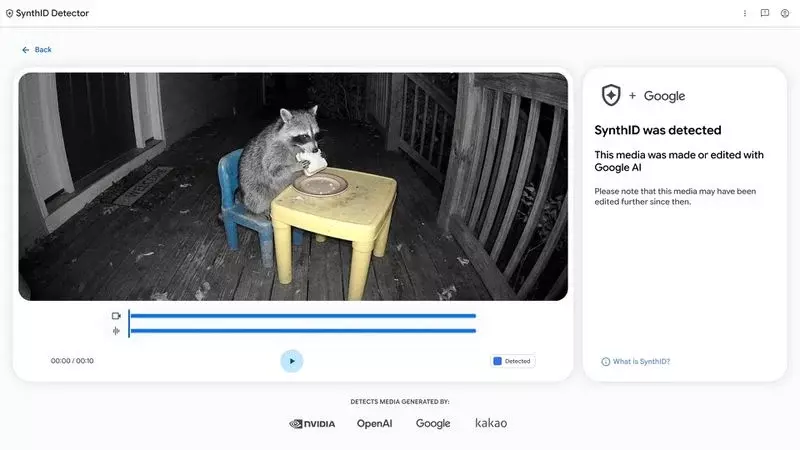
Google has made SynthID Detector available to everyone, expanding access beyond the media members who first received it last year. The tool is now available worldwide in English, giving users a way to check whether media carries a SynthID watermark.
SynthID Detector is a website where users can upload a photo, video, or audio file for analysis. Google’s technology looks for digital watermarks embedded in AI-created content. These marks are not visible to people, but the detector can identify them. Users must sign in to use the site.
The public launch makes the detector accessible beyond its initial media-focused rollout, but it is not a general-purpose AI checker. It can only identify content that uses SynthID, and it cannot distinguish media created entirely by AI from media edited with AI.
Google says SynthID checks are also integrated into Search, Gemini, and Chrome, offering alternatives to using the standalone detector. The company’s release brings its watermark-checking tool to a worldwide audience while keeping its results tied specifically to SynthID technology.
SynthID Detector is a website where you can upload a photo, video, or audio file to check whether it contains a SynthID watermark. The watermark is embedded in AI-created content and is not visible to people, but Google’s tool can detect it.
To use the website, you must sign in. Once you upload a file, SynthID Detector checks for the hidden watermark that identifies media as AI-generated. The tool is available worldwide in English.
A positive check means the media uses SynthID; it does not make the website a general-purpose AI detector. It can identify only content marked with SynthID technology, and it cannot distinguish between media created entirely by AI and media that was edited using AI. Google says the detector can identify SynthID-marked media generated using AI from Google, OpenAI, Nvidia, and Kakao. Apple plans to support SynthID later this year.
SynthID Detector can identify media generated using AI from Google, OpenAI, Nvidia, and Kakao. This gives the tool coverage beyond content made with Google’s own AI systems, provided the media uses SynthID technology.
Apple also plans to support SynthID later this year. That would add Apple-generated media to the list the watermark system can identify once support is available.
The detector works by checking for a SynthID watermark, which is embedded in AI-created content and is not visible to people. It can check uploaded photos, videos, and audio files, but it is not a general-purpose AI detector: media created with AI that does not use SynthID is outside its stated scope. A result therefore depends on whether the relevant content carries the watermark, not simply on whether AI was involved in making it.
SynthID Detector also cannot distinguish between media that was created by AI and media that was edited using AI. Its ability to identify supported media should be understood in that context: it detects SynthID-marked content, rather than determining every way AI may have contributed to a file.
SynthID Detector is not a general-purpose AI detector: it can identify only media that uses SynthID technology. If a file has no SynthID watermark, the tool cannot establish whether it was created or edited with AI. Google also says the detector cannot distinguish AI-created media from AI-edited media, so a result should not be treated as a judgment about how a file was made.
SynthID watermarks are embedded in AI-created content and are not visible to people, but Google’s detector can check for them. The tool can identify media generated using AI from Google, OpenAI, Nvidia, and Kakao; Apple plans to support SynthID later this year. Its coverage is therefore tied to media using the technology, rather than all AI-made or AI-edited content.
For an alternative to uploading a file to SynthID Detector, SynthID checks are also integrated into Search, Gemini, and Chrome. These options check for SynthID as well, so they do not remove the tool’s underlying limitation: content without a SynthID watermark cannot be identified by these checks.










Comment