Alerts

-
8 minutes, 36 seconds
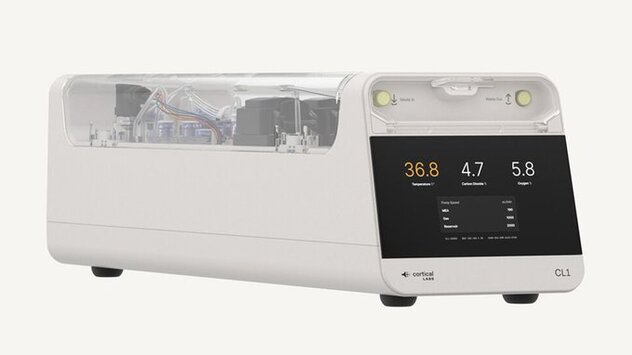
What if you could interact with a real human brain—without stepping into a lab? Thanks to a revolutionary device called the CL1, renting a chip fused with human neurons is now possible. For just $300 a week, Cortical Labs allows developers, researchers, and AI enthusiasts to remotely access a biological computer made with living brain cells. This human brain chip rental isn’t science fiction—it’s already available and promises to change how we study cognition, AI, and synthetic intelligence.
Whether you're a neuroscientist looking to simulate neural responses, an AI startup testing machine learning on organic networks, or simply curious about the edge of computing, the CL1 opens up an entirely new frontier. Here's everything you need to know about renting this powerful hybrid of biology and silicon.
The CL1, developed by Cortical Labs in Australia, is the world’s first commercially available biological computer that can execute real code using human neurons. This system is available as part of their "wetware-as-a-service" model, and for $300 per week, users can access this living, thinking chip over the cloud.
Here’s how it works: each CL1 device contains about 800,000 lab-grown neurons derived from reprogrammed adult cells. These neurons are cultivated on a silicon substrate that integrates electrical inputs, outputs, and life support systems. The environment is carefully maintained—complete with nutrients and temperature regulation—to ensure the neurons stay alive and functional throughout your usage window.
What makes the CL1 revolutionary is its real-time responsiveness. It doesn’t simulate thinking—it actually thinks. Neurons fire and respond within sub-millisecond latency, meaning you can run input-output experiments or observe learning behaviors much like you would in an organic brain.
This system supports simple programmable logic that interacts with the neurons. As Brett Kagan, Cortical Labs’ Chief Scientific Officer, explained: “The CL1 reads information, acts on it, and writes new instructions into the cell culture using fast neural loops.” That’s the kind of biological feedback loop researchers dream about.
The concept of biological computing isn't entirely new, but CL1 is the first to make it remotely accessible and practical for real-world applications. Previously, working with neurons required specialized labs, costly equipment, and deep biology expertise. Now, cloud access democratizes neurobiological research, lowering the barrier for AI developers, cognitive scientists, and even artists to explore how living cells respond to stimuli.
The CL1 builds on Cortical Labs' earlier success with DishBrain, a prototype where cultured neurons learned to play Pong by responding to visual cues in a simulated environment. In that project, neurons adapted their firing patterns based on success and failure—essentially learning from experience, a behavior associated with human cognition.
With the CL1, that kind of biological learning is now scalable and programmable. Imagine teaching neurons to recognize patterns, simulate memory formation, or test new forms of machine learning that mimic brain plasticity. For companies in biotech and AI, it’s a testing ground that fuses neuroscience and artificial intelligence in one compact, real-time system.
Who is this brain chip for? Cortical Labs is targeting a wide range of users, including:
AI startups developing bio-inspired neural networks
Neuroscience researchers studying real-time cellular responses
Biotech companies testing pharmaceutical interactions with live brain cells
Educational institutions exploring neural computation in curricula
Developers and creators looking to experiment with living code
One key area of interest is adaptive computing. With silicon chips approaching physical and power limits, researchers are exploring whether living systems can augment or replace traditional AI processors. The CL1’s capacity for spontaneous adaptation—like real neurons—could offer insights into low-power, high-efficiency computing models.
Another use case? Drug discovery. Since the neurons are real and human-derived, testing how compounds affect their firing patterns could lead to breakthroughs in brain-related disorders. You could simulate early stages of neurodegenerative disease or test behavioral responses to stimuli—all from your laptop.
And let’s not forget education. Imagine a classroom where students can interact with a real mini-brain, watching how it responds to code in real time. That’s hands-on STEM learning at its most advanced.
While $300 a week sounds steep, it’s a fraction of the cost to own the hardware outright. Cortical Labs sells the full CL1 device for $35,000, including the life-supporting components required to sustain the neurons. For labs with ongoing research, that may be the better long-term option.
But for indie developers, schools, or early-stage startups, human brain chip rental is the smarter route. It gives access to the same tech without the overhead, and you can scale usage up or down based on your needs.
The rental service also includes support tools, such as APIs to interact with the chip and visualizations of neuron activity. This makes it easy even for teams without a biology background to start experimenting.
It’s clear Cortical Labs aims to blur the line between biological and digital intelligence, making wetware just as accessible as software.
With the launch of the CL1, Cortical Labs is making a bold claim: the future of AI may not just be about faster GPUs or smarter models—but about combining code with life itself. Renting a human brain chip is more than just a tech novelty—it’s a window into how thinking works at the cellular level.
This could be the beginning of hybrid computing systems where neurons and silicon work together to unlock new types of intelligence—adaptive, emotional, resilient. And at $300 a week, it’s no longer reserved for government labs or billion-dollar companies.
So whether you’re a scientist, developer, educator, or just fascinated by the brain, human brain chip rental is your chance to explore the most advanced intersection of life and machine.










Comment