
-
6 minutes, 15 seconds
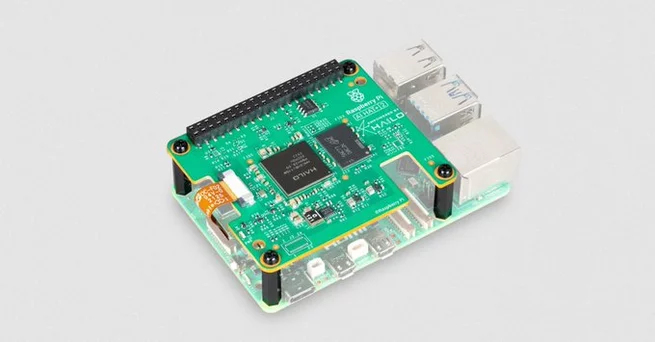
Raspberry Pi AI HAT+ 2 is designed to answer a growing question among developers and hobbyists: can small, affordable computers run generative AI locally without relying on the cloud? The newly launched add-on board makes that possible by introducing dedicated AI hardware and 8GB of onboard memory to the Raspberry Pi 5 ecosystem. Built for on-device inference, the module shifts AI workloads away from the main CPU, enabling smoother multitasking. For makers experimenting with text, vision, or translation models, this add-on signals a major step forward. It also reflects how edge AI is becoming practical beyond research labs.
Raspberry Pi AI HAT+ 2 is an upgraded version of last year’s AI-focused add-on, but the changes are substantial. The board features 8GB of dedicated RAM and a Hailo 10H accelerator capable of delivering up to 40 TOPS of AI performance. That combination allows the add-on to handle inference tasks independently, freeing the Raspberry Pi 5’s Arm CPU for other processes. Unlike earlier versions that focused heavily on image processing, this model is built with broader generative AI workloads in mind. The result is a more flexible platform for running compact language and multimodal models locally.
One of the most compelling aspects of the Raspberry Pi AI HAT+ 2 is its ability to run small generative AI models without an internet connection. Supported models include lightweight language systems such as Llama 3.2, DeepSeek-R1-Distill, and multiple Qwen variants. These models can perform tasks like text generation, translation, and visual description directly on the device. Developers can also train and fine-tune models locally, which is especially useful for privacy-sensitive or offline environments. This capability aligns with the broader shift toward edge computing and on-device intelligence.
Demonstrations shared alongside the launch highlight how the Raspberry Pi AI HAT+ 2 can be used in everyday projects. In one example, a camera feed is analyzed by an AI model that generates descriptive text and answers questions about what appears in the scene. Another demo shows real-time translation from French to English using a compact language model. These examples emphasize practicality rather than theoretical benchmarks. They show how the add-on can support robotics, smart cameras, accessibility tools, and educational experiments without requiring cloud-based AI services.
While the Raspberry Pi AI HAT+ 2 adds impressive capabilities, performance comparisons reveal important trade-offs. Tests indicate that a standalone Raspberry Pi 5 with 8GB of system RAM can outperform the add-on in some supported models. The difference largely comes down to power limits. The Raspberry Pi 5 can draw up to 10 watts, while the AI HAT+ 2 operates under a much lower 3-watt ceiling. That power efficiency makes the add-on suitable for low-energy projects, but it can also constrain peak performance in more demanding AI tasks.
The inclusion of 8GB of onboard RAM is a key selling point, but it may not be a universal advantage. For some users, upgrading to a higher-memory Raspberry Pi configuration could offer better flexibility and faster model execution. The AI HAT+ 2 shines in scenarios where offloading AI tasks improves system responsiveness or power efficiency. However, developers seeking maximum raw performance may find more value in higher-RAM main boards. This makes the add-on best suited for targeted use cases rather than as a default upgrade for every project.
Despite its limitations, Raspberry Pi AI HAT+ 2 represents a meaningful shift in how accessible generative AI has become. It lowers the barrier for experimenting with on-device AI, especially for students, educators, and independent developers. The ability to run, train, and fine-tune models locally encourages learning and innovation without heavy infrastructure costs. It also reinforces the idea that AI does not always need massive data centers to be useful. Small-scale, purpose-built hardware can deliver real-world value.
Raspberry Pi AI HAT+ 2 arrives at a time when interest in local AI processing is accelerating. Privacy concerns, latency reduction, and energy efficiency are pushing developers toward edge solutions. This add-on board fits neatly into that trend by offering a balanced mix of affordability and capability. While it may not replace more powerful systems, it opens doors for experimentation and deployment in constrained environments. For the Raspberry Pi community, it marks another step toward making advanced AI tools approachable and practical.

2.5K articles

1.4K articles

34 articles

28 articles














Comment