Alerts

-
3 minutes, 8 seconds
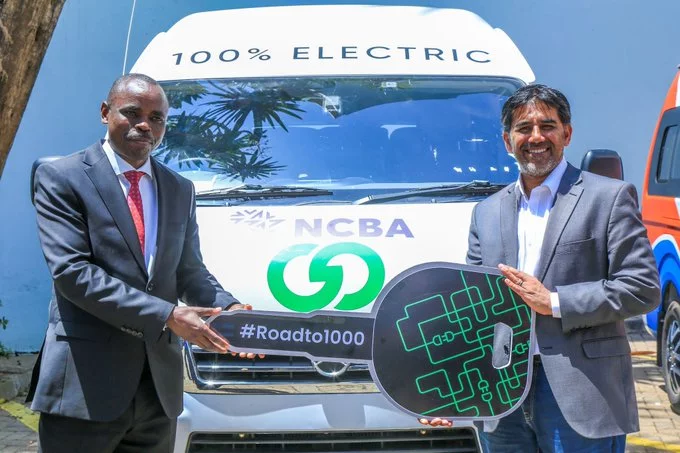
NCBA Bank Kenya and BasiGo Kenya have announced a strategic partnership to finance 1,000 electric vans for Kenya’s public service vehicle (PSV) market. The collaboration is designed to tackle one of the biggest barriers to electric mobility adoption: the high upfront cost of vehicles.
Through this initiative, the two organisations will offer leasing and asset finance solutions, making it easier for PSV operators to transition to cleaner, more affordable electric transport. By spreading the cost over time, the partnership aims to lower the initial financial burden on operators while supporting Kenya’s broader push toward sustainable urban mobility.
This move is expected to accelerate the rollout of electric vans across the country, positioning both NCBA Bank and BasiGo as key players in the region’s green transport transition.
To lower the initial cost barrier for buyers, the partnership introduces flexible financing structures. These are designed to make adoption more accessible without requiring a large upfront capital outlay. The two primary routes are leasing and asset finance, each tailored to different balance-sheet preferences and cash-flow situations.
Both options are intended to remove the financial friction that often delays purchasing decisions, enabling a smoother transition to the new system. By decoupling the technology’s value from its immediate cost, the program aims to make the investment viable for a broader range of organisations, from small operators to larger fleets.
The electric vans are aimed squarely at Kenya’s public service vehicle (PSV) sector, which encompasses the ubiquitous matatus as well as other passenger transport operators. This market is the backbone of urban and inter-county mobility, moving millions of commuters daily. By offering an electric alternative, the initiative seeks to modernise this vital transport segment while addressing its high operational costs.
Key characteristics of this target market include:
The focus is on providing a durable, high-occupancy vehicle that meets the specific demands of Kenyan commuter transport, from congested city centres to busy inter-town highways. This targeted approach ensures the technology is deployed where it delivers the greatest economic and environmental returns.
This initiative is expected to accelerate the adoption of electric vehicles within public transport networks. By lowering the financial barriers to entry, it directly supports the transition away from diesel-powered fleets.
For operators, the shift to electric models offers a dual advantage. Firstly, emissions are significantly reduced, contributing to cleaner air and aligning with urban sustainability targets. Secondly, operators stand to benefit from lower operating costs over the vehicle’s lifespan, driven by reduced fuel expenditure and fewer moving parts requiring maintenance.
Beyond the immediate operational gains, the program aims to demonstrate the viability of electric public transport at scale. This demonstration effect is crucial for encouraging other municipalities and private firms to follow suit, creating a positive feedback loop that strengthens the market for electric buses and charging infrastructure. Ultimately, the initiative supports a more resilient and environmentally responsible public transport system.










Comment