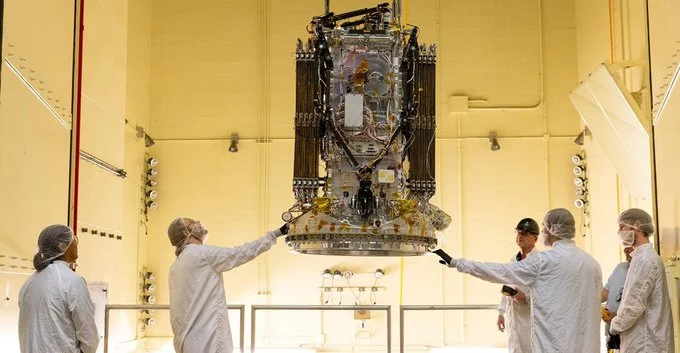
NASA recently launched an emergency mission to stop the Swift Observatory from crashing to Earth. The Swift Observatory, a space telescope designed to study gamma-ray bursts, faced a critical situation when its orbit began to decay faster than expected. Without intervention, the satellite could have burned up in the atmosphere or caused damage upon reentry. This article explains what happened, why it matters, and how NASA acted to save the mission.
What Is the Swift Observatory?
The Swift Observatory is a NASA space telescope launched in 2004. Its primary job is to detect and study gamma-ray bursts—the most powerful explosions in the universe. Swift orbits Earth at an altitude of about 600 kilometers, using its instruments to catch these cosmic events in real-time. Over the years, it has made groundbreaking discoveries, helping scientists understand black holes, star deaths, and the early universe.
Why Did Swift Face an Emergency?
In early 2023, NASA noticed that Swift's orbit was dropping faster than normal. This was caused by increased atmospheric drag, likely due to higher solar activity. Solar storms heat the upper atmosphere, causing it to expand. When this happens, low-Earth orbit satellites like Swift experience more resistance, slowing down and losing altitude. If left unchecked, Swift could have reentered Earth's atmosphere uncontrolled, potentially over populated areas.
The Risk of Uncontrolled Reentry
An uncontrolled reentry is dangerous because the satellite could break apart and debris might reach the ground. While most satellites burn up completely, large pieces can survive. For a mission as valuable as Swift, losing it would also mean missing years of scientific data. NASA had to act quickly.
How Did NASA Save Swift?
NASA launched an emergency mission to boost Swift's orbit. The plan involved using the satellite's own thrusters to raise its altitude. Here’s how it worked:
- Assessment: Engineers calculated the exact orbital decay rate and determined how much fuel was needed.
- Burn Sequence: Swift fired its thrusters in a series of precise burns, each lasting a few minutes.
- Monitoring: NASA tracked the satellite’s new orbit to ensure it was stable and safe.
The operation was successful, raising Swift's orbit by about 20 kilometers. This gives the observatory several more years of life before it needs another boost or is decommissioned safely.
Why This Matters for Space Science
Swift is one of NASA's most productive telescopes. It has detected over 1,500 gamma-ray bursts and helped scientists discover new types of cosmic explosions. Losing it would have been a major setback. The emergency mission shows how important it is to monitor satellite health and act fast when problems arise.
Lessons for Future Space Missions
This event highlights the growing challenge of space debris and orbital decay. As solar activity increases, more satellites will need similar boosts. Future missions should include better fuel reserves and autonomous systems to handle such emergencies. For now, Swift continues its work, thanks to NASA's quick thinking.
What’s Next for Swift?
With its orbit stabilized, Swift is back to observing the universe. NASA plans to keep using it for at least a few more years. The agency is also developing new telescopes, but Swift remains a vital tool. Scientists hope it will catch more rare events, like neutron star mergers, which could reveal secrets about gravity and matter.
How You Can Follow Swift’s Discoveries
You can track Swift's latest findings on NASA's website or through space news outlets. The observatory often announces new gamma-ray burst detections within hours. It’s a great way to stay connected to space exploration without needing a telescope yourself.
In summary, NASA’s emergency mission to stop the Swift Observatory from crashing to Earth was a success. By acting quickly, they saved a valuable scientific asset and ensured it continues to explore the cosmos. This story reminds us that even the most advanced technology needs care and attention to survive in space.














Comment