
Alerts
-
2 minutes, 47 seconds
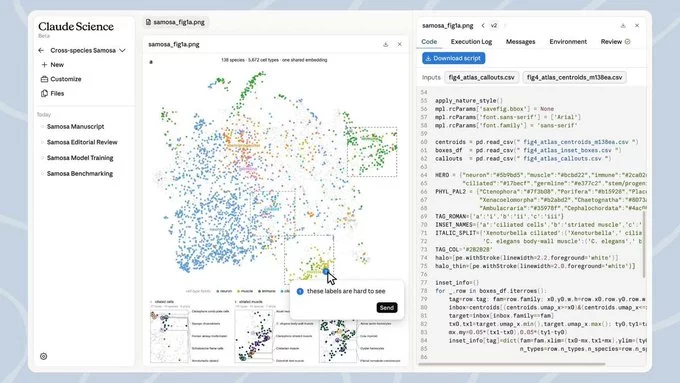
Anthropic has launched a new AI workbench for scientists using Claude, a powerful tool designed to help researchers accelerate their work. This workbench makes it easier for scientists to interact with Claude, Anthropic's advanced AI assistant, to analyze data, generate hypotheses, and write research papers. The main goal is to simplify complex research tasks so scientists can focus on discovery.
In simple terms, the AI workbench is a special interface that lets scientists use Claude more effectively. It includes features like custom prompts, data uploads, and secure handling of sensitive information. This means researchers can ask Claude to help with everything from literature reviews to statistical analysis.
Scientists often deal with large amounts of data and complex problems. Traditional AI tools can be hard to use for specialized research. The Anthropic AI workbench solves this by offering:
This makes Claude a better partner for scientific work, not just a chatbot.
Claude can help scientists quickly summarize hundreds of papers, find relevant studies, and highlight key findings. This saves hours of manual reading.
With the workbench, scientists can upload datasets (like spreadsheets or lab results) and ask Claude to spot patterns, run statistical tests, or create visualizations. For example, a biologist could ask Claude to analyze gene expression data and suggest possible correlations.
The AI workbench can suggest new research ideas based on existing data. Claude might say, “Based on these results, a next experiment could test the effect of temperature on enzyme activity.” This helps scientists think outside the box.
Claude can help draft sections of research papers, abstracts, or grant proposals. It can also check for clarity, tone, and consistency. This is especially useful for non-native English speakers.
The launch of the Anthropic AI workbench is a big step forward. It lowers the barrier for scientists to use AI in their daily work. Even researchers with no coding experience can benefit. The tool is designed to be intuitive and safe.
For example, a climate scientist could use the workbench to model weather patterns, while a chemist might use it to simulate molecular reactions. The possibilities are vast.
If you are a scientist interested in using the AI workbench, here are a few tips:
Anthropic plans to update the workbench regularly, adding new features based on feedback from researchers.
The Anthropic AI workbench for scientists using Claude is a practical innovation. It makes AI more accessible, secure, and useful for research. Whether you are a biologist, physicist, or social scientist, this tool can help you work faster and smarter. As AI continues to evolve, tools like this will become essential in labs and universities worldwide.









Comment