Alerts

-
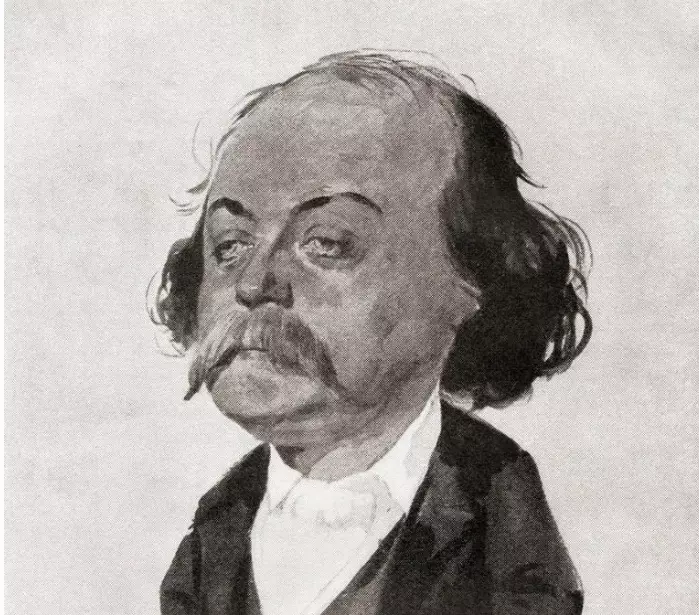
In a private notebook entry from around 1840, a young Gustave Flaubert—then roughly eighteen years old and years away from writing Madame Bovary—wrote a striking reflection on happiness. “The secret of being happy consists of knowing how to enjoy yourself—enjoy being at table, in bed, enjoy standing up, sitting down, enjoy the palest ray of sunshine, the slightest bit of landscape: in other words, love everything, so that to be happy you must already be happy. No bread without leaven.”
The passage remained unpublished until 1965, eighty-five years after his death. But what makes the quote especially meaningful is its context. The surrounding pages of that same notebook reveal a young man in real distress—aching with loneliness and writing openly about how much happier he would feel if only he could love and be loved in return. This was not the cheerful musing of a carefree teenager. It was the hard-won insight of someone at a low point, trying to learn a new way of relating to the world in the hopes of becoming happier.
Flaubert’s words point to an idea that feels remarkably modern: happiness is less a stroke of good fortune and more a skill you can deliberately develop. Roughly two centuries later, psychologists have given this skill a name—savoring.
When researchers talk about savoring, they borrow from an everyday experience: the way you might slow down to truly enjoy a delicious meal. Savoring means intentionally focusing your attention on a positive experience while it is happening, with the goal of stretching it out, deepening your appreciation of it, and drawing more enjoyment from it.
It sounds simple, but savoring is often confused with two closely related concepts:
Savoring shares elements of both, but it is distinct in one key way: its purpose is to amplify the present moment. When Flaubert wrote about loving the palest ray of sunshine or the slightest bit of landscape, he was not counting his blessings in a detached way. He was absorbing himself in them—pressing into the experience so he could appreciate it more deeply than he ordinarily would.
That distinction matters. Gratitude can remind you what you have; mindfulness can ground you in what is. But savoring invites you to turn up the volume on what is good, right now, and let it register fully. It is an active, deliberate practice—one that Flaubert, in his loneliness, seemed to sense intuitively long before psychology had a term for it.
Dr. Travis Bradberry, a leading expert on the subject, defines emotional intelligence as “your ability to recognize, understand, and manage your own emotions, as well as the emotions of other people, in order to be more effective in your relationships and life.” This framework is built upon four distinct core skills that work in tandem:
Flaubert’s concept of “savoring” aligns directly with the second pillar: self-management. In our daily lives, it is all too easy to treat happiness like a weather report, passively waiting for the sun to break through the clouds. However, as Flaubert suggests, even the “palest ray” of light already streaming through the window holds immense value if you train yourself to savor it fully.
This notion of savoring is critical to understanding self-management because most conventional advice on the topic focuses on a narrow scenario: working through difficult, negative emotions such as anger, anxiety, and overwhelm. While important, that approach represents only a fraction of what emotional regulation can achieve. Flaubert’s insight shines a light on the neglected other half of the equation. How do we regulate a positive feeling to make it more intense, meaningful, and long-lasting? To gain a baseline understanding of your own proficiency in this area, psychologists often recommend taking a validated emotional intelligence self-assessment, which can offer valuable insight into your current strengths and areas for growth.
It is common for the final line of Flaubert’s quote to be omitted, but it was deliberately included here because it contains the key to the entire message. Flaubert writes, “There’s no bread without leaven.” In baking, leaven—often called a starter—is a living culture of yeast and bacteria that a baker keeps alive and carefully folds into fresh dough. The point is simple: you cannot produce a proper loaf of bread from just flour and water alone. You must introduce a portion of your last successful batch into the new one. In essence, bread makes bread.
Flaubert is describing a mechanism by which happiness begets more happiness. This is not merely poetic sentiment; it is a phenomenon that has been tested empirically. Psychologists Fredrickson and Joiner studied this theory with a sample of 138 participants and found compelling evidence for a positive feedback loop. Their research demonstrated that positive emotion predicted better broad-minded coping strategies. Simultaneously, they found that broad-minded coping predicted more positive emotion. In short, the two elements fed into each other, creating an upward spiral of well-being.
The ten seconds you spend actively searching for a way to appreciate that pale ray of sunshine become the “starter” for future moments of happiness. This mechanism acts as a powerful unlock for self-management. Instead of focusing solely on quelling negative emotions, you can lean into the positive ones—no matter how small they seem—and begin to cultivate a self-sustaining, positive cycle of emotions that builds momentum over time.
Flaubert was a teenager when he wrote those words to himself, reflecting on an ability he had not yet developed. But his observation about the path to that capacity was remarkably accurate. The ability to enjoy your life is not a prize that arrives after everything falls into place. It is a skill you can develop, and with practice, it creates a positive ripple effect that grows over time.
This week, make a deliberate effort to notice a small point of light in your day and direct your full attention to it. It may not be dramatic, but by acknowledging it and giving it genuine appreciation, you begin the process. That simple act of focusing on what is good is all it takes to start applying this principle in your daily life.
Kevin Kruse is the Founder and CEO of LEADx, a company that focuses on emotional intelligence training. In addition to his leadership role, Kevin is a New York Times bestselling author. His work centers on helping individuals and organizations build the skills that lead to personal and professional growth.
If you are interested in understanding your own emotional intelligence, Kevin offers a free EI Assessment on his website. The assessment is psychologically validated and provides a score breakdown across the four core skills of emotional intelligence, giving you a clear picture of your strengths and areas for development.










Comment