Alerts

-
4 minutes, 39 seconds
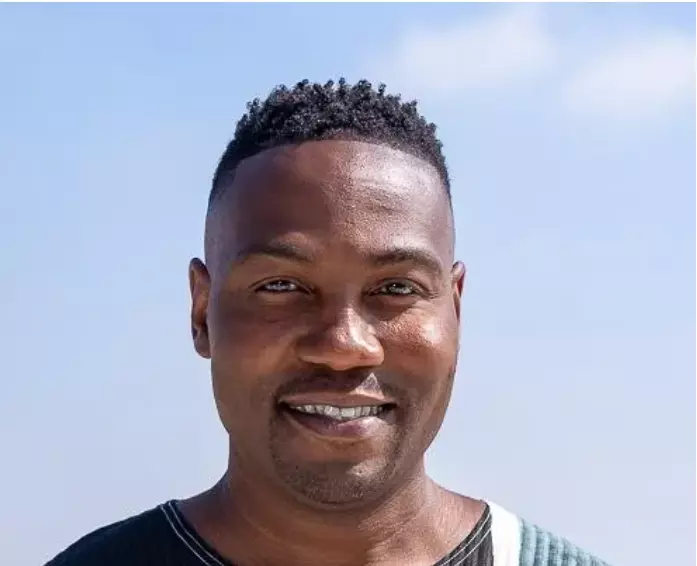
Sean Green’s career has moved from a starring role in a hit music video to founding an AI company and investing in startups. His path offers a practical lesson for millennials whose careers have taken unexpected turns: experience that seems unrelated may build skills and relationships that matter later.
Green is the founder and CEO of Arternal, an AI-powered sales and inventory platform for galleries, dealers and auction houses. He is also a co-founder and general partner at Black Operator Ventures, a seed fund that closed its first $20 million fund in 2021.
His story begins about two decades ago, when he was a student at the University of Western Ontario and was cast as the love interest in Mario’s “Let Me Love You” music video. The song spent nine weeks at No. 1 on the Billboard Hot 100 in early 2005. Green still gets recognized for the video: his daughter’s soccer team discovered it recently, and a friend sent him a still from it this summer.
Rather than dismiss that attention, Green has come to see how a less conventional chapter can contribute to his work today.
“Humans are attracted to whatever is bubbling up in the cultural zeitgeist,” Green said. The renewed interest in the video has led him to think more deliberately about his personal brand. He believes that matters when speaking with people who decide where money goes. “Whether you’re speaking to investors or founders, they don’t like one-dimensional,” he said.
His modeling years also taught him about presentation. Green draws on that experience when raising capital. “Pitching is very theatrical,” he said. “You’re trying to get somebody to not think that you’re thirsty, even if you are.”
The broader point is that early jobs can develop abilities a later role requires, even when the connection is not obvious on a résumé. Green learned to read an audience and hold a room. Someone who began in retail, hospitality or another service job may have practiced de-escalating difficult situations, upselling or working with a crowd while exhausted. Describing those abilities in terms a hiring manager or investor recognizes can make a career detour easier to understand.
Green’s business education began at home. His mother, a Jamaican immigrant, built a cleaning service from the ground up, working in the homes of doctors, lawyers and dentists. Watching her gave him an early view of the effort involved in building a business with little support.
His move into investing came later. Green says police stopped him while he was walking through Beverly Hills in broad daylight. A year later, after George Floyd was killed, he called his partner, James Norman, and told him they were starting a fund for Black founders.
Green is careful not to describe Black Operator Ventures as an impact play. Its investment thesis is that operators who share founders’ experiences may recognize talent other investors overlook. Crunchbase reported that U.S. startups with a Black founder raised about $942 million in 2025, or 0.32% of all U.S. venture funding.
The fund looks for grit, adaptability and the ability to rally people—qualities Green associates with his own path. “We got our MBAs in the streets,” he said. “We’re operators, and we’ve taken that same mindset and approach to venture capital.”
He applied that practical approach when building Arternal. Green entered the art world in 2012 knowing almost no one. His team joined the first cohort of the New Museum’s NEW INC incubator, which helped them get return calls. Arternal brought customer relationship management (CRM) software to galleries and now deploys AI agents inside them.
Green’s most widely applicable lesson may be the importance of investing in peers. He says friends who were working alongside him a decade ago are now executives and founders. Those relationships can open doors that cold outreach may not. “The world is small when you’re doing things,” he said. “It’s an ocean when you’re not.”
He also wants stronger exchange between generations, especially between Black investors who built wealth in private equity and younger founders working in venture capital.
Millennials were often told to choose a career lane early and stay in it. Yet Deloitte’s 2026 Gen Z and Millennial Survey, which polled 8,211 millennials across 44 countries, found that 20% would move laterally or take a step back to find the right role. Only 6% of millennials and Gen Zs combined named a leadership position as their primary career goal. Green’s example suggests that a winding route is not necessarily wasted time—but its value is easier to see when you can explain what it taught you.










Comment