Alerts

-
It is common to think of resilience as an inborn personality trait. Many people assume that some individuals are simply wired to handle stress better than others. However, a substantial body of research challenges this assumption, suggesting that resilience is not a fixed characteristic. Instead, it is a set of skills and mindsets that can be developed and improved over time. This means that how we respond to adversity is largely within our control, offering a promising path for personal growth.
A compelling new study sheds light on one surprising factor that influences our ability to bounce back: our perception of time. This one-year study followed 1,567 high school students in China and found that resilience may depend less on inherent toughness and more on how we envision our future.
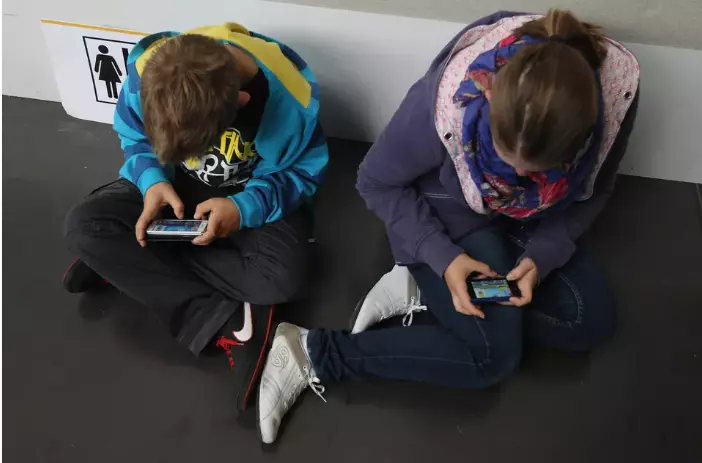
The research, led by Guanxing Xiong and colleagues at South China Normal University, investigated the link between teenagers’ short-form video habits and their “academic buoyancy.” Academic buoyancy is the specific ability to recover from the everyday pressures of school life, such as receiving a disappointing grade on a test or paper. The findings were revealing, showing that heavy consumption of short-form videos was a significant predictor of declining buoyancy over time.
The mechanism behind this effect appears to be a shrinking sense of the future. The researchers found that students who watched a high volume of rapid-fire, short-term videos experienced a diminished ability to think about the long term. This impaired future thinking, in turn, made them less equipped to absorb and recover from academic setbacks. The paper’s title succinctly captures this dynamic: “no future vision, no present perseverance.”
To understand the long-term impact, the research team surveyed the same group of students three times over the course of a single year, with assessments spaced six months apart. They used the framework of Temporal Self-Regulation theory to guide their analysis. This theory posits that our behavior is the result of a constant negotiation between immediate impulses and the effort required for long-term goals. For instance, studying for an exam provides a payoff that is months away, whereas watching a funny short video offers an instant reward in seconds.
The researchers hypothesized that an endless stream of algorithmic rewards—like those delivered by platforms such as TikTok—might fundamentally alter how teenagers experience time. Specifically, they were interested in its effect on “future time perspective,” which is the capacity to vividly picture the future and connect present actions to their long-term consequences. Their hypothesis was that students who consumed a high volume of short-form videos would have a weakened ability to see this connection.
The data confirmed their suspicions. Students who reported higher levels of video addiction at the start of the study showed significant drops in academic buoyancy both six months and a full year later. Critically, the analysis revealed that “future time perspective” was the key factor carrying much of this negative effect. The relationship also worked in the opposite direction. Teenagers who began the study with strong buoyancy were much less likely to report video addiction at the six-month mark. This points to a self-perpetuating cycle: fragility and excessive scrolling feed into each other, with each one making the other progressively worse over time.
Emotional intelligence (EI) is the capacity to recognize, understand, and manage your own emotions while also recognizing and influencing the emotions of others. This skill set is typically divided into four core competencies: self-awareness, self-management, social awareness, and relationship management. If you want to measure your own emotional intelligence accurately, psychologists recommend using a validated assessment tool rather than relying on informal self-evaluation.
Xiong’s research finding that your time horizon directly impacts your resilience offers a powerful strategy for strengthening one of those four core competencies: self-management.
Most conventional advice about self-management centers on impulse control. The typical suggestions include taking deep breaths, improving your self-talk, or stepping away for a walk to regulate your mood. While these techniques have their place, there is another approach that may yield even greater results. By consciously considering your time horizon and deliberately lengthening it, you can boost your resilience. The key is to zoom out and view your current setbacks not as permanent roadblocks but as growth and learning opportunities that fit within a much larger timeline.
To understand the concept of a time horizon, consider how a horizon line works in drawing. It is the element that gives every object in your picture a sense of scale. Erase that line, and the image goes flat; a coffee cup and a mountain suddenly appear to be the same size. A similar flattening happens to a person with no felt future. When your time horizon is too short, your immediate obstacles and your long-term goals all seem to carry the same weight. Yet you know that your long-term goals are what truly matter most.
If you want to expand your own time horizon and put setbacks into perspective, try following these four steps the next time you face a challenge:
Resilience is rarely forged in the heat of the moment itself. Instead, it is cultivated long before a challenge arises, by maintaining a vision of the future that is vivid enough to serve as a benchmark when difficulties occur. In practical terms, this means the groundwork for navigating hard times is laid during periods of calm, not crisis.
This principle has a direct application to a common modern struggle: reducing screen time. The urge to reach for a phone often feels automatic, but the impulse can be redirected when a compelling alternative exists. Before attempting to scroll less, it is essential to define precisely what will replace that habit. Vague intentions, such as "spend less time on my phone," rarely stick. A more effective approach involves getting specific about the activities you want to prioritize instead.
Consider what you would do with the reclaimed time. Would you read a book, take a walk, start a creative project, or simply sit with a cup of coffee without distractions? The more detailed and appealing this alternative vision is, the easier it becomes to choose it over a screen. This clarity transforms a vague goal into a tangible target, making it far easier to measure progress against.
To illustrate this concept in a professional context, consider the work of Kevin Kruse. Kruse is the Founder and CEO of LEADx, a company that specializes in emotional intelligence training. He is also a New York Times bestselling author, bringing a significant depth of expertise to the field of personal and professional development.
Kruse offers a practical tool for those looking to build a stronger foundation for resilience: a free Emotional Intelligence (EI) Assessment. This assessment is not a casual quiz; it is a psychologically validated instrument. Upon completion, individuals receive a detailed score breakdown across four core skills that are fundamental to emotional intelligence. This data provides a clear, personalized starting point for understanding one's emotional strengths and areas for growth, offering a concrete way to apply the principles of resilience and self-awareness in a structured manner.
By combining a clear vision of your desired future with a measurable understanding of your current emotional skills, you create a powerful framework. You are not just reacting to stress; you are proactively building the capacity to handle it, ensuring that when the hard moment arrives, you have a vivid future to measure it against and the emotional toolkit to navigate it successfully.










Comment