
-
3 minutes, 6 seconds
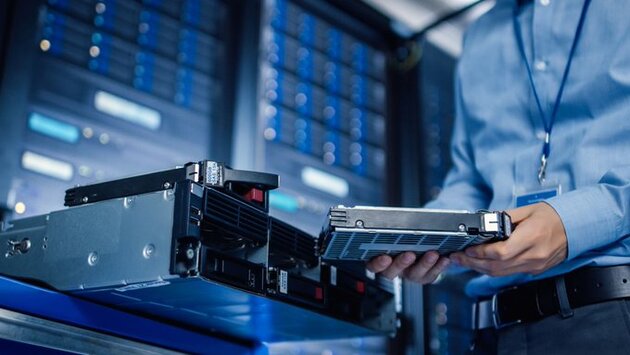
With the U.S. tightening restrictions on advanced AI chips like Nvidia’s, many people are asking: How is China still advancing its AI models without access to these GPUs? The answer lies in a surprising workaround now making headlines—China AI chip workaround strategies include flying petabytes of AI training data into GPU-rich countries like Malaysia using traditional hard drives. Yes, in 2025, it's not just about high-speed internet or data centers—it's back to basics with physical storage.
Chinese AI firms are now physically transporting massive datasets across borders, effectively bypassing U.S. digital firewalls and surveillance. A recent report revealed four Chinese engineers arrived in Malaysia, each carrying 15 high-capacity hard drives—totaling nearly 5 petabytes of data—used for training large language models (LLMs). This unconventional method avoids the need for restricted AI chips and restricted cloud transfers, highlighting how companies are adapting to geopolitical and regulatory obstacles with surprising creativity.
Thanks to relaxed controls and GPU-rich infrastructure, Malaysian data centers have become a hotbed for offshore AI training by Chinese firms. As the China AI chip workaround evolves, Malaysia is increasingly at the center of international AI operations. This shift shows how global politics are reshaping the flow of data and the infrastructure used to power next-gen AI. Instead of waiting for chip access to improve, Chinese companies are building new, unconventional pipelines for progress—powered by terabytes and travel.
While hard drives are now the preferred method for physically moving training data, some wonder why China isn’t turning to old-school tape storage. The answer likely lies in speed and convenience—modern HDDs are cheaper, faster to load, and easier to transport. But as the China AI chip workaround gets more sophisticated, new data logistics technologies may come into play. What’s clear is that China’s determination to keep training AI, despite U.S. sanctions, is reshaping how the world thinks about data mobility in the AI era.

2.5K articles

1.4K articles

34 articles

28 articles














Comment