
Alerts
-
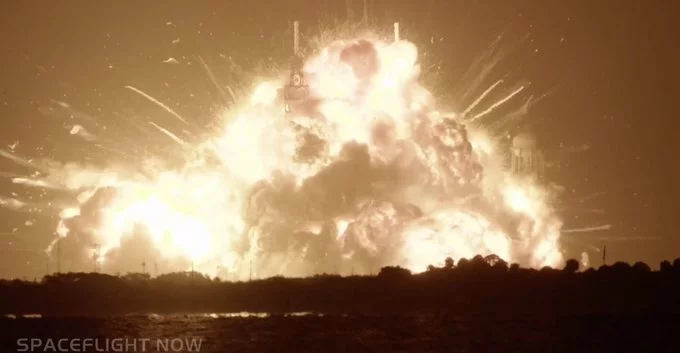
The recent Blue Origin explosion of its New Glenn rocket during a hot-fire test at Launch Complex 36 in Florida has sent shockwaves through the aerospace industry. The incident, occurring at approximately 9 PM, severely damaged the only launchpad for the New Glenn rocket, leading to significant delays for both NASA's Moon base plans and Amazon's fledgling LEO space internet constellation.
The explosion happened as seven engines in the booster stage ignited while the 322-foot-tall rocket remained fixed to the launchpad. The resulting fireball caused catastrophic damage to the transporter-erector and one of the lightning towers at LC-36A, with sources suggesting these components may not be salvageable.
Blue Origin CEO Jeff Bezos acknowledged the severity on X, stating, "Very rough day, but we'll rebuild whatever needs rebuilding and get back to flying." The company has launched an investigation to determine the root cause of the New Glenn explosion.
The NASA Moon base plans face a major setback due to this incident. NASA had announced that New Glenn would deliver a robotic lunar lander as soon as fall 2026. Furthermore, Blue Origin is scheduled to participate in the Artemis III mission in 2027, which involves docking an Orion capsule with lunar landers from SpaceX and Blue Origin.
NASA Administrator Jared Isaacman commented on the situation: "Spaceflight is unforgiving, and developing new heavy-lift launch capability is extraordinarily difficult." He assured that NASA would support a thorough investigation and assess near-term mission impacts.
According to Ars Technica, New Glenn almost certainly will not launch again in 2026, and a launch during the first half of 2027 would be "heroic" given the launch site concerns. This delay could ripple through NASA's lunar timeline, affecting the Artemis III mission.
Amazon's Starlink competitor, the Project Kuiper LEO satellite constellation, is also heavily impacted. The New Glenn rocket that exploded was prepped to carry 48 Amazon LEO satellites—the largest batch ever slated for a single launch. Fortunately, the satellites were not onboard.
Amazon has launched just over 300 of the 1,618 LEO satellites required by the FCC by July 30, 2026. With the primary workhorse grounded, Amazon has applied for an extension to keep its license. The company will now rely more heavily on secondary providers like United Launch Alliance (ULA), Arianespace, and its chief rival, SpaceX.
SpaceX CEO Elon Musk offered his condolences on X: "Sorry to see this. I hope you recover quickly." This highlights the competitive yet interconnected nature of the space industry.
The Blue Origin rocket explosion represents a significant hurdle for the company's ambitions. Repairing or replacing the launchpad infrastructure at LC-36A could take months or longer. As Blue Origin investigates, the entire space community watches closely, knowing that the outcome will shape the future of lunar exploration and satellite internet competition.









Comment