Alerts

-
6 minutes, 38 seconds
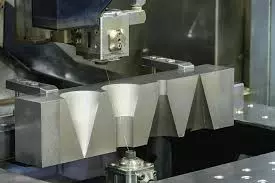
Wire EDM machining has become one of the most precise and reliable manufacturing methods for producing complex metal components. From rapid prototyping to full-scale production runs, this advanced process enables manufacturers to achieve exceptional accuracy, tight tolerances, and smooth surface finishes that are difficult to match with traditional machining methods. As industries demand higher precision and faster turnaround times, wire EDM machining continues to play a critical role in modern manufacturing workflows.
Wire EDM machining (Electrical Discharge Machining) is a non-traditional manufacturing process that uses a thin, electrically charged wire to cut through conductive materials. Instead of mechanical force, it relies on controlled electrical sparks to erode material with extreme precision.
This method is especially useful for hard metals such as titanium, tungsten, and hardened steel, which are difficult to machine using conventional tools. Because there is no direct contact between tool and workpiece, wire EDM machining eliminates mechanical stress and reduces the risk of deformation.
Key aspects of wire EDM machining include:
The technology has evolved significantly, making it a preferred solution for industries requiring micron-level accuracy and repeatability.
In prototyping, speed and precision are both essential. Wire EDM machining offers a unique advantage by allowing engineers to quickly produce highly accurate prototypes without the need for expensive tooling or long setup times.
Since the process is computer-controlled, design modifications can be implemented quickly, making it ideal for iterative development cycles. Engineers can test form, fit, and function without committing to mass production tooling.
Advantages in prototyping include:
These benefits make wire EDM machining a valuable tool in industries such as aerospace, automotive, and medical device development, where precision testing is critical before production.
Beyond prototyping, wire EDM machining is widely used in full-scale production environments. It is particularly effective for manufacturing small to medium batch sizes of high-precision components where consistency is essential.
Production efficiency is enhanced because wire EDM machines can operate continuously with minimal supervision. Once programmed, they can produce identical parts repeatedly with extremely tight tolerances.
Key production advantages include:
Industries such as aerospace, electronics, and precision tooling rely heavily on wire EDM machining to maintain quality standards while meeting production deadlines.
One of the strongest advantages of wire EDM machining is its ability to process a wide range of conductive materials. This flexibility allows engineers to choose materials based on performance rather than machining limitations.
It also enables the creation of highly complex geometries, including sharp internal corners, intricate slots, and detailed contours that would be nearly impossible with traditional cutting tools.
Material and design advantages include:
Because of this flexibility, wire EDM machining is often the preferred choice for tooling components, dies, molds, and precision mechanical parts.
Although wire EDM machining may seem expensive initially, it often proves cost-effective in the long run due to reduced material waste, minimal tooling requirements, and lower defect rates. Its precision reduces the need for secondary operations, saving both time and money.
Additionally, the automation capabilities of modern wire EDM systems allow manufacturers to optimize production efficiency while maintaining consistent quality standards.
Efficiency and cost benefits include:
These advantages make wire EDM machining a smart investment for companies focused on precision manufacturing and operational efficiency.
Wire EDM machining has established itself as a cornerstone technology in modern manufacturing, offering unmatched precision, flexibility, and efficiency for both prototyping and production. Its ability to cut complex shapes from hard materials without physical contact makes it indispensable for industries requiring high-performance components.
Whether used for rapid prototyping or large-scale manufacturing, wire EDM machining delivers consistent accuracy, superior surface finishes, and cost-effective production solutions. As engineering demands continue to evolve, this technology will remain a key driver of innovation and precision in advanced manufacturing.


8.3K articles

2.7K articles

1.6K articles

34 articles








Comment