
Alerts
-
2 minutes, 52 seconds
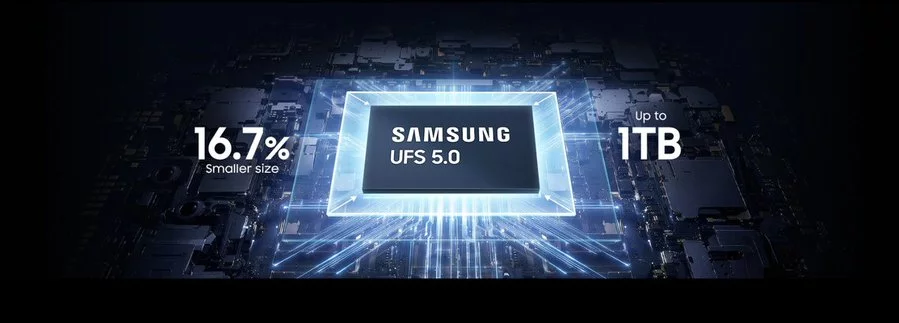
Samsung is working on a storage chip smaller than a fingernail that could replace your M.2 SSD. This new technology, called the PM9C1a, is a compact solid-state drive (SSD) that fits into a tiny form factor, making it ideal for thin laptops, tablets, and next-gen devices. If you’re wondering how Samsung plans to replace your M.2 SSD with a storage chip smaller than a fingernail, the answer lies in its advanced NAND flash memory and PCIe 5.0 interface, which deliver fast speeds in a much smaller package.
Samsung’s new chip is a small SSD module that uses the company’s latest V-NAND technology. It measures just a few millimeters, yet it can store up to 2TB of data. This chip is designed to fit into devices where space is limited, like ultrabooks, gaming handhelds, and even smartphones. It connects via the PCIe 5.0 bus, offering read speeds up to 14,000 MB/s—much faster than most current M.2 SSDs.
M.2 SSDs are already compact, but they still take up space inside a laptop or PC. Samsung’s tiny chip goes a step further by integrating the controller and NAND flash into a single, tiny package. This change could help manufacturers build thinner, lighter devices without sacrificing performance. For example, future laptops could be as thin as a tablet but still offer fast storage.
Today’s M.2 SSDs are about 22mm wide and 80mm long. Samsung’s new chip is just a fraction of that size—roughly 10% of the footprint. Despite being smaller, it offers similar or better speeds. For instance, a standard M.2 SSD might reach 7,000 MB/s read speeds, while this tiny chip can hit 14,000 MB/s. That’s a big leap for storage performance.
While exciting, this technology may not be for everyone. Here are some things to consider:
Samsung plans to release the PM9C1a chip in 2025. It will likely appear in premium laptops and devices first. As production scales, prices should drop, making it accessible to more users. If you’re building a new PC or buying a laptop, look for this chip as a future upgrade.
Samsung’s tiny storage chip is a game-changer for portable storage. It offers faster speeds, smaller size, and large capacity—all in a package smaller than your thumbnail. While it won’t replace every M.2 SSD overnight, it points to where storage is headed: compact, fast, and efficient. Keep an eye on this technology if you want the best performance in future devices.










Comment