
Trending
Trending Hashtags
Alerts
-
5 minutes, 11 seconds
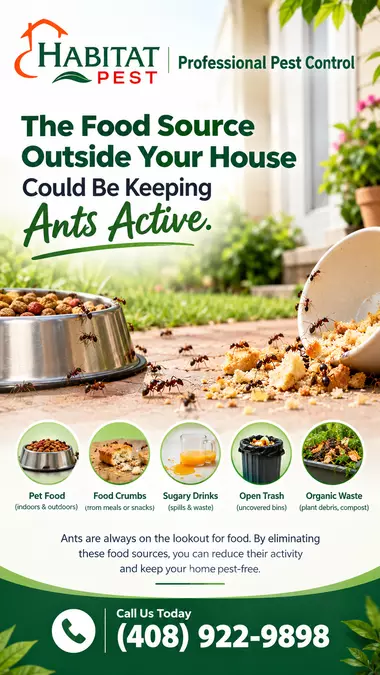
Homes across Alviso, CA can still experience persistent ant activity when outdoor food sources remain accessible. Professional ant control can address the activity around the structure while helping identify conditions contributing to repeated infestations.
The Yard Can Be the Main Food Supply
An ant trail near a kitchen does not always mean the kitchen is attracting the ants. Workers may be entering the house simply because it sits along the route between their nest and an outdoor food source.
This changes the way an infestation should be viewed. The important question is not only where ants are entering, but also what keeps drawing them toward that part of the property.
Plants Can Feed More Than Bees and Butterflies
Some plants support insects that produce honeydew, a sugary substance collected by several ant species. Aphids, soft scales, mealybugs, and whiteflies can create this food source on leaves and stems.
Ants may protect or tend these insects because the honeydew provides a dependable food supply. UC IPM identifies honeydew-producing insects as an important reason ants may become active around landscape plants.
Look for ant activity around:
• New plant growth
• Undersides of leaves
• Tender stems
• Fruit trees
• Shrubs with sticky leaves
• Plants showing sooty mold
The ants may be responding to the insects rather than feeding directly on the plant.
Fallen Fruit Can Keep Ants Nearby
Overripe fruit creates another easy food source. Fruit trees can drop damaged or fermenting fruit onto soil, mulch, patios, and walkways. Ants can take advantage of the sugars and other materials released as fruit breaks down.
A single piece of fallen fruit is unlikely to explain a large infestation by itself. Repeated accumulation beneath a productive tree is different. It can create a dependable feeding area that keeps foraging activity concentrated in one section of the property.
Removing fallen fruit regularly can reduce one source of competition around bait placements and other treatment areas.
Outdoor Food Can Compete With Ant Baits
Bait works only when ants are willing to take it. An abundant food source elsewhere can make a bait less attractive, especially when ants already have easy access to their preferred food.
A strong honeydew source in a nearby planting bed can draw workers away from bait placed elsewhere on the property. Fallen fruit, pet food, or other sugary food sources can create the same problem.
Treatment results depend on more than the amount of bait applied. Removing competing food sources can make the treatment area more relevant to the ants and give them fewer reasons to ignore the bait.
Pet Food Can Create a Hidden Feeding Spot
Outdoor pet bowls can become an easy food source for ants. Wet food, dry kibble, and small amounts of residue around the bowl may attract foraging workers, especially when the feeding area sits near a wall, doorway, patio, or another route toward the house.
Removing leftover food and cleaning the area regularly can reduce this attraction. The same principle applies to food residue around outdoor preparation areas and trash containers, where small amounts of leftover material can keep ants active close to the property.
Water Can Matter Alongside Food
Food is only one part of the picture. Ant activity can increase around areas where moisture and shelter occur together.
Leaking outdoor faucets, overwatered planting beds, clogged drainage areas, and irrigation overspray can create favorable conditions close to food sources. Ants may then have both the resources and the protection needed to remain active in the same section of the yard.
That combination is more significant than moisture or food considered separately.
The Same Food Source Can Affect Indoor Activity
An outdoor feeding area can become connected to the house through landscaping. A tree may provide food near the canopy while its trunk and branches offer a route toward the structure. Dense shrubs can connect planting beds to walls. Groundcover can hide trails between the two.
This creates a chain:
Food source → foraging trail → protected landscape route → structural entry
Breaking one part of this chain can reduce the pressure reaching the building.
Do Not Treat Every Outdoor Ant Trail the Same Way
Different ant species have different feeding habits. Some may show greater interest in sugars, while others can shift toward protein or other food sources. Seasonal changes can also affect what ants seek.
That makes species identification useful when an infestation continues despite treatment. A strategy designed around the wrong food preference may attract little interest even when ants are actively foraging nearby.
What to Check Before Treatment
A quick outdoor inspection can reveal food sources that are easy to overlook. Check the areas closest to repeated ant activity rather than inspecting the entire property without a specific purpose.
Pay attention to:
• Fruit trees and fallen fruit
• Aphids, scales, and other honeydew-producing insects
• Outdoor pet-feeding areas
• Trash and recycling containers
• Sticky plant surfaces
• Irrigation leaks
• Food residue around patios or outdoor kitchens
These observations can help explain why ants continue using the same part of the property.
Treatment Should Account for the Surroundings
Removing food sources does not automatically eliminate an established ant problem. It does, however, change the conditions surrounding the infestation.
Pest control services in Alviso can take those conditions into account when evaluating repeated outdoor activity. Instead of treating a visible trail in isolation, an inspection can consider nearby plants, moisture, food sources, nesting areas, and routes leading toward the structure.
The objective is not to make every part of the landscape unusable for ants. It is to reduce the conditions that keep concentrated activity close to the house.
Start Where the Ants Are Feeding
The most useful clue may be sitting outside rather than inside the kitchen. A tree covered with honeydew-producing insects, fallen fruit beneath a canopy, or food residue beside a patio can keep ants returning long after an indoor trail disappears.
Finding that attraction gives treatment a clearer target. Once the outdoor food source is identified and managed, ant activity can be evaluated under very different conditions, making it easier to address the routes that continue toward the house.



Comment