Alerts

-
5 minutes, 35 seconds
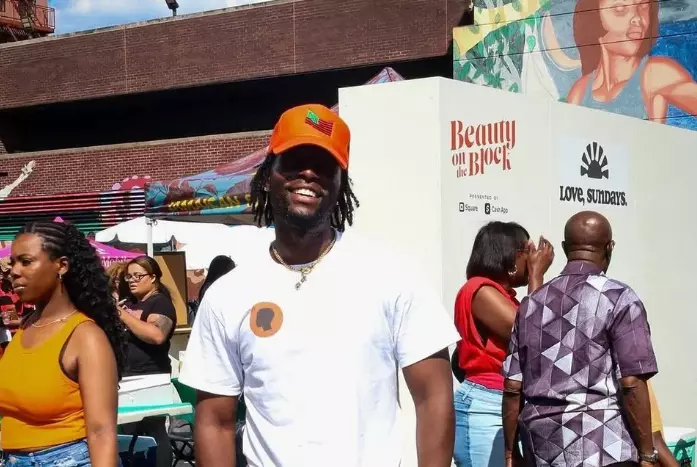
Forget the boardroom. For a growing number of millennial founders, the most effective business meeting is happening on the street—at a block party. These vibrant community events are becoming powerful marketplaces where brands connect directly with customers, build real relationships, and drive sales. It's a shift that's redefining how beauty brands, especially Black-founded ones, scale and succeed.
A block party business meeting is a large, free community event that combines entertainment, food, and shopping. It's a marketplace where founders can showcase their products, meet customers face-to-face, and get immediate feedback. Unlike traditional trade shows or retail meetings, these events are open, accessible, and built around cultural connection.
One standout example is Beauty on the Block, held in Harlem. Over 4,000 people attended, enjoying DJs, food vendors, and a live braiding lounge. More than 20 Black-founded beauty brands participated, and many sold out completely. The event was free, public, and strategically placed in a culturally significant neighborhood.
Millennial founders are turning to block parties for several key reasons:
Tomi Talabi, founder of The Black Beauty Club, which produced Beauty on the Block, explains the strategy. “Black beauty does more than influence trends. It builds businesses, shapes consumer behavior, and moves markets.” She emphasizes that these events provide “the space, infrastructure, and audience” for Black-founded brands to be discovered at scale.
Talabi identifies a critical gap: Black consumers account for 11.1% of total beauty spending, but Black-founded brands capture only 2.5% of industry revenue. She calls this a “discovery problem.” Many top-quality brands remain invisible to the consumers most likely to buy from them.
“There are a lot of cream-of-the-crop brands that no one had ever actually heard of,” she says. Too many founders focus on saturated coastal markets like New York and Los Angeles, missing opportunities in other cities.
The returns from a block party go beyond single-day sales. Dujon Smith, founder of sun-care brand My Block Skin, vended at the Harlem event and “did real business,” according to Talabi. Several brands sold out, and consumers discovered products they had never tried before.
But the lasting value is the relationship built. “That experience that they’ve had with your brand is going to probably go further and touch more people—their cousins and their friends—than that influencer that they don’t really necessarily know,” Talabi explains. This personal connection drives repeat business and word-of-mouth marketing.
Talabi is clear that block parties aren't a complete replacement for other channels. “You always have to have more than one channel of reaching your audience,” she says. Influencers and retail still matter. However, the community-first approach offers something more durable.
“Bringing beauty out of closed industry rooms and into the community” is the goal. The Harlem event was deliberately high-quality, with a full braiding operation from a Black-owned salon. “I really don’t believe that just because it’s us, it needs to just be whatever,” Talabi says. “It’s really important that it is at the same level any other brand would show up.”
Accessibility is key. Most events are free, inspired by Talabi’s upbringing in the Bronx. When a young person walks into a beautifully produced event and realizes they’re welcome, it “really opens the door in her mind of what possibilities could look like.”
Talabi isn't a beauty founder in the traditional sense. She’s the person building the room. Before The Black Beauty Club, she worked at Bobbi Brown and Pinterest, focusing on inclusive storytelling. The club started in late 2020 as a Clubhouse conversation and has since hosted over 100 events.
Her corporate experience shaped her model. “It was always ‘sell this lipstick,’” she recalls. “People care about a product if you are able to connect it to their personal experience.” The block party is commerce built on cultural connection.
She also chooses corporate partners carefully. Beauty on the Block was presented by Cash App and Square—not just as sponsors, but as infrastructure providers. Cash App offered cardholders 20% off purchases, and Square provided card readers for vendors. “We talk a lot about funding, which is important, but we never talk about how that funding is used for actual infrastructure,” Talabi says. A few grants don’t build the rails for transactions; a payments partner does.
The second Beauty on the Block event is set for August 8 in Chicago’s Fulton Market and West Loop area. This choice reflects a strategy to move beyond the New York-LA bubble. Chicago is the third-largest U.S. city, with a large Black population and deep local loyalty.
“Chicago is also super Black, super focused on Black hair,” says Talabi, who attended university there. “It’s one of the first places that I really saw people embrace their natural hair. In fact, it’s where I learned the word Afrocentric.”
When The Black Beauty Club ran a smaller event in Chicago last year, attendees traveled from Detroit, Indiana, and Wisconsin. This shows the hunger for community-driven marketplaces outside coastal cities.
Whether block parties become a permanent fixture in beauty brand strategy remains to be seen. But the early evidence from Harlem is clear: a generation of founders has already decided where they’d rather be discovered. Not in a convention hall, but on a block, in front of the people who were always going to be their customers.









Comment