
Trending
Trending Hashtags
Alerts
-
3 minutes, 18 seconds
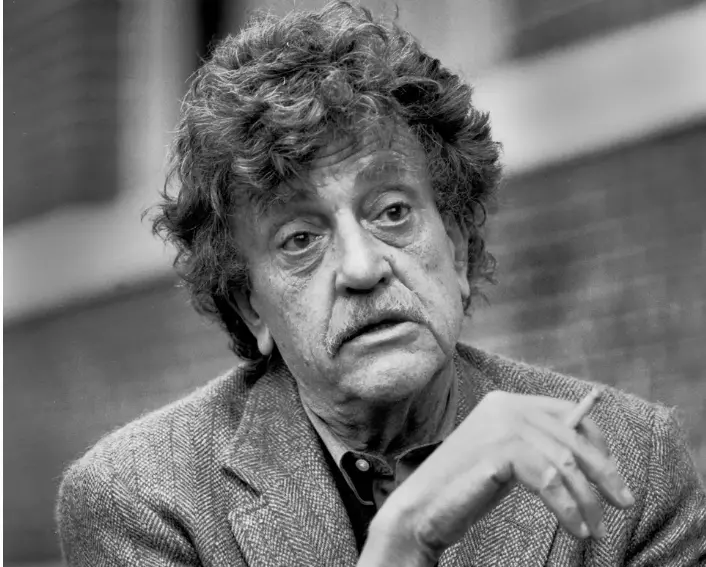
In this week’s emotional intelligence quote of the week, novelist Kurt Vonnegut reminds us that we rarely know what is truly good or bad news. During a lecture, he drew a graph of Shakespeare’s Hamlet to show the “shapes of stories.” Then he paused and said something surprising: “The truth is, we know so little about life, we don’t really know what the good news is and what the bad news is.”
Vonnegut’s point is simple: when something happens, we tend to label it “good” or “bad” right away. But that quick judgment closes us off from future possibilities. A bad break may later turn into a blessing, and a “good” opportunity may lead to dead ends. As Tom Robbins wrote, “Success can eliminate as many options as failure.”
Psychologists call this skill temporal distancing — the ability to step back in time and see events from a longer perspective. It’s a core part of emotional intelligence. Instead of reacting immediately, you pause, zoom out, and ask: “How will I see this a year from now? Ten years?”
Research supports this. A 2023 study in the journal Emotion found that people who journaled about hard days and viewed them from a longer time window felt less negative emotion and more positive emotion — even on the same day. Another study by Bruehlman-Senecal and Ayduk showed that imagining yourself in the distant future reduces emotional distress by reminding you that most “disasters” are temporary.
Emotional intelligence (EI) helps you manage your own emotions and understand others. It has four core skills:
Vonnegut’s quote highlights a breakdown in self-awareness. When we label an event as “bad,” our negative emotions take over. We stop seeing other possibilities. With better self-awareness, you can slow down, notice the label you’re attaching, and open your mind to new outcomes.
This simple three-step strategy helps you avoid the trap Vonnegut described. It’s not about forcing a positive spin; it’s about widening your view before you judge.
Notice when you say to yourself, “This is terrible” or “This is great.” Observe the emotion that comes with that label. Recognize that both labels limit your future vision.
Ask yourself: How might this look in a year? In ten? Imagine your future self looking back. What do they see that you can’t see now?
Don’t lock in a story. Stay open to new opportunities you haven’t considered yet. If you want to make this a habit, write your reflections in a journal. Over time, you’ll spot patterns in how you react to good and bad news.
Next time something happens that feels clearly good or bad, borrow Vonnegut’s humility. Don’t force a silver lining, and don’t spiral into worst-case thinking. Just zoom out a week, a year, then a decade. You’ll discover that most things are not as clear-cut as they first seem. Getting comfortable with that uncertainty — living in the space between “good” and “bad” — is the essence of emotional intelligence. You can’t control everything, but you can control how you receive and respond to life’s surprises.










Comment