
What Australian Building Inspectors Find Most Commonly Wrong During Essential Services Maintenance Checks
-
4 minutes, 31 seconds
Across Australia, building inspections are becoming more thorough, more frequent, and far less forgiving. Whether it’s a school, aged care facility, or commercial office, inspectors are not just checking if systems exist. They are checking if they actually work, are properly maintained, and are backed by accurate documentation.
And what they are finding, time and time again, are the same recurring issues.
Essential Safety Measures (ESMs) such as fire alarms, emergency lighting, exit paths, and sprinkler systems are legally required in most buildings. Their purpose is simple. They protect lives during emergencies. But despite clear regulations, many buildings still fall short when it comes to ongoing maintenance and compliance.
Missing or Incomplete Documentation
One of the most common problems inspectors identify is poor record-keeping.
Australian regulations require building owners to maintain detailed records of all inspections, testing, and repairs. These records must be readily available, often within 24 hours of a request.
In reality, many buildings either have incomplete logs or rely on outdated manual systems. Some only keep basic tags on equipment, which is not enough on its own.
Inspectors frequently flag:
-
Missing maintenance logs
-
Incomplete service histories
-
No clear evidence of routine testing
Without proper documentation, even a fully functioning system can be considered non-compliant.
Systems Installed but Not Maintained
Another major issue is the assumption that once a system is installed, the job is done.
In practice, safety systems require ongoing servicing to ensure they operate correctly in an emergency. Fire detection systems, emergency lighting, and mechanical ventilation must all be tested regularly under structured schedules.
Inspectors often find:
-
Fire alarms that have not been tested on schedule
-
Emergency lights with dead batteries
-
Sprinkler systems with blocked or damaged components
These are not minor issues. If a system fails during an emergency, the consequences can be severe.
Blocked or Non-Compliant Exit Paths
Clear exit paths are a basic requirement, yet they remain one of the most common failures.
Regulations state that exits and paths of travel must remain unobstructed and functional at all times.
However, inspections regularly uncover:
-
Storage items placed in corridors or stairwells
-
Fire doors wedged open or not closing properly
-
Exit signage that is missing or not illuminated
These issues are often caused by day-to-day operational habits rather than deliberate neglect, but they still pose serious risks during an evacuation.
Lack of Awareness from Building Managers
A less obvious but equally important issue is knowledge gaps.
Many building owners or managers are not fully aware of their legal responsibilities. They may assume contractors are handling everything, or they may misunderstand the scope of what needs to be maintained.
In Australia, the responsibility ultimately sits with the building owner or occupier. Even if maintenance is outsourced, accountability cannot be transferred.
Inspectors often encounter situations where:
-
Maintenance schedules are unclear or inconsistent
-
Responsibilities are not properly assigned
-
Compliance is treated as a once-a-year task rather than an ongoing process
This lack of clarity leads to missed checks and gaps in compliance.
Poor Coordination Between Contractors
Many buildings rely on multiple service providers for different systems. One contractor handles fire equipment, another manages HVAC, and another deals with electrical systems.
On paper, this works. In reality, it often leads to fragmented compliance.
Inspectors commonly find:
-
Overlapping responsibilities with no clear accountability
-
Missed inspections because each contractor assumes another is responsible
-
Inconsistent reporting formats that make audits difficult
Without a coordinated approach, it becomes easy for critical tasks to fall through the cracks.
Incomplete or Incorrect Annual Reporting
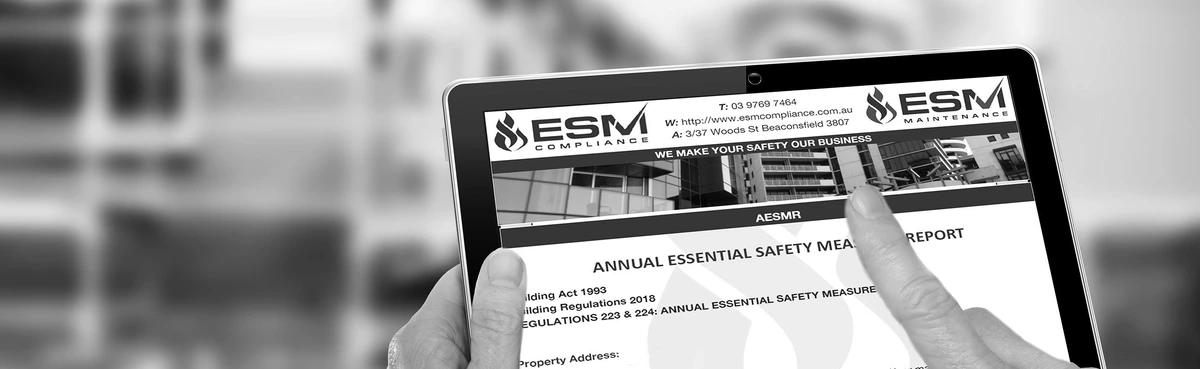
Midway through the compliance process, one of the most critical documents comes into play, the annual essential safety measures reports.
These reports are a legal requirement and must accurately reflect the condition and maintenance status of all safety systems within a building.
Inspectors frequently identify problems such as:
-
Reports that do not match actual maintenance records
-
Missing systems from the report
-
Incorrect frequencies or testing details
In some cases, reports are treated as a paperwork exercise rather than a true reflection of building safety.
Reactive Instead of Preventative Maintenance
A common pattern across many buildings is reactive maintenance.
Issues are only addressed when something fails or when an inspection is due. This approach increases risk and often leads to higher long-term costs.
Modern compliance expectations in Australia are shifting towards preventative maintenance. Regular inspections, early fault detection, and consistent servicing help ensure systems remain operational at all times, not just during audits.
Inspectors are increasingly looking for evidence of this proactive approach.
Why These Issues Keep Appearing
The reason these problems persist is not always negligence. In many cases, it comes down to complexity.
Managing multiple safety systems, contractors, schedules, and compliance requirements is not simple. Without a structured system, even well-managed buildings can fall behind.
This is why more organisations are moving towards integrated compliance solutions rather than handling everything separately.
Final Thoughts
Essential services maintenance in Australia is no longer just a compliance checkbox. It is a continuous process that requires proper systems, clear accountability, and consistent oversight.
Building inspectors are not just identifying faults. They are highlighting patterns. And those patterns show that documentation gaps, poor coordination, and reactive maintenance remain the biggest risks across all building types.
For organisations looking to avoid these issues and stay audit-ready year-round, working with specialists like ESM Compliance can make a measurable difference. With a structured approach to inspections, reporting, and ongoing maintenance, they help ensure nothing is missed and every requirement is properly met.

Contact Information
Suggested Writers
-

7.6K articles
-

2.5K articles
-

1.3K articles
-

34 articles




Comment