
Alerts
-
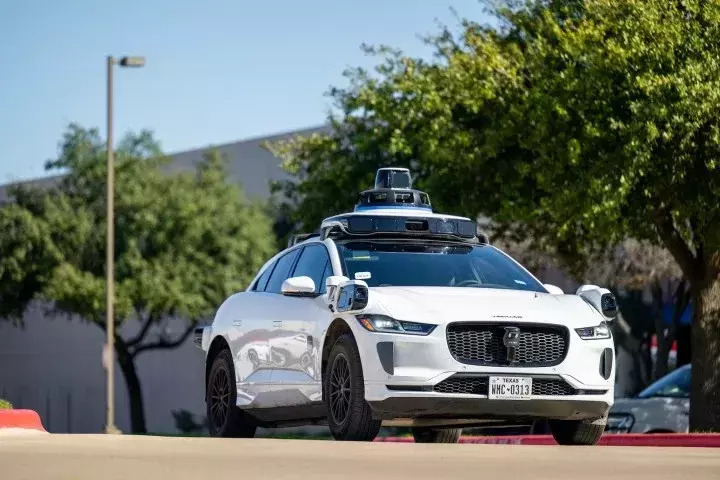
The Waymo recall and flooding issue are making headlines after the autonomous driving company issued a major software update affecting nearly 4,000 robotaxis. The recall was triggered after several incidents where self-driving vehicles struggled to handle flooded roads, raising questions about safety in extreme weather conditions. If you are wondering what the Waymo recall means, how many vehicles are affected, and whether robotaxis are still safe to ride, the situation centers on a flooding-related driving limitation that regulators say still does not have a final fix.
The Waymo flooding recall was prompted after real-world incidents in central Texas exposed weaknesses in the system's decision-making. Heavy rainfall led to flash flooding in several areas, creating conditions that were difficult even for human drivers to navigate safely.
In one notable incident, an empty Waymo robotaxi in San Antonio was swept away after entering a flooded roadway. While no passengers were inside, the event raised concerns about how autonomous systems evaluate risk in extreme weather. Following these events, operations in the affected city were temporarily paused.
Regulators later confirmed that the recall decision was made in late April after reviewing multiple scenarios where robotaxis failed to fully recognize the danger of water-covered roads. These cases highlighted the need for stronger environmental detection and decision logic in autonomous driving systems.
The Waymo recall impacts 3,791 autonomous vehicles, making it one of the company's largest safety updates to date. These vehicles operate across around a dozen cities in the United States, where Waymo has been steadily expanding its commercial robotaxi service.
This scale matters because it shows how widely deployed autonomous fleets have become in urban transportation networks. With thousands of vehicles operating simultaneously, even small system issues can have broad implications for safety, regulation, and public trust.
The affected fleet includes vehicles running different versions of Waymo's autonomous driving software, meaning the update must be carefully deployed to ensure consistent behavior across all systems.
As part of the Waymo recall response, the company has already pushed a software update to improve how robotaxis handle flooded road detection. The update introduces restrictions that limit vehicle access to areas where there is a higher risk of flash flooding or water-covered high-speed roads.
This means that during heavy rain events or in regions flagged as flood-prone, robotaxis may automatically avoid certain routes altogether. The goal is to prevent vehicles from entering situations where the system cannot confidently determine road safety.
However, regulators have noted that this is still not a complete solution. Waymo is continuing to refine its system and develop a final version of the fix that will allow better real-time decision-making in extreme weather conditions.
The Waymo flooding recall highlights a broader challenge in the autonomous vehicle industry. Flooded roads are difficult for self-driving systems because they disrupt normal visual and sensor-based navigation.
Cameras may struggle to distinguish road boundaries when water covers lane markings. Sensors like lidar can also misinterpret reflections or submerged objects, making it harder to assess depth or road safety accurately. Unlike human drivers, who can rely on intuition and experience, autonomous systems depend entirely on data interpretation.
This creates a critical edge case where the vehicle may recognize that something is wrong but still attempt to proceed cautiously rather than stopping completely. That partial uncertainty is what led to the issues identified in the Waymo recall.
The recent flooding-related recall is not the first time Waymo has had to issue software fixes for its autonomous fleet. Over the past two years, the company has rolled out several updates addressing different safety concerns.
Each of these recalls has contributed to ongoing improvements in the system's decision-making capabilities. While these incidents have drawn regulatory attention, they also reflect the iterative nature of autonomous vehicle development.
The Waymo recall has broader implications for the entire autonomous vehicle industry. As robotaxis become more common in cities, expectations for safety and reliability continue to rise. Flooding incidents in particular are likely to influence how future systems are designed to handle extreme weather.
Regulators are increasingly focused on edge cases such as storms, emergency road conditions, and unpredictable natural events. These scenarios are difficult to simulate fully in testing environments, which means real-world data plays a critical role in shaping safety standards.
For competitors and startups in the autonomous driving space, the recall serves as a reminder that scaling robotaxi services requires not only advanced AI but also robust environmental adaptability.
Waymo has stated that it identified the issue as part of its ongoing safety monitoring process and chose to voluntarily file the recall with regulators. The company emphasized that it is actively working on additional software safeguards to improve how robotaxis respond to extreme weather conditions.
These updates include refining operational limits during heavy rainfall and improving sensor fusion to better detect water-covered roads. The company remains committed to safety and transparency as it continues to deploy its autonomous fleet across the United States.









Comment