Alerts

-
7 minutes, 4 seconds
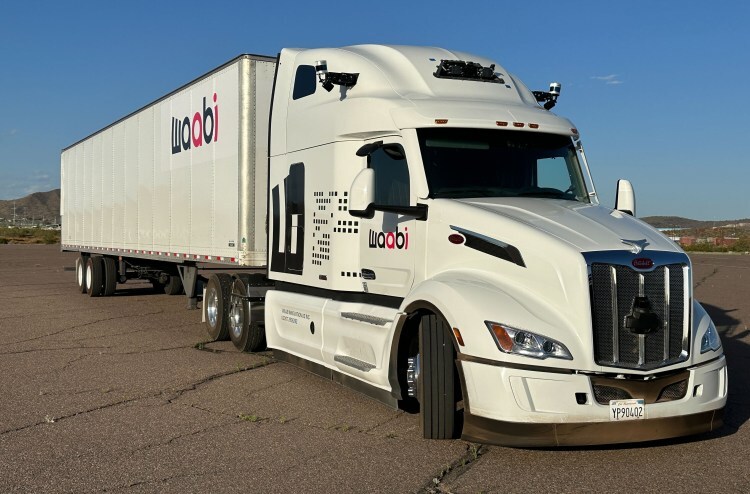
Waabi robotaxi plans are officially moving from theory to large-scale ambition. The Toronto-based autonomous vehicle startup has announced a major partnership with Uber alongside a massive $1 billion funding boost. The deal centers on deploying at least 25,000 robotaxis powered by Waabi’s AI-driven technology on Uber’s ride-hailing platform. For readers asking who Waabi is, why Uber is involved, and what this means for self-driving vehicles, the answer is simple: this partnership could reshape how autonomous rides reach everyday users.
The announcement positions Waabi as a serious contender in the robotaxi race, even as the company continues to refine its original focus on self-driving trucks. It also highlights how momentum in autonomous mobility is shifting toward passenger vehicles that can scale faster and demonstrate real-world reliability.
Waabi was founded in 2021 by Raquel Urtasun, a respected AI researcher and former chief scientist of Uber’s autonomous vehicle division. From the start, the company took a different approach to autonomy, branding itself as “AI-first” rather than sensor-heavy. Its early work focused on automating long-haul trucking routes, particularly in Texas, where predictable highways offered an ideal testing ground.
However, autonomous trucking has proven more complex and slower to commercialize than many startups initially expected. Regulatory hurdles, safety validation, and the sheer challenge of handling edge cases at highway speeds have delayed widespread deployment. At the same time, robotaxis have gained renewed attention as cities and platforms look for scalable, driverless ride solutions.
Shifting toward robotaxis allows Waabi to showcase its “physical AI” in dense, real-world environments while tapping into an existing ride-hailing network. The move is not an abandonment of trucking, but rather an expansion that reflects where near-term opportunities are emerging.
The funding announcement is as striking as the partnership itself. Waabi revealed it has secured $1 billion in new capital, including $750 million from an oversubscribed Series C round. Additional investment tied directly to robotaxi development came from Uber as part of the deployment agreement.
This level of funding gives Waabi a long runway to scale engineering, safety validation, and fleet deployment. It also signals strong investor confidence in the company’s AI-centric approach, even as the broader autonomous vehicle sector faces skepticism. According to Waabi leadership, the 25,000 robotaxi commitment represents a minimum target rather than a hard cap.
That framing suggests Waabi and Uber see room for rapid expansion if early deployments meet performance and safety benchmarks. In an industry where many pilots stall at small fleet sizes, setting a high floor is a notable statement of intent.
Partnering with Uber instantly solves one of the biggest challenges for robotaxi startups: access to riders. Building autonomous vehicles is only half the battle; integrating them into a platform people already use daily is what drives real adoption.
For Uber, the deal revives its long-standing interest in autonomy without requiring it to build everything in-house. For Waabi, Uber provides demand, routing data, and a proven marketplace that can accelerate learning at scale. The result is a symbiotic relationship that could shorten the path from pilot programs to meaningful commercial impact.
This partnership also reflects a broader trend of ride-hailing platforms working with specialized AI startups rather than attempting to own the full autonomy stack themselves. It’s a pragmatic approach in a space where costs and risks remain high.
Despite the excitement, Waabi’s announcement raises valid questions. The company has not yet validated its self-driving trucks for full commercial operation, and it has not deployed a robotaxi fleet at scale. Moving from controlled tests to thousands of autonomous vehicles in urban environments is a major leap.
Safety, regulatory approval, and public trust will all play critical roles in determining how quickly the robotaxi rollout progresses. Waabi’s leadership argues that its simulation-driven AI training and focus on generalizable intelligence give it an edge. Still, real-world performance will ultimately determine whether those claims hold up.
Industry observers will be watching closely to see how soon the first Waabi-powered robotaxis appear on the Uber platform and how they perform in mixed traffic conditions.
Waabi’s robotaxi expansion underscores a larger shift in autonomous vehicle strategy. Instead of waiting for perfect technology across every use case, startups are prioritizing applications that can demonstrate value sooner. Robotaxis, with their clear business model and high utilization rates, fit that goal well.
If successful, Waabi’s approach could influence how other autonomous trucking and mobility startups allocate resources. It may also help normalize the presence of driverless vehicles in everyday life, moving autonomy from novelty to utility.
For now, the Waabi robotaxi partnership stands as one of the most ambitious announcements in autonomous mobility this year. Whether it becomes a breakthrough moment or a cautionary tale will depend on execution, transparency, and trust earned on real roads.









Comment