
Alerts
-
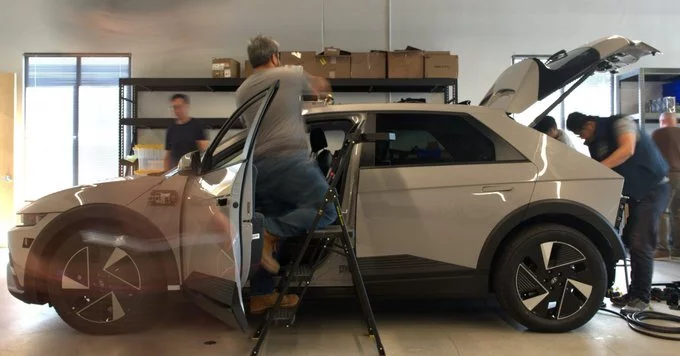
Uber is deploying its own autonomous vehicles again, but this time the focus is on data collection, not robotaxi operations. The company's new AV Lab project uses a single Hyundai Ioniq 5 equipped with full self-driving hardware—including cameras, lidar, and radar—to gather critical driving data for its dozens of robotaxi partners. Unlike Uber's troubled past with self-driving cars, these vehicles will be manually driven and will not operate as robotaxis. Instead, they will complete regular Uber trips and generate revenue while collecting data on edge cases and real-world driving scenarios.
Uber's history with autonomous vehicles includes a tragic incident in 2020 when one of its self-driving cars killed a pedestrian in Tempe, Arizona. Following that event, Uber sold its AV division and pivoted to a platform model, partnering with AV startups like Wayve, WeRide, Nuro, and Waabi. Now, the AV Lab project reflects Uber's commitment to supporting these partners with high-quality training data. By deploying vehicles on its ride-hail network, Uber can expose them to the variety of edge cases that occur during its 40 million daily trips. This data is provided for free to partners, helping them overcome the high costs of developing autonomous technology.
Balaji Krishnamurthy, Uber's CFO, notes that AV operators typically need at least 10 million miles of data for a public driverless launch. Uber's AV Lab fleet aims to generate 2 million miles per month by the end of 2026, scaling further in 2027. Starting with one Hyundai Ioniq 5, the fleet will expand as needed. This initiative is part of Uber's larger Uber Autonomous Solutions project, which offers services like training data from thousands of test vehicles operating in dozens of cities.
Uber's data-driven approach could accelerate the deployment of robotaxis by startups that lack the resources of giants like Waymo or Tesla. By leveraging Uber's massive ride-hail network, AV developers gain access to diverse driving environments and millions of miles of data without building their own fleets. This collaborative model positions Uber as a central hub for autonomous mobility, while avoiding the risks and costs of developing its own self-driving technology.
The AV Lab project signals Uber's long-term commitment to autonomous vehicles without direct operational involvement. As the company provides data and platform services, it strengthens its relationships with AV partners and reinforces its role as the go-to ride-hailing platform for robotaxis. With plans to scale data generation in 2027, Uber is betting that data sharing will drive the next wave of autonomous vehicle innovation.










Comment