
Alerts
-
6 minutes, 31 seconds
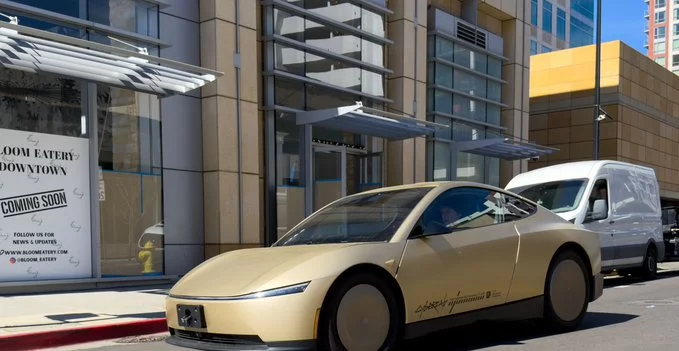
Two-seater robotaxi designs are quickly becoming one of the most talked-about innovations in autonomous mobility. While many people assume larger vehicles are better for ride-hailing, the reality is different. Most daily trips involve just one or two passengers, making smaller, purpose-built vehicles far more efficient. Companies investing in autonomous driving are now rethinking what a ride-hailing vehicle should look like—and size is at the center of that shift.
This new approach challenges traditional assumptions about cars, especially when comparing personal ownership to fleet-based mobility services.
Ride-hailing data consistently shows that the majority of trips involve solo riders or pairs. Large vehicles designed for families or long road trips often operate far below capacity in urban fleets. That mismatch leads to wasted energy, higher costs, and unnecessary congestion on city streets.
A two-seater robotaxi directly addresses this inefficiency. By aligning vehicle design with real-world usage, operators can maximize utilization while reducing operating expenses. Smaller vehicles are also easier to deploy in dense urban environments, where space is limited and traffic is a constant challenge.
This shift reflects a broader trend: designing technology around actual user behavior rather than outdated expectations.
One of the biggest advantages of two-seater robotaxis is cost reduction. Smaller vehicles require fewer materials to build, which lowers manufacturing expenses. They also consume less energy, making them cheaper to operate over time.
For fleet operators, these savings can scale quickly. Lower upfront and operational costs make it easier to expand services while keeping ride prices competitive. That could lead to more affordable rides for passengers and improved profitability for companies.
Maintenance costs may also decrease, as simpler designs often result in fewer components that can fail. Over time, this efficiency could play a major role in accelerating the adoption of autonomous ride-hailing services.
Energy efficiency is another key reason why two-seater robotaxis make sense. Smaller vehicles are lighter, which means they require less power to move. This directly translates into longer range and reduced energy consumption per trip.
For cities working toward sustainability goals, this is a major advantage. A fleet of compact, efficient robotaxis could significantly reduce overall emissions compared to traditional vehicles. Even in fully electric ecosystems, energy efficiency still matters because it affects charging demand and infrastructure requirements.
By optimizing vehicle size, companies can deliver greener transportation without sacrificing convenience or performance.
Cities are evolving, and so are transportation needs. Congestion, limited parking, and growing populations are forcing a rethink of how vehicles are designed and used. Two-seater robotaxis fit naturally into this new urban landscape.
Their compact size makes them easier to park, maneuver, and integrate into crowded environments. They can also improve traffic flow by taking up less space on the road. Over time, widespread adoption could help reduce congestion and make cities more livable.
This design philosophy prioritizes efficiency and practicality over excess, which is increasingly important in modern urban planning.
One reason two-seater robotaxis seem surprising is the difference between consumer expectations and fleet requirements. Private car buyers often prioritize versatility, opting for larger vehicles that can handle occasional needs like road trips or carrying multiple passengers.
Fleet operators, however, focus on consistency and efficiency. They design vehicles for the most common use cases, not rare scenarios. In this context, a two-seater vehicle is not a limitation—it is an optimization.
Understanding this distinction helps explain why smaller robotaxis are not just practical, but potentially transformative for the industry.
The rise of two-seater robotaxis signals a broader shift toward purpose-built mobility solutions. Instead of adapting traditional cars for new uses, companies are designing vehicles specifically for autonomous ride-hailing.
This approach opens the door to innovation in areas like interior design, safety features, and passenger experience. With no need for a driver, space can be used more efficiently, creating a more comfortable and streamlined ride.
As autonomous technology continues to advance, these specialized designs could become the standard rather than the exception.
Two-seater robotaxis may seem unconventional at first, but they align closely with how people actually travel. By focusing on efficiency, cost, and sustainability, they offer a compelling vision for the future of mobility.
As cities grow and technology evolves, the demand for smarter transportation solutions will only increase. Smaller, purpose-built autonomous vehicles could play a key role in meeting that demand.
Far from being a niche idea, the two-seater robotaxi might just be the breakthrough that makes autonomous ride-hailing scalable, affordable, and widely accessible.










Comment