Alerts

-
4 minutes, 51 seconds
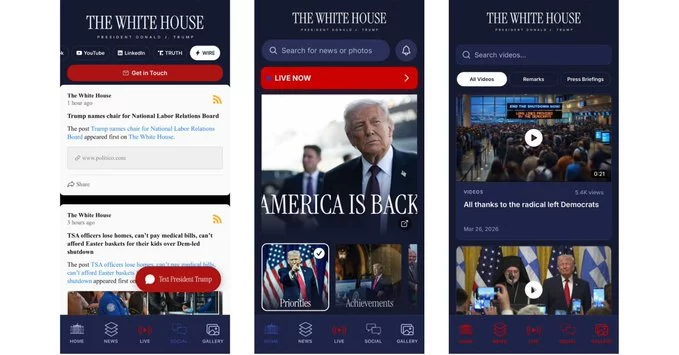
A newly launched White House app tied to the administration of Donald Trump is drawing widespread attention—and criticism—after reports that it encourages users to submit tips related to immigration enforcement. Many people searching online want to know: Is the app real? What does it do? And why is it controversial?
The app appears to serve as a centralized hub for official updates, policy messaging, and curated government news. However, its reported feature allowing users to report individuals to immigration authorities has quickly become the most talked-about—and divisive—aspect.
At its core, the White House app is designed to streamline communication between the administration and the public. It delivers push notifications, policy updates, and official statements directly to users’ phones. This approach reflects a broader trend of governments adopting direct-to-user digital platforms to bypass traditional media channels.
One of the most controversial features is a reporting tool allegedly linked to Immigration and Customs Enforcement (ICE). The tool invites users to submit information about individuals they suspect may be violating immigration laws. While the administration frames this as a public safety measure, critics argue it raises serious ethical and legal questions.
Civil rights advocates and privacy experts have reacted strongly to the app’s reporting feature. Concerns center around potential misuse, including false accusations, racial profiling, and lack of due process. Critics argue that empowering the public to report others could create a climate of fear and mistrust in communities.
There are also questions about how the submitted data is handled. Without clear transparency on data storage, verification processes, and safeguards against abuse, many worry about the long-term implications for personal privacy. These concerns have fueled debates across social media and policy circles.
Supporters of the app, including some political allies of Donald Trump, argue that it provides a practical tool for community involvement in law enforcement. They claim the reporting feature could help authorities identify serious violations more efficiently.
From this perspective, the app is seen as an extension of existing tip lines and reporting systems, simply modernized for the digital age. Proponents also emphasize that participation is voluntary, and that responsible use could strengthen national security efforts.
Beyond the reporting feature, the app’s content strategy is also attracting attention. It reportedly curates news and updates aligned with the administration’s messaging, raising concerns about information bias. Critics argue that such platforms could limit exposure to diverse viewpoints, especially if users rely heavily on the app for political news.
This development highlights a broader shift in how governments communicate with citizens. By delivering information directly through official apps, administrations can control messaging more tightly—but may also face increased scrutiny over transparency and credibility.
The White House app represents a significant step in the evolution of digital governance, blending communication, policy promotion, and public engagement in one platform. However, its controversial features underscore the challenges of balancing innovation with ethical responsibility.
As debates continue, the app is likely to remain a focal point in discussions about privacy, public trust, and the role of technology in law enforcement. Whether it becomes a widely adopted tool or a cautionary example may depend on how these concerns are addressed in the coming months.










Comment