
-
3 minutes, 49 seconds
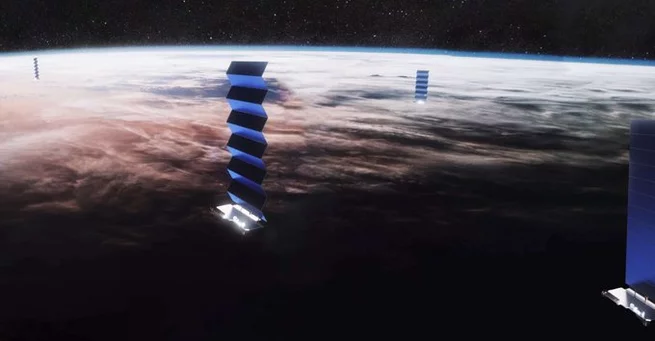
A potential disaster in space was narrowly avoided last week when a newly launched Chinese satellite came within a few hundred meters of a Starlink satellite, according to SpaceX. The incident raises questions about satellite coordination and the growing risks in increasingly crowded low Earth orbit (LEO). With thousands of satellites currently orbiting the planet, close encounters like this highlight the critical need for transparency and communication among operators.
Michael Nicolls, Vice President of Starlink Engineering, stressed that the near-miss was caused by missing positional data from the Chinese operator. “When satellite operators do not share ephemeris for their satellites, dangerously close approaches can occur in space,” Nicolls said. Nine satellites had been deployed from China’s Jiuquan Satellite Launch Center, and Starlink reported one satellite came as close as 200 meters at an altitude of 560 km.
Starlink satellites are equipped with automated maneuvering capabilities to avoid collisions. These systems successfully perform thousands of avoidance maneuvers every year, but only when the positions of nearby objects are known. In the first six months of 2025 alone, Starlink satellites executed over 144,000 such maneuvers, showcasing both the efficiency and necessity of active orbital management.
The satellite involved was launched by CAS Space, a Guangzhou-based commercial space company. CAS Space stated that all its launches use ground-based space awareness systems to avoid collisions with known satellites or debris. The company also noted the incident occurred nearly 48 hours after payload separation, when the launch mission had officially concluded, suggesting the risk was unforeseen at that point.
The incident underscores a larger problem: space is getting crowded. According to Space, over 24,000 objects—including satellites and debris—are tracked in LEO, marking a 76% increase since 2019. Experts warn that as more commercial and national satellites launch, the likelihood of collisions grows, making coordination between operators more critical than ever.
Industry specialists advocate for stronger international standards and more robust information sharing to prevent near-misses. Transparent ephemeris sharing, better tracking systems, and collaborative deconfliction protocols are seen as essential to ensuring safety in increasingly congested orbits. Without these measures, incidents like the Starlink near-miss could become more frequent.
As satellite constellations expand, managing orbital traffic will be as important as managing air traffic. Companies like SpaceX are pioneering automated avoidance systems, but experts say broader cooperation between nations and commercial operators is crucial. The Starlink incident serves as a stark reminder that even in the vastness of space, safety depends on collaboration and foresight.

2.5K articles

1.4K articles

34 articles

28 articles














Comment