
Alerts
-
8 minutes, 40 seconds
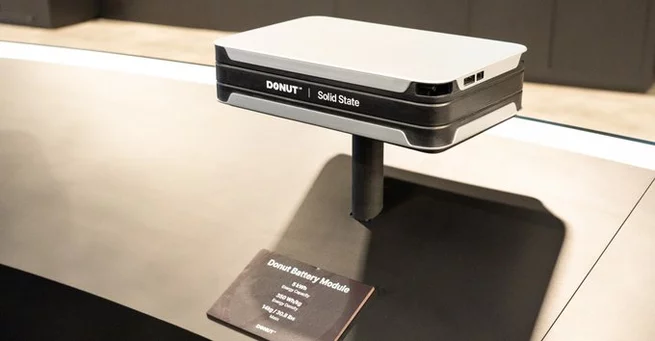
Solid-state battery breakthrough headlines are flooding search results after Finnish startup Donut Lab revealed independent test data showing its battery can charge from 0 to 80 percent in under five minutes. Drivers wondering whether ultra-fast EV charging is finally real — or still hype — now have fresh evidence to examine. Early results suggest this next-generation battery may deliver both speed and stability, two goals that have long seemed incompatible in electric vehicle technology.
Donut Lab’s solid-state battery was recently evaluated by VTT Technical Research Centre of Finland, a respected state-owned research organization. The independent testing focused on charging speed and thermal behavior, two critical benchmarks for real-world EV use.
According to the results, the battery consistently charged from 0 to 80 percent in approximately 9.5 minutes while retaining 100 percent capacity. Even more impressive, some tests achieved 0 to 80 percent in roughly 4.5 minutes while maintaining 99 percent capacity retention.
For EV owners, those numbers represent something close to refueling times at a gas station. More importantly, they suggest that rapid charging doesn’t automatically mean rapid degradation — a common concern in high-speed battery systems.
Solid-state batteries have been described for years as the holy grail of EV technology. Traditional lithium-ion batteries rely on liquid electrolytes to transfer energy between electrodes. While effective, they can overheat, degrade under stress, and pose safety risks if damaged.
Solid-state designs replace the liquid electrolyte with a solid conductive material. This shift offers several theoretical advantages: higher energy density, improved safety, better cold-weather performance, and reduced risk of thermal runaway. However, scaling production has historically been the biggest obstacle.
Many companies have promised breakthroughs. Few have delivered independently verified results showing both speed and durability.
One of the biggest technical hurdles in battery engineering is the relationship between charging speed and chemical stability. Force-feeding energy into a battery at extreme speeds typically causes internal stress. Over time, this stress leads to capacity loss, shorter lifespan, and safety risks.
Donut Lab’s early data suggests it may have found a way to manage that balance. Retaining 99 to 100 percent capacity after ultra-fast charging cycles is significant. It indicates that the internal chemistry and thermal management system can handle rapid energy intake without immediate breakdown.
Thermal behavior testing also plays a crucial role here. Heat is the enemy of battery longevity. If temperatures spike uncontrollably during fast charging, long-term durability becomes questionable. The independent evaluation appears to show stable thermal performance during high-speed sessions.
For everyday drivers, the promise is simple: dramatically shorter charging stops. If scaled successfully, a 5-minute 0–80 percent charge could remove one of the biggest psychological barriers to EV adoption — range anxiety and charging inconvenience.
Current fast chargers often require 20 to 40 minutes to reach 80 percent capacity under ideal conditions. That gap between expectation and reality has slowed adoption in some regions. A consistent sub-10-minute charging window would redefine what consumers consider practical.
However, laboratory testing is only the first milestone. Real-world deployment across thousands of vehicles, varying climates, and long-term cycles remains the ultimate proving ground.
History urges caution. Solid-state batteries have faced manufacturing bottlenecks for decades. Issues include material stability, interface resistance between solid layers, and high production costs. Scaling a prototype into mass-market production is far more complex than demonstrating performance in controlled tests.
Donut Lab has positioned its battery as production-ready, but broader commercialization timelines remain unclear. Industry watchers will be monitoring partnerships with automakers, pilot deployments, and factory build-outs closely over the coming months.
The difference between a laboratory success and an automotive revolution often lies in supply chains, manufacturing yield, and cost competitiveness.
Today’s EV market is dominated by advanced lithium-ion packs that continue to improve incrementally. Charging speeds have increased steadily, but most systems still face trade-offs between speed, longevity, and safety.
Solid-state batteries promise a step change rather than a gradual upgrade. Higher energy density could mean longer range without increasing battery size. Faster charging could mean fewer public charging stations required per vehicle. Improved safety could reduce cooling system complexity.
Yet lithium-ion technology benefits from decades of optimization and established infrastructure. Any newcomer must outperform not just technically, but economically.
Battery breakthroughs often trigger waves of excitement — and skepticism. Investors tend to reward companies that demonstrate independently verified data, especially when a neutral research body conducts testing.
At the same time, the EV sector has seen numerous ambitious announcements that failed to materialize at scale. As a result, analysts are approaching Donut Lab’s claims with cautious optimism.
Independent validation is a crucial first step toward building credibility. Continued transparency around cycle life testing, large-scale manufacturing, and cost per kilowatt-hour will determine whether enthusiasm sustains momentum.
Ultra-fast charging sits at the center of the EV adoption debate. Governments are investing heavily in public charging infrastructure. Automakers are racing to reduce charging times to match consumer expectations shaped by decades of gasoline refueling habits.
A true 5-minute 0–80 percent charging solution could dramatically shift infrastructure planning. Fewer long dwell times would ease congestion at charging hubs. Fleet operators could minimize downtime. Rural charging access challenges could become less severe.
In short, faster batteries could reshape not just vehicles, but the entire charging ecosystem.
Solid-state battery breakthrough headlines often generate bold predictions. What makes this development stand out is the presence of independent test data and measurable performance metrics.
Still, caution remains warranted. Scaling, cost, and long-term durability will determine whether this becomes a historic turning point or another promising experiment.
For now, Donut Lab has delivered something tangible: numbers that suggest ultra-fast charging without catastrophic degradation may finally be within reach. If those results hold under real-world conditions, the EV industry could be approaching one of its most important inflection points yet.
And for drivers who have long wondered whether EV charging will ever feel as quick as filling a tank — this may be the first real sign that the future is accelerating faster than expected.










Comment