
Alerts
-
4 minutes, 59 seconds
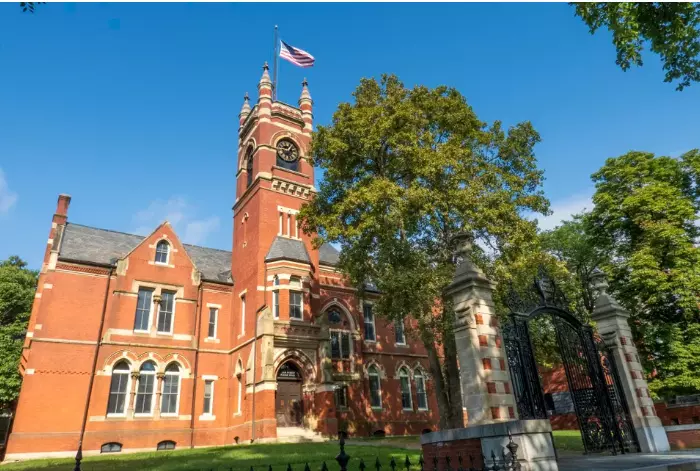
The Education Department has launched a civil rights investigation into Smith College's transgender admissions policy. The question is whether the college broke anti-discrimination laws by allowing transgender women to enroll. The complaint refers to these students as "biological males." This case could change the future of women's colleges in America.
Title IX is a federal law that stops sex discrimination in schools that get federal funding. But it has an exception. It allows colleges to admit only men or only women. The Education Department says this exception is based on biological sex, not gender identity. Smith College, however, lets students apply if they identify and live as women. This includes transgender women.
Assistant Secretary for Civil Rights Kimberly Richey said in a press release, "An all-women's college loses all meaning if it is admitting biological males." But what does "all-women's college" mean in 2026? The purpose of single-sex schools has changed over time.
Many top women's colleges started in the mid-1800s. Smith College opened in 1871. At that time, few schools admitted women. Even coed schools let in very few female students. Women's colleges were created to give women access to higher education. It was a real solution to a real problem.
For decades, these schools were a necessary choice. Ivy League schools like Princeton and Yale did not admit undergraduate women until 1969. Dartmouth waited until 1972. A few all-male colleges still exist, like Morehouse and Wabash.
In 2026, the situation is very different. Women now earn most degrees at every level. Recent data shows:
This means the original mission of women's colleges—expanding access—is mostly complete.
Supporters of women's colleges say they help students build confidence and leadership skills. They argue that women participate more freely without men around. But research does not back this up.
A 2024 analysis looked at 677 studies with over 1 million students. It found no real academic benefit from single-sex education. In some cases, students at coed schools had better communication skills and higher self-confidence. Academics is not like sports. In sports, physical differences matter. But there is little proof that men and women learn so differently that they need separate colleges.
Separating students by sex can reinforce outdated stereotypes. The idea that women learn or lead better only when men are away sends a wrong message. If we say women are less effective around men, employers may think men are better for leadership roles.
For some students, women's colleges offer a safe space. When Mills College became coed in 2021, many students were upset. They said they felt physically safer without men on campus. Safety remains a real concern for many female students.
The role of women's colleges gets more complicated as views on gender identity change. In the mid-2010s, elite women's colleges like Smith started letting transgender women apply. They said their mission was to support people disadvantaged because of gender. Now, Smith is defending its single-sex status because of this policy.
The investigation's outcome is uncertain. But if courts must decide who is "female enough" to attend, it may show that the single-sex model no longer works in today's world.










Comment