Alerts

-
6 minutes, 27 seconds
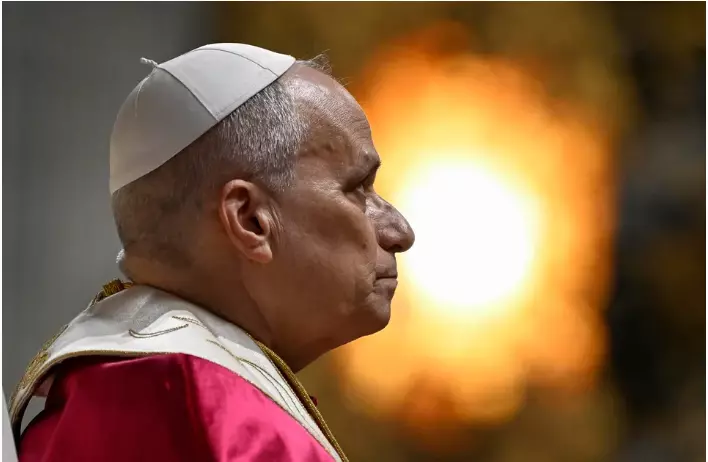
In today’s hyper-connected world, many are asking: what is moral courage, and why does it feel so rare? The answer lies in rising social pressure, where speaking openly can trigger backlash within hours. Yet, as global conversations grow louder, the need for leaders who stand firm in their values has never been greater. The example of Pope Leo XIV is quickly becoming a defining case study in modern moral courage—one that extends far beyond religion or politics.
When retired four-star general Stan McChrystal reflects on leadership, his insight cuts through the noise: moral courage is harder to find than physical courage. Coming from a leader who commanded tens of thousands in high-risk environments, that statement carries weight. Physical courage often happens in moments of urgency, but moral courage requires sustained conviction under scrutiny. It demands standing firm not when it’s easy, but when it’s costly. That distinction explains why so many leaders struggle with it today.
Since his rise to prominence, Pope Leo XIV has demonstrated a consistent willingness to speak on issues like human dignity, conflict, and justice—without retreating under pressure. His approach is notably calm and grounded, avoiding personal attacks while remaining firm in principle. When challenged publicly, his simple response—“I have no fear”—resonated widely. It wasn’t defiance for attention, but clarity rooted in belief. That distinction is what separates moral courage from performative leadership.
While most people won’t face global scrutiny, the same internal conflict plays out in everyday situations. Whether in meetings, conversations, or personal decisions, there’s often a gap between what people believe and what they actually say or do. This “courage gap” grows each time silence feels safer than honesty. Research from Harvard Business School shows that this silence doesn’t just affect individuals—it weakens organizations by eroding trust and delaying critical decisions. Over time, the cost compounds in ways many fail to notice.
The leaders people trust most aren’t always the smartest or most charismatic. What sets them apart is integrity—the alignment between belief, speech, and action. Teams instinctively recognize this consistency and respond with deeper trust. Studies have shown that leaders who demonstrate moral courage are more respected and effective overall. Without it, even the most talented individuals struggle to inspire confidence. In contrast, integrity builds credibility that no skill alone can replace.
As writer C. S. Lewis observed in The Screwtape Letters, courage is the moment where every virtue is tested. It’s easy to claim values in theory, but far harder to uphold them when there’s something to lose. That testing point defines character. It reveals whether decisions are guided by conviction or shaped by fear. In that sense, courage isn’t separate from integrity—it’s the proof of it.
Even those who value integrity admit they don’t always live up to it. There are moments of hesitation, softened truths, and delayed accountability. That internal struggle is universal. What makes the example of Pope Leo XIV compelling is not perfection, but consistency. His actions suggest alignment between inner belief and outward behavior—a rare quality in high-pressure environments. It’s a reminder that character is built quietly, long before it’s tested publicly.
In today’s polarized climate, staying neutral often feels like the safest path. But silence carries its own consequences. It affects relationships, weakens trust, and gradually reshapes personal identity. As William H. McRaven once noted, everyone has lines they claim they won’t cross. The real question is whether those lines hold under pressure. Over time, small compromises accumulate, shaping not just outcomes—but who we become.
Moral courage rarely appears in dramatic, defining moments. More often, it shows up in small, everyday choices—speaking honestly, standing firm, or choosing principle over approval. Each decision reinforces identity and direction. Collectively, these choices shape culture, leadership, and society itself. If more individuals chose courage more often, the ripple effect would be significant. The real challenge isn’t recognizing what’s right—it’s having the resolve to act on it when it matters most.









Comment