
Alerts
-
4 minutes, 27 seconds
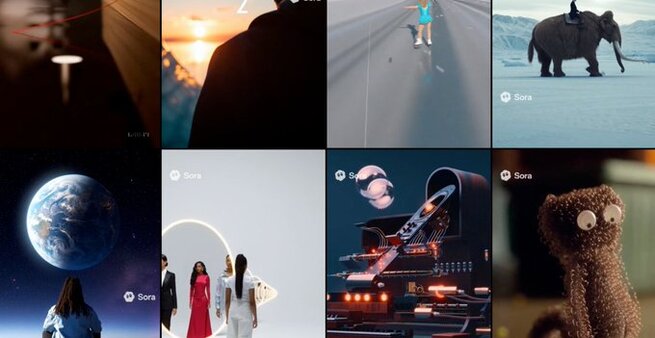
On Monday, I watched OpenAI CEO Sam Altman drink from a giant mango juice box. He joked about how it was nearly half his size. The strange part? None of it was real. The juice box didn’t exist, Altman wasn’t speaking, and the entire moment was created by AI.
OpenAI made a TikTok for deepfakes, and it’s getting hard to tell what’s real. That’s because the company has just launched Sora 2, its next-generation AI video and audio tool. Like ChatGPT changed text-based AI, Sora 2 could become the “ChatGPT moment” for video — making it easy for anyone to generate lifelike clips of real people saying almost anything.
Sora first appeared in early 2024, but the results were inconsistent — more like a slot machine than a creative tool. You’d type in a prompt and hope for the best.
Now, after more than 20 months of development, Sora 2 promises far greater reliability and realism. According to Bill Peebles, OpenAI’s head of Sora, the system is now far more faithful to user prompts, producing clips that feel eerily authentic.
And with the launch of a TikTok-like app for sharing these creations, OpenAI is essentially giving the world a deepfake social network — on purpose.
The idea of a platform built around deepfakes raises huge ethical and security questions. Imagine scrolling through videos of politicians, celebrities, or even your friends, only to realize you can’t trust what you’re seeing.
This blurring of reality could have serious consequences:
Misinformation: False clips spreading faster than fact-checks can keep up.
Identity misuse: Bad actors using realistic AI videos to scam or manipulate.
Erosion of trust: People becoming skeptical of all media, even when it’s real.
While OpenAI insists it has safeguards in place, experts worry this could accelerate the very problem deepfakes represent.
OpenAI isn’t alone in the AI video race — competitors like Runway, Pika Labs, and Stability AI are also pushing boundaries. But with its resources and mainstream reach, OpenAI has the potential to make AI-generated video as accessible as ChatGPT made AI writing.
The difference this time? Instead of playful text prompts, we’re dealing with video content that looks like reality. And when OpenAI made a TikTok for deepfakes, it wasn’t just another app launch — it was a signal that we’re stepping into a new era where trust in digital media may be permanently shaken.
OpenAI’s Sora 2 is a breakthrough, no doubt. But it also highlights the double-edged sword of generative AI. While creative opportunities abound, the risk of misinformation and deception grows larger every day.
For now, one thing is clear: OpenAI made a TikTok for deepfakes, and it’s getting hard to tell what’s real. The next challenge isn’t just building the technology — it’s making sure society can handle it.









Comment