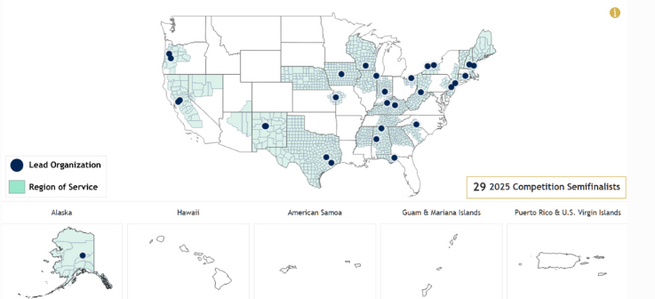
The NSF Engines funding program is once again making waves in America’s technology and innovation ecosystem. Recently, the National Science Foundation (NSF) announced 29 semifinalist teams for its second round of Regional Innovation Engine awards. This highly competitive program—backed by the bipartisan CHIPS and Science Act—is designed to supercharge regional economies through advanced technologies like AI, biotech, quantum science, and advanced manufacturing. With nearly 300 initial submissions and only a few selected, the NSF Engines initiative is emerging as a game-changer in regional economic development.
How NSF Engines Funding Drives Economic Growth
The NSF Engines funding initiative supports long-term, place-based innovation ecosystems by investing up to $160 million over 10 years in each selected region. These awards go beyond research—they build public-private partnerships between universities, local governments, nonprofits, businesses, and community colleges. The goal? To spark regional tech clusters that advance R&D, foster workforce development, and attract new industries. Many of this year’s semifinalists propose bold visions—from revitalizing agriculture with biotechnology to creating secure domestic supply chains for critical minerals and AI infrastructure.
NSF Engines at Risk Amid Budget Battles
Despite the program’s potential, the future of NSF Engines funding remains uncertain due to ongoing budget tensions in Congress. Although the CHIPS Act authorized $20 billion for NSF's Technology and Innovation directorate, only 2% has been appropriated. A proposed 56% budget cut under the Trump administration has raised concerns among scientists, educators, and economic leaders who say the U.S. risks falling behind in global innovation. The NSF has already experienced layoffs and grant suspensions, with some semifinalist teams unsure if their transformative proposals will see the light of day.
NSF Engines Semifinalists Tackle Rural Innovation
While many past recipients were based in tech-heavy metros, the latest round of NSF Engines semifinalists includes several rural-focused proposals. Wisconsin’s “Forward Agriculture” aims to lead in the circular bioeconomy, while Iowa and Nebraska’s “Rural STAMINA” targets biomanufacturing and national farm security. Leaders behind these proposals highlight how Engines funding could bring millions in economic impact to underserved regions, stimulate STEM workforce training, and reduce America’s dependence on foreign supply chains—all while empowering local communities to shape their economic futures.














Comment